President Trump calls for disqualification of Mary Peltola following allegations of ballot manipulation in Alaska Senate race

The political landscape in Alaska has reached a boiling point as President Trump publicly demanded the disqualification of Democratic Senate candidate Mary Peltola, labeling her alleged involvement in the recruitment of a "spoiler candidate" as a form of election fraud. This explosive development follows a report from The New York Times, which alleged that individuals connected to the Peltola campaign assisted in recruiting a candidate who shares the same name as the incumbent Republican, Senator Dan Sullivan. As the November election approaches, the incident has triggered a firestorm of litigation, federal intervention, and heightened concerns regarding the integrity of Alaska’s nonpartisan ranked-choice voting system.
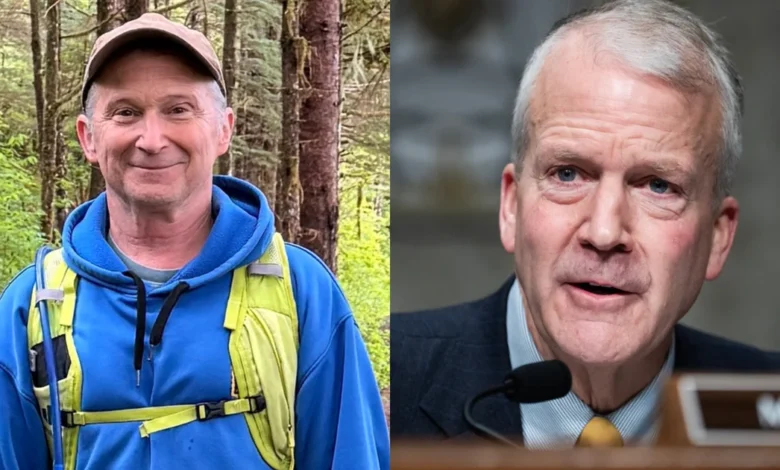
The controversy centers on the presence of Daniel J. Sullivan Jr., a retired teacher, on the ballot alongside Republican Senator Dan Sullivan. The existence of two candidates with identical names has created significant friction in a state that has become a critical battleground for control of the United States Senate. While the incumbent senator has consistently denounced his namesake challenger as a "sham candidate" designed to confuse voters, the entry of the second Sullivan into the race has now moved from a local political nuisance to a national constitutional crisis.
A Chronology of the Alaska Ballot Controversy
The roots of this situation date back to the early stages of the 2026 election cycle. After the nonpartisan primary concluded, the Alaska Division of Elections faced immediate scrutiny regarding the candidate list.
- Early 2026: Daniel J. Sullivan Jr. files to run for the U.S. Senate. Incumbent Senator Dan Sullivan challenges the eligibility of the candidate, arguing that his entry is a bad-faith effort to manipulate the ballot.
- Mid-2026: State officials initially move to disqualify the younger Sullivan, citing "voter confusion" and a lack of a "good-faith" campaign effort.
- Late Summer 2026: The Alaska Supreme Court intervenes, overturning the state’s decision. The court rules that there are insufficient grounds to block a candidate based on name similarity, effectively granting Daniel J. Sullivan Jr. a permanent spot on the ballot.
- October 2026: New evidence surfaces via investigative reporting, suggesting that a Democratic operative linked to the Peltola campaign and national party interests played a role in facilitating the younger Sullivan’s candidacy.
- October 28, 2026: The New York Times publishes details of text messages and communications allegedly connecting the Peltola camp to the recruitment of the spoiler candidate.
- October 29, 2026: President Trump escalates the rhetoric, calling for the disqualification of Mary Peltola and confirming his administration’s direct role in ordering a Justice Department lawsuit to block the certification of the results should the incumbent lose.
The Legal and Federal Response
The involvement of the federal government in this state-level race is unprecedented. Last week, the Department of Justice, led by Attorney General Todd Blanche, filed a lawsuit intended to prevent the certification of the Alaska Senate election results in the event that Senator Dan Sullivan is defeated. The suit argues that the presence of a "fake candidate" violates the rights of Alaskan voters by intentionally sowing confusion.
President Trump, speaking to reporters shortly after the lawsuit was filed, confirmed his personal directive regarding the legal challenge. "I’m the one that said, ‘Do it,’" the president stated. This move represents a significant expansion of federal authority into election administration, which is traditionally a power reserved for the states. Legal scholars are currently debating the merits of the DOJ’s intervention, noting that while federal oversight of elections exists, a lawsuit preemptively challenging the certification of a result based on the composition of a ballot—which was previously upheld by a state Supreme Court—presents a complex constitutional hurdle.
Analysis: The Impact of Ranked-Choice Voting
The confusion in this race is compounded by Alaska’s unique election system. Under the state’s ranked-choice voting framework, voters do not simply select one candidate; they rank them in order of preference. In a contest where margins are expected to be razor-thin, the presence of an additional candidate with a nearly identical name could potentially siphon off enough votes from the incumbent to alter the outcome of the final round of tabulation.
Data from recent polling suggests that voters, particularly those who are less familiar with the specific records of the two Sullivans, have expressed concern regarding the lack of clarity on the ballot. While the ballot identifies the incumbent as a Republican and an "incumbent," the confusion remains a primary talking point for the GOP. The Democratic Senatorial Campaign Committee (DSCC) has pushed back, arguing that the Republican party has a documented history of utilizing similar tactics, pointing to instances in other states where third-party candidates were propped up to fragment the opposition.
Official Responses and Denial
The Peltola campaign has remained steadfast in its denial of the allegations. In a formal statement issued following the president’s comments, a spokesperson for the campaign explicitly denied any coordination with the second Sullivan. "Mary got in this race because Alaskans deserve a champion who is fighting to lower their costs and put Alaska first, and no tweet or threat from any DC politician will keep her away from that fight," the statement read.
The DSCC echoed these sentiments, characterizing the accusations as a "desperate political narrative" designed to distract from Senator Dan Sullivan’s voting record. "The Republican party is attempting to gaslight Alaskans to cover for their own lack of competitive messaging," a spokesperson for the DSCC argued. They further highlighted that the DSCC has played no role in the younger Sullivan’s campaign and emphasized that the candidate himself has consistently maintained he is running on his own merits and policy interests.
Broader Political Implications
The implications of this incident extend far beyond the borders of Alaska. The rhetoric surrounding "election fraud" and "prosecuting" opponents has heightened political polarization across the nation. By framing the local controversy as a national test of election integrity, both parties are effectively using the Alaska Senate race as a proxy for larger battles regarding the security and legitimacy of the American electoral process.
For the people of Alaska, the immediate future remains uncertain. The pending DOJ lawsuit casts a shadow over the upcoming vote, leaving citizens to wonder if their ballots will even be certified once the counting process concludes. The case is expected to reach higher federal courts if the results are contested, potentially setting a precedent for how future elections handle candidates with identical names and the extent to which the federal government can influence state ballot procedures.
As the final week of campaigning begins, the discourse has shifted almost entirely away from inflation, energy policy, and the specific legislative goals of the candidates, and toward the integrity of the ballot itself. Regardless of the outcome, the 2026 Alaska Senate race will likely be studied for years to come as a primary example of how ballot design, judicial intervention, and partisan strategy can collide to create a profound crisis of confidence in the democratic process.
The political stakes remain high as the state approaches the final day of voting. Whether the courts or the voters will have the final word remains the central question of this election, but one thing is clear: the path to the Senate for both candidates has been irrevocably altered by a series of events that have redefined the boundaries of political combat in the modern era.
Related posts: