Fourth Circuit Court Strikes Down West Virginia Law Protecting Personal Data of Judges and Law Enforcement Officers

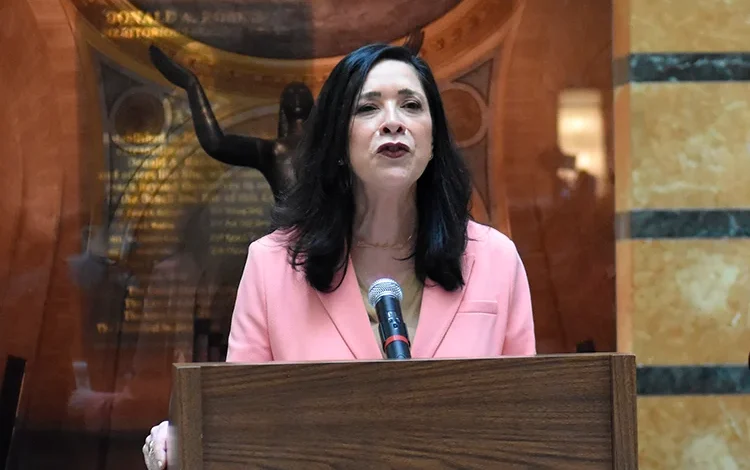
In a landmark decision handed down on Tuesday, October 27, 2026, the 4th U.S. Circuit Court of Appeals declared unconstitutional a West Virginia statute designed to shield the home addresses and unpublished phone numbers of judges and law enforcement officers from online publication. The ruling marks a significant moment in the ongoing legal tension between public data privacy rights and First Amendment protections for speech and information access.
The appellate court’s decision is the first of its kind at the federal appellate level since a wave of states enacted protective measures following a tragic 2020 shooting at the New Jersey home of U.S. District Judge Esther Salas. That incident, which claimed the life of Judge Salas’ 20-year-old son, Daniel Anderl, galvanized lawmakers across the nation to look into ways to scrub sensitive personal information belonging to public servants from the internet. While federal and state legislatures have increasingly sought to bolster the safety of judicial officers and law enforcement personnel, this week’s ruling demonstrates the constitutional roadblocks that emerge when privacy mandates clash with free speech guarantees.
The Origin of Judicial and Law Enforcement Data Privacy Laws
The movement to restrict the online dissemination of personal data for judicial officers and law enforcement gained intense momentum in the wake of the July 2020 attack on Judge Salas’ family. A disgruntled attorney posing as a delivery driver arrived at the judge’s home, opening fire and killing her son, Daniel, while severely wounding her husband. The assailant, who had compiled extensive personal dossiers on federal judges using commercially available data broker networks, later took his own life.
In response to the tragedy, state legislatures across the country rapidly introduced protective measures. West Virginia passed its own version of a privacy shield law in 2021, restricting the publication and commercial availability of sensitive contact information for judges, magistrates, prosecutors, and law enforcement personnel. A year later, in 2022, federal lawmakers followed suit by passing the Daniel Anderl Judicial Security and Privacy Act, which specifically aimed to safeguard the personal information of federal judges from being scraped, posted, or sold by data brokers online.
Despite these noble legislative intentions, civil liberties advocates, media coalitions, and data broker entities immediately raised constitutional concerns, arguing that broad prohibitions on publishing public records would severely infringe upon First Amendment freedoms.
Class Action Lawsuits and the Legal Challenge
The constitutional showdown in the Fourth Circuit stems from a series of class action lawsuits initiated by Michael Jackson, a retired law enforcement officer. Represented by attorney Philip Fraiyati of the prominent law firm Bursor & Fisher, Jackson filed lawsuits against major data aggregation and people-search companies, including Thomson Reuters, Whitepages Inc., PeopleConnect, and LexisNexis.
The complaints alleged that these corporations violated West Virginia’s data protection framework—often referred to locally as Daniel’s Law—by continuing to compile, host, and distribute protected personal information through their online commercial search platforms. Lower court proceedings grappled with how to reconcile the state’s interest in protecting public safety workers with the longstanding constitutional protections afforded to the aggregation and publication of lawfully acquired public data.
However, the legal landscape shifted dramatically on October 27, 2026, when the Richmond-based appellate court handed down its ruling, finding that the West Virginia statute could not withstand strict First Amendment scrutiny.
Corporate Responses and Legal Reactions
Following the release of the appellate decision, legal representatives and corporate stakeholders weighed in on the far-reaching implications of the ruling.
A spokesperson for Thomson Reuters issued a statement addressing the company’s dual commitment to data integrity and constitutional principles. “Thomson Reuters has long been committed to honoring privacy and keeping personal data safe,” the spokesperson noted. “However, in its current form, the statute is overbroad and violates the First Amendment.”
The company and its co-defendants successfully argued that the sweeping nature of the West Virginia law effectively criminalized or penalized the routine dissemination of lawfully obtained public records, creating an unacceptable chill on protected speech. Representatives for the plaintiffs, including attorney Philip Fraiyati, declined to provide immediate public comments following the release of the appellate court’s opinion, leaving open the possibility of further appeals or petitions for Supreme Court review.
Broader Implications for State and Federal Privacy Frameworks
The 4th Circuit’s decision carries profound implications not only for West Virginia, but for jurisdictions across the United States that have enacted similar statutes. More than a dozen states have passed legislation aimed at hiding the residential information of judges, prosecutors, and police officers from data broker sites and public registries.
Legal scholars note that while the state interests in protecting public servants from targeted violence, harassment, and stalking are undeniably compelling, the judiciary continues to apply rigorous First Amendment standards to content-based speech restrictions. Statutes that are deemed overly broad or that fail to narrowly target specific instances of malicious harassment without broadly sweeping up lawful publishers face immense constitutional vulnerability.
Furthermore, the ruling may influence ongoing and future challenges to the federal Daniel Anderl Judicial Security and Privacy Act, as well as similar state-level enactments. While federal laws often incorporate specific safe harbors or administrative mechanisms for judges to request the removal of their data—differing structurally from blanket state prohibitions—the Fourth Circuit’s rationale will undoubtedly be cited by data brokers and information-access advocates in future litigation.
A Delicate Balance Between Safety and Speech
As the legal community digests the impact of the October 27 ruling, lawmakers and judicial administrators are left searching for viable alternatives to protect those who serve in the justice system. Balancing the physical security and peace of mind of judges, prosecutors, and law enforcement officers against the foundational free speech principles of the First Amendment remains one of the most intricate challenges facing modern American jurisprudence.
With the Fourth Circuit having drawn a definitive constitutional line in West Virginia, attention now turns to whether the plaintiffs will seek further review at the U.S. Supreme Court, and how other federal circuits will handle similar statutory challenges in the months and years ahead.
Related posts: