Federal Judge Rules Tulsa Sheriff Deputy Violated Fourth Amendment Using Flock Safety Automated License Plate Reader Without Warrant

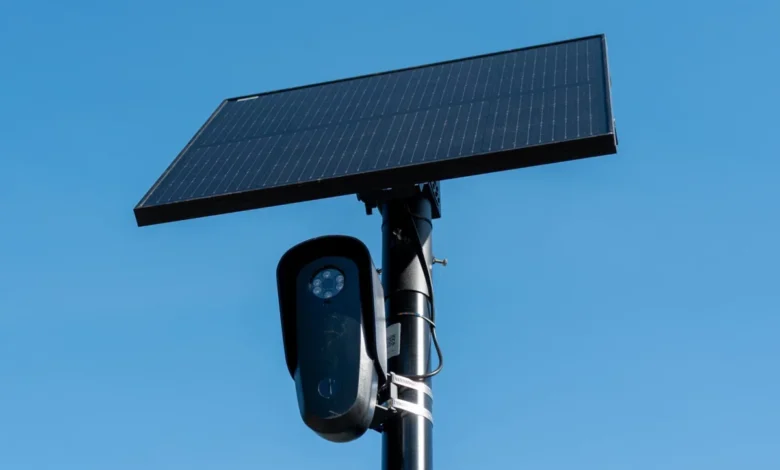
A federal judge in Oklahoma has issued a landmark ruling declaring that a local sheriff’s deputy violated the Fourth Amendment when querying an automated license plate reader (ALPR) database without a warrant. The decision, handed down by U.S. District Judge Sara Hill, centers on the controversial use of Flock Safety technology by law enforcement to track motorists. While the ruling does not establish a binding nationwide legal precedent, it marks a significant milestone as one of the first formal judicial rebukes of dragnet-style ALPR searches by a federal court, intensifying an ongoing national debate over privacy, public safety, and the limits of digital surveillance in the United States.
The Case and the Ruling
The legal challenge arose from a traffic stop and subsequent search conducted by a Tulsa County Sheriff’s Office deputy. According to court documents, the deputy queried the Flock Safety database for a woman’s vehicle license plate. Judge Hill noted in her ruling that the officer had “no apparent reason” to perform the search “other than the fact that [the woman’s vehicle] had a California license plate.”
Using the historical location data retrieved from the Flock network, the deputy formulated reasonable suspicion to search the vehicle. Inside the car, authorities allegedly discovered 91 pounds of methamphetamine. However, the defense successfully argued that the initial search of the database violated the motorist’s constitutional protections against unreasonable searches and seizures.
In her strongly worded opinion, Judge Hill agreed, ruling that all evidence gathered following the warrantless ALPR query must be suppressed under the legal doctrine known as the “fruit of the poisonous tree.” Because the initial database lookup was unconstitutional, any subsequent discoveries stemming from that investigative lead are legally tainted and inadmissible in court.
The Mechanics of Mass Surveillance
Judge Hill’s decision extended far beyond the specifics of the Tulsa traffic stop, delivering a sweeping critique of automated license plate reader technology as a form of mass surveillance. She drew a sharp distinction between traditional, targeted law enforcement techniques and the passive, continuous tracking enabled by modern camera networks.
“This is a type of indiscriminate mass surveillance,” Judge Hill wrote. “It is not targeted on a single individual, as in [Carpenter v. United States, a Supreme Court case focused on how government agencies access location data from cell phones]. It is a tool that collects information about all vehicles that pass by any network-connected camera at all times, and it serves up the information to law enforcement on demand.”
The judge addressed the legal nuance surrounding location tracking in public spaces. While citizens historically hold a diminished expectation of privacy while traveling on public roads, Hill argued that the continuous, automated aggregation of historical travel patterns crosses a constitutional threshold. Tracking individuals becomes “constitutionally problematic when law enforcement can indiscriminately and passively catalog your whereabouts over an extended period of time and then use that information for any purpose whenever convenient,” she noted.
Growing Political Backlash and Legislative Pushback
The federal ruling in Oklahoma arrives amid a mounting wave of legislative resistance and public skepticism toward private surveillance contractors like Flock Safety. Across the political spectrum, lawmakers and civil liberties advocates have increasingly questioned the unchecked expansion of automated tracking systems in American communities.
State and local governments are actively reevaluating their contracts with surveillance vendors. In jurisdictions across states like Florida and Texas, local and state officials have moved to restrict or outright block the installation and operation of Flock cameras over mounting privacy concerns.
At the federal level, legislative action is also taking shape. U.S. Senator Bernie Sanders introduced federal legislation known as the Block Flock Act, designed to bar federal agencies from utilizing automated license plate reader systems like Flock. The bill reflects a broader legislative anxiety regarding the procurement of powerful commercial surveillance tools by government entities without explicit statutory authorization or congressional oversight.
Corporate Response and Industry Implications
As public scrutiny intensifies, Flock Safety and its leadership have faced mounting pressure to address civil liberties concerns. Garrett Langley, the chief executive officer of Flock Safety, has publicly advocated for what he terms a “compromise” between community safety and individual privacy. Langley has also addressed systemic vulnerabilities and misconduct, including issuing public apologies following incidents where law enforcement officers misused the technology to stalk citizens.
The commercial fallout from the widening backlash has begun to affect the company’s internal operations. Faced with contract cancellations, local bans, and negative publicity, reports indicate that Flock Safety has initiated voluntary employee buyout programs in an effort to downsize its workforce.
Tech industry analysts and legal experts suggest that the Tulsa federal ruling, while not binding on other jurisdictions, could serve as a blueprint for defense attorneys challenging ALPR evidence nationwide. If similar rulings proliferate in federal and state courts, law enforcement agencies may find themselves legally compelled to secure warrants before mining historical automated license plate reader databases, fundamentally altering how police agencies utilize private surveillance infrastructure in criminal investigations.