A’ja Wilson Reflects on Emotional Turmoil and Triumphant Return After Fan Altercation in WNBA Playoff Series

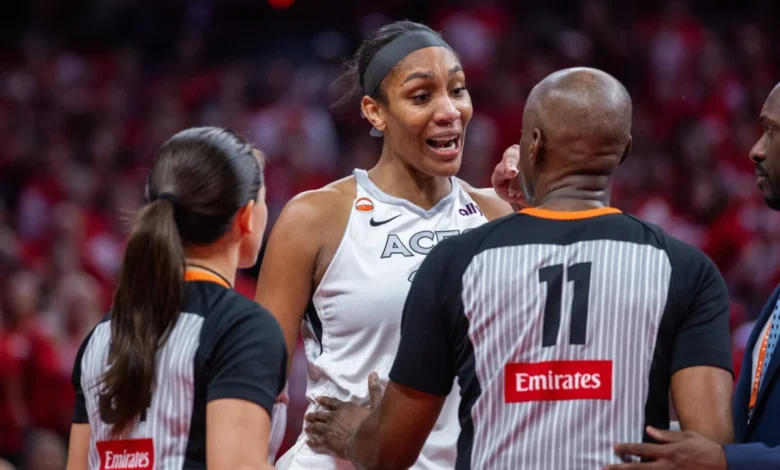
Las Vegas Aces superstar A’ja Wilson opened up about the intense emotional toll she experienced following a highly publicized verbal altercation with an Indiana Fever fan during the first round of the WNBA playoffs. The incident, which occurred during a heated Game 2 matchup at Gainbridge Fieldhouse in Indianapolis, momentarily overshadowed an otherwise thrilling postseason series. However, Wilson demonstrated remarkable resilience, channeling her frustration into a dominant performance in the decisive Game 3 to secure the Aces’ advancement to the next round.
The confrontation brought to the forefront ongoing discussions regarding player safety, fan conduct, and the immense pressures placed on professional athletes in modern sports arenas. As the WNBA continues to experience unprecedented growth in viewership, attendance, and media coverage, incidents at the intersection of player-fan interactions have increasingly drawn scrutiny from league executives, players associations, and organizational leadership.
The Chronology of the Playoff Confrontation
The sequence of events began on Tuesday, September 29, 2026, during a high-stakes Game 2 playoff contest between the defending champion Las Vegas Aces and the visiting Indiana Fever. As the intensity on the court escalated, tensions spilled over into the seating bowl. A’ja Wilson, widely regarded as one of the preeminent talents in women’s basketball history and the frontrunner for her fifth WNBA Most Valuable Player award, approached the stands after a Fever fan stepped toward her and engaged in unacceptable verbal provocation.

Game officials quickly intervened, assessing Wilson a technical foul for unsportsmanlike conduct. The individual involved was temporarily escorted away from his seat by arena security while stadium personnel evaluated the situation. Following a brief investigation, security personnel determined that the fan’s actions did not technically violate the venue’s Fan Code of Conduct, allowing him to return to his seat for the remainder of the contest. The Aces ultimately dropped Game 2 by a score of 99-89, evening the series and forcing a winner-take-all Game 3 back in Las Vegas.
In the immediate aftermath of the game, Wilson faced a wave of public scrutiny while processing the emotional weight of the confrontation. Speaking candidly to reporters following the series finale, the star center admitted that the days between Game 2 and Game 3 were exceptionally difficult.
"I mean, honestly, I have my days. I had my moment, because I’m human," Wilson shared during her postgame media availability. "But after a while, I understood I didn’t want to be a distraction to myself and to my team. And I knew what we had to do coming into tonight. So I put it behind me."
Wilson revealed that she leaned heavily on her faith and support system to navigate the crisis. "I prayed a lot. I cried a lot. I talked to a lot of different people, and the amount of love that I received today, the amount of Bible verses that I received, it reminded me I’m covered. So I can’t really worry about anything else. I’m grateful to be surrounded by people that could constantly lift me up. Once I put that on the back burner, I had to come up. I had to show up for my team today, and I’m glad we got the win."

League Review and Disciplinary Decisions
In the days following the altercation, the WNBA office reviewed game footage, security reports, and referee evaluations to determine whether additional disciplinary measures were necessary. On October 1, 2026, the league announced that Wilson would not face further fines or suspensions beyond the technical foul assessed during the game.
The decision brought a sense of competitive relief to the Aces organization, which relied heavily on Wilson’s leadership and production as they prepared for the elimination game. League insiders noted that while player-fan altercations are treated with extreme seriousness by basketball operations, the review concluded that Wilson’s reaction—while resulting in a technical foul—was an understandable response to an overly aggressive spectator who crossed professional boundaries by advancing toward the playing boundary.
Simultaneously, the incident ignited a broader debate across professional sports regarding courtside seating configurations. Unlike sports where athletes are separated from spectators by thick glass barriers or elevated playing surfaces, basketball courts place fans within arm’s reach of competing athletes. This unique proximity, while offering fans an immersive entertainment experience, consistently exposes players to inappropriate remarks, physical encroachment, and heightened safety risks.
A Resounding Response on the Hardwood
Any lingering doubts regarding Wilson’s focus or emotional stability were swiftly dispelled on Thursday, October 1, 2026, at the Michelob ULTRA Arena in Las Vegas. Facing elimination in front of a raucous home crowd, Wilson delivered a masterclass performance that underscored her status as the league’s definitive MVP frontrunner.

Playing with relentless energy and surgical precision, Wilson recorded a massive double-double, pouring in 36 points and pulling down 10 rebounds. Her dominant interior scoring, combined with defensive anchoring, propelled the Las Vegas Aces to a decisive 94-83 victory over the Indiana Fever. The win sealed the first-round series two games to one, punching the franchise’s ticket to the WNBA semifinals.
The game itself was a physical battle from tip-off to the final buzzer. The Fever fought tenaciously, underscored by an intense effort from rookie sensation Caitlin Clark, who sustained a bloody nose during the contest before voicing her frustrations regarding officiating during her own postgame remarks. Despite Indiana’s resilience, Wilson and the veteran core of the Aces maintained control in the fourth quarter, executing down the stretch to secure the victory.
Reflecting on the victory and the emotional hurdles of the preceding forty-eight hours, Wilson displayed a radiant smile during her postgame media session. The contrast between her tearful reflection earlier in the week and her triumphant celebration on the floor of the Michelob ULTRA Arena highlighted the immense mental fortitude required to perform at the highest echelon of professional athletics.
Broader Implications for WNBA Fan Culture and Player Safety
As the WNBA navigates its most commercially successful era in history—characterized by record-breaking television ratings, sold-out arenas, and surging corporate sponsorship—issues surrounding arena security and spectator behavior have taken center stage. The exponential growth in the league’s popularity has brought an influx of new fans into arenas across the country, many of whom may be unfamiliar with the established etiquette governing professional sports environments.

Sports management experts and league administrators point out that maintaining the intimate atmosphere of WNBA games while safeguarding player welfare requires a delicate balance. Franchises across the league have begun evaluating their security protocols, particularly concerning courtside seats where ticket prices command premium figures but often blur the line between spectator and participant.
For the Las Vegas Aces, the immediate focus now shifts away from the off-court drama and back to the quest for organizational history. Having advanced past the rugged first-round test posed by the Indiana Fever, the franchise remains firmly entrenched in its pursuit of consecutive WNBA championships.
The Aces will face the winner of the fierce first-round series between Golden State and Dallas, with the deciding game scheduled to take place in San Francisco. Armed with a battle-tested roster, renewed organizational cohesion, and a revitalized A’ja Wilson operating at the absolute peak of her powers, Las Vegas enters the next phase of the postseason carrying both momentum and a powerful reminder of their collective resilience.
Related posts: