Round Two At The Ballot: Abortion Rights Face High-Stakes Rematches In Missouri, Nevada, And Across The United States

The landscape of reproductive rights in the United States continues to evolve through state-level referendums, creating a complex patchwork of laws that directly impacts millions of citizens. Nearly four years after the United States Supreme Court issued its landmark ruling in Dobbs v. Jackson Women’s Health Organization—a decision that effectively eliminated the federal constitutional right to an abortion and returned the authority to regulate or prohibit the procedure entirely to individual states—voters across the country find themselves returning to the ballot box.
As the nation approaches the upcoming November general election, voters in at least four states will decide pivotal ballot measures concerning reproductive healthcare. Among these states, Missouri and Nevada stand out as unique battlegrounds where the electorate is being asked to vote on abortion-related constitutional questions for a second time since 2024. The unfolding political battles highlight a deeply polarized nation grappling with clashing ideologies regarding bodily autonomy, constitutional governance, and the legal status of fetal life.
The Legislative Pushback and the Missouri Battleground
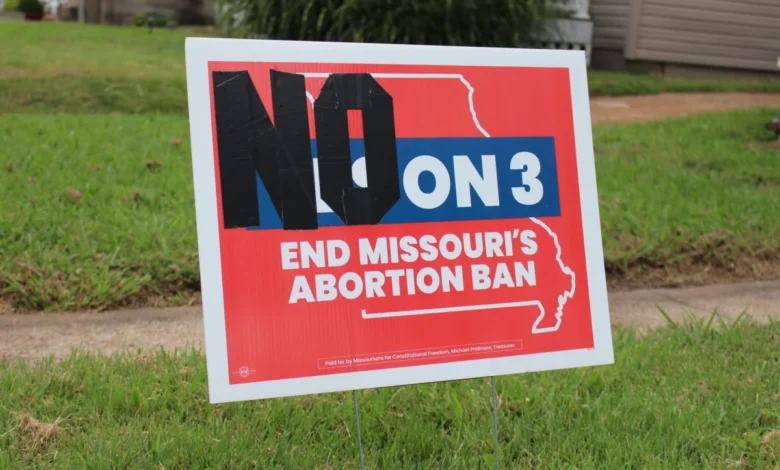
In Maplewood, Missouri, suburban resident Kelly McCoomb recently retrieved a political yard sign from her basement. The sign, a keepsake from the momentous 2024 election cycle, originally urged voters to approve a constitutional amendment protecting abortion access and successfully reversing the state’s near-total ban. McCoomb, who keeps a watchful eye on state politics, anticipated that she would need to display the sign once again.
Her prediction materialized swiftly. Just two years after Missouri voters enshrined abortion protections into their state constitution, the Republican-dominated Missouri General Assembly advanced a counter-measure designed to dismantle those very protections. In a twist of bureaucratic irony, both the 2024 initiative and the current 2026 challenge share the exact same ballot designation: Amendment 3.
The strategic implications, however, are reversed. While a "yes" vote in 2024 successfully established constitutional protections, a "no" vote in the upcoming election is required to maintain those existing safeguards. Recognizing the confusion this creates for the electorate, McCoomb ingeniously altered her original sign, using black duct tape to cover the word "YES" and replacing it with "NO" before placing it back on her front lawn.
The proposed measure backed by Missouri lawmakers aims to repeal the 2024 amendment—which had guaranteed abortion access through fetal viability—and replace it with a stringent statutory ban. While the replacement measure includes narrow exceptions for medical emergencies, fetal anomalies, and pregnancies resulting from rape or incest, the latter exceptions mandate that the procedure must take place within the first 12 weeks of pregnancy.
Missouri’s legislative maneuver is the culmination of decades of incremental restrictions. Following the Dobbs decision in June 2022, Missouri was the first state in the nation to trigger a near-total ban on abortion. However, the operational availability of the procedure had already been severely curtailed over the preceding thirty years through a series of stringent state regulations. These included mandatory 72-hour waiting periods, strict physical specifications for clinical facilities regarding hallway and procedure room dimensions, and requirements that physicians performing abortions maintain local hospital admitting privileges. State health records underscore this systematic reduction: in 2011, approximately 5,772 abortions were performed in Missouri, a figure that plummeted to just 150 procedures by 2021. Even after voters overwhelmingly approved constitutional protections in 2024, bureaucratic and legal hurdles delayed the actual resumption of medication abortions in the state by nearly two years.
A Patchwork Nation: Nevada, Idaho, Virginia, and Utah
The dynamic playing out in Missouri is part of a broader nationwide trend characterized by stark geographic disparities. With federal protections dismantled, the United States has transformed into a patchwork of jurisdictions featuring varying degrees of access, ranging from comprehensive protection to near-total prohibition. This legal fragmentation has also prompted lawmakers in states where abortion remains legal to enact "shield laws," designed to protect in-state medical providers from civil and criminal prosecution initiated by out-of-state authorities.
This persistent legal uncertainty motivated the creation of ballot initiatives in other key states. In Nevada, Nevadans for Reproductive Freedom spearheaded a 2024 ballot measure to enshrine the state’s statutory right to an abortion up to 24 weeks of pregnancy into the state constitution. Denise Lopez, president of the advocacy coalition, noted that the initiative secured robust backing two years ago, capturing 64% of the vote. Because Nevada law mandates that constitutional amendments must be approved by voters in two consecutive general elections to take effect, Nevadans must once again mobilize to pass the measure this November.
While the proposed Nevada amendment does not alter the existing 24-week statutory limit, it significantly raises the political and procedural barrier to any future legislative attempts to restrict access, requiring any subsequent ban to survive approval across two separate statewide elections. Lopez emphasized that voters remain deeply engaged, motivated in part by the restrictive laws taking effect in neighboring states such as Idaho and Utah.
In Idaho, where lawmakers enacted one of the nation’s strictest total bans following the Dobbs decision, a citizen-led ballot measure has officially qualified for the November ballot. Voters there will decide whether to amend state law to explicitly permit abortions up to the point of fetal viability, typically recognized around 24 weeks of gestation. Meanwhile, in Utah, abortion remains accessible up to 18 weeks while ongoing litigation challenges the constitutionality of the state’s statutory ban. Across the country in Virginia, where elective procedures are currently permitted through the second trimester up to 28 weeks, voters will decide whether to solidify these rights by embedding them directly into the state constitution.
Voter Confusion and Campaigning Challenges
The repetition of statewide referendums has injected an unprecedented level of administrative and voter confusion into the electoral process. Margot Riphagen-Dunn, president and CEO of Planned Parenthood Great Rivers, argued that the whiplash of repeated voting cycles is not accidental.
"Chaos is kind of the point here," Riphagen-Dunn stated, emphasizing that perpetual legal instability acts as a functional deterrent that complicates healthcare delivery and clouds clinical operations.
Paradoxically, the administrative confusion has also complicated messaging for anti-abortion advocacy groups attempting to mobilize their own base. Reagan Barklage, vice president of Students for Life of America and treasurer for the Missouri Students for Life Ballot Committee, acknowledged the messaging hurdles created by the procedural timeline.
"I think it’s unfortunate," Barklage noted. "People need to be very clear on what they’re voting for."
Barklage described instances while canvassing where she and other volunteers had to actively correct anti-abortion voters, reminding them that to support the legislative rollback of abortion rights this cycle, they must cast a "yes" vote on Amendment 3—an inversion of the directional logic required during the 2024 cycle. "It is crazy that it ended up being even the same number," Barklage added. "I do not think that was intentional, but we’ve got to deal with what we’ve got. I hope the pro-choicers kept their yard signs from last time."
Broader Implications and Future Outlook
Legal scholars and policy experts suggest that the ongoing wave of state-level referendums points toward a deepening systemic friction within American federalism. Kristi Hamrick, vice president of media and policy for Students for Life Action, warned that the current trajectory is unsustainable.
"I just think there’s a constitutional crisis that’s coming," Hamrick said, questioning the long-term viability of a fractured legal framework. "Can you have 50 state standards on whether or not a human being is a human being? Can you have 50 state standards on whether human beings have legal protection?"
Conversely, reproductive rights advocates argue that these ballot measures represent a vital exercise of direct democracy, allowing citizens to reclaim bodily autonomy and establish protections that reflect the broader will of the public, even in states where legislative bodies have moved in the opposite direction.
As the November general election approaches, the outcomes in Missouri, Nevada, Idaho, and Virginia will not only dictate the immediate legal realities for healthcare providers and patients within those borders, but they will also serve as a critical national barometer for the future of reproductive rights in post-Dobbs America. Whether through duct-taped yard signs in suburban neighborhoods or high-stakes multi-million-dollar campaign advertisements, the debate over abortion access remains one of the most volatile and defining issues in contemporary politics.
Related posts: