Twenty-Five Years After the Anthrax Attacks: Lessons in Biosecurity and the Fragility of Public Health Preparedness

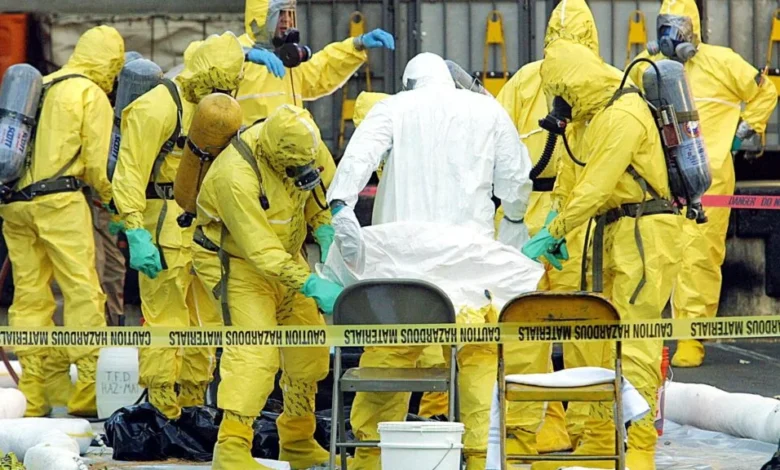
Twenty-five years have passed since the United States faced a harrowing challenge that fundamentally altered the nation’s approach to public health and national security. In the immediate, fragile aftermath of the September 11, 2001, terrorist attacks, a secondary, insidious threat emerged: the mailing of anthrax-laden envelopes to media outlets and congressional offices. This deliberate act of bioterrorism resulted in 22 confirmed cases of anthrax disease, five tragic deaths, and a profound, long-lasting disruption to the American way of life. As the nation reflects on this quarter-century anniversary, the lessons learned from the 2001 response provide a critical blueprint for managing the modern, increasingly complex landscape of biological threats, ranging from emerging natural pandemics to the risks posed by artificially generated pathogens.
A Chronology of the 2001 Anthrax Attacks
The anthrax crisis began in early October 2001, though retrospectively, experts identified that the initial exposure likely occurred in mid-September. The first confirmed case involved a photo editor at American Media Incorporated (AMI) in Florida. Initially, the illness was an enigma to local clinicians; it was only through the vigilance of an astute physician who performed a spinal tap that the presence of Bacillus anthracis was identified.
The timeline of the attacks was marked by two distinct waves, each characterized by different formulations of the lethal agent. The first mailing, postmarked September 18, 2001, contained a coarser, clumped powder—informally referred to by investigators as "crunchy" anthrax. These letters were primarily directed at media organizations. The second mailing, postmarked October 9, 2001, contained a much finer, more weaponized powder designed to be easily aerosolized. This batch targeted high-profile government offices, including the Senate Hart Office Building, and inadvertently compromised the mail-processing infrastructure, leading to severe inhalational anthrax among postal workers who had no direct link to the intended targets.
The Epidemiological Investigation and Technical Challenges
At the time, the Centers for Disease Control and Prevention (CDC) had only recently established its Laboratory Response Network (LRN). The emergence of the anthrax cases acted as a trial by fire for this nascent infrastructure. Researchers and epidemiologists, working from a makeshift Emergency Operations Center (EOC) set up in a CDC auditorium, faced a clinical picture that defied existing medical literature.
The investigation utilized molecular testing—a technology that was in its relative infancy regarding widespread field application—to confirm that the isolates recovered from victims, the letters, and the environment were genetically indistinguishable. This confirmed a single, deliberate source. The data revealed a sobering reality: the formulation of the pathogen mattered immensely. The "fine powder" found in the October mailing resulted in higher rates of inhalational disease, which carries a significantly higher mortality rate compared to the cutaneous (skin) infections observed in the initial, "crunchy" powder exposure cases.
Crucially, the investigation shattered the prevailing academic assumption that the risk of re-aerosolization of deposited spores was negligible. Prior guidance suggested that decontamination efforts should be limited to the immediate vicinity of an opened envelope. However, the subsequent infections of postal workers—who were exposed to the aerosolized spores as letters moved through high-speed sorting machinery—forced a total revision of public health protocols regarding environmental exposure and prophylaxis.
The Scale of Response and Economic Impact
The logistical response to the anthrax attacks was unprecedented. To mitigate the risk of further infection, approximately 32,000 individuals were placed on antimicrobial prophylaxis. The mobilization of this massive medical effort prevented additional fatalities but underscored the immense financial and societal cost of a biological event. Beyond the medical response, the economic impact reached into the billions of dollars, encompassing the total shutdown of congressional offices, the decontamination of the Brentwood postal facility, and the psychological toll of a nation already reeling from the collapse of the Twin Towers.
Shifting the Paradigm: Then vs. Now
Two and a half decades later, the biological security landscape has been transformed by technology. Today, mail screening protocols are significantly more rigorous, and the volumes of physical mail have decreased, reducing the surface area for such attacks. Furthermore, the implementation of "select agent" regulations has created a more robust oversight framework for the handling and research of dangerous pathogens.
However, these institutional gains are increasingly offset by systemic vulnerabilities. Recent reports from the Center for Strategic and International Studies (CSIS) and the Bipartisan Commission on Biodefense have issued stark warnings. The modern threat environment is no longer limited to traditional actors or state-sponsored programs; the democratization of biotechnology and the rapid advancement of artificial intelligence have fundamentally altered the calculus. AI, in particular, has the potential to lower the barrier to entry for the development of biothreat agents, allowing for the design of pathogens that could bypass current detection or immunization frameworks.
The Current State of Public Health Readiness
Despite the lessons of 2001, there is growing concern regarding the resilience of the nation’s biodefense infrastructure. Recent years have seen a contraction in civilian and military biodefense funding. The CDC, which served as the cornerstone of the 2001 response, is currently facing significant staffing challenges. Reports indicate that the agency’s covered civilian staff levels have declined by roughly 28% compared to 2024 levels. This loss of subject matter expertise and scientific leadership creates a "brain drain" that directly compromises the ability to respond to high-consequence outbreaks.
Furthermore, the integration between federal authorities and state/local governments—a vital component of the 2001 success—appears increasingly strained. The effective response to a biological event requires independent, evidence-based decision-making. Observers have noted that a culture which discourages internal dissent or ignores scientific consensus risks repeating the errors of the past. If the leadership within health agencies is unable to facilitate honest, science-driven evaluation, the speed of course correction during an unfolding crisis will inevitably suffer.
Implications for Future Policy
The specter of an intentional biological release remains a low-probability, high-impact event that necessitates constant vigilance. The current public health environment, characterized by frequent outbreaks of measles, hantavirus, Ebola, and other emerging infectious diseases, serves as a stress test for systems that are already overstretched.
The path forward requires a three-pronged commitment:
- Integrated Detection and Response: Technical detection must be seamlessly linked to political and bureaucratic action. A signal is useless if it is not acted upon with urgency and coordination.
- Dynamic Preparedness: Policies must be built on the assumption that initial theories about an outbreak may be incorrect. A "culture of uncertainty" that remains open to real-time scientific adjustments is the only way to minimize mortality in the early stages of an unknown threat.
- Institutional Longevity: Technology, while essential, cannot replace the human capital of experienced responders. Investing in the recruitment and retention of scientific staff at federal agencies is not merely a budgetary line item; it is a fundamental pillar of national security.
Twenty-five years ago, the anthrax attacks taught the United States that the first signal of a biological event is rarely the whole story. The resilience of the nation depends not on static defenses, but on the ability of its institutions to learn, adapt, and act under pressure. As we look to the next quarter-century, the necessity of reinforcing the human and institutional networks of public health has never been more urgent. The 2001 crisis was a wake-up call; the current era requires us to ensure that those who are tasked with protecting the public have the resources, the autonomy, and the expertise to face a future where the biological threat landscape is evolving faster than ever before.
Related posts: