The Hidden Cost of the Digital Casino: How Sportsbooks Engineered a Crisis of Compulsive Play

It was late May, the French Open was in full swing, and DraftKings was aggressively steering its users toward the betting window. A promotion notification pinged on a smartphone, promising to "BOOST" profits for those wagering on the clay courts of Paris. It was the latest in a relentless stream of digital nudges designed to keep the user engaged in a two-hour betting spree that spanned 64 individual wagers, all executed from an office chair in New York City.

This wasn’t an isolated incident; it was part of a ten-week investigation into the mechanics of modern online sports betting. By adopting the behavioral patterns of a compulsive gambler—chasing losses, increasing wager sizes, and toggling between sports and high-frequency casino games—the experiment sought to determine if the "responsible gaming" guardrails touted by major operators were effective, or if they were merely cosmetic features in a business model predicated on high-frequency churn.
The Anatomy of an Engineered Spiral
The surge in sports betting following the 2018 Supreme Court ruling, which allowed states to legalize the practice, has resulted in over $600 billion in wagers placed nationwide. With sports betting now legal in 39 states and Washington, D.C., the industry has grown into a titan of the digital economy. However, this growth has brought with it significant public health concerns. According to recent data from the Siena Research Institute, approximately one-quarter of active sportsbook account holders report that their gambling losses have hindered their ability to meet essential financial obligations.

For the purpose of this investigation, an account was established with DraftKings under a real name, with the reporter’s professional background fully disclosed. Over the course of 10 weeks, the account mimicked the habits of a "degen"—industry slang for a degenerate gambler. The trajectory was swift: what began as modest, recreational wagers on the NBA playoffs quickly escalated into thousands of dollars in losses, punctuated by frantic attempts to recoup money through live, micro-betting markets on obscure sports like Czech table tennis.
The Paradox of Responsible Gaming
DraftKings, like its competitors, frequently emphasizes its "responsible gaming" suite of tools. These include deposit limits, time-based reality checks, and the ability to self-exclude. Yet, these tools often function as an opt-in system that relies on the user to self-regulate, even as the platform employs sophisticated machine learning to identify and retain high-loss customers.

When the experimental account reached $4,500 in losses within a 24-hour period, an in-app prompt appeared: "Take a loss? Now take a beat." While the sentiment suggested concern, the reality was that within 30 minutes of the prompt, four promotional alerts were sent to the device, urging the user back to the betting interface.
This "wink-and-a-nod" dynamic is at the heart of current regulatory friction. While companies like DraftKings and FanDuel maintain that their systems are designed to identify red flags, the threshold for manual intervention remains opaque. Lori Kalani, DraftKings’ chief responsible gaming officer, stated that the company monitors accounts and will proactively close them if "too many red flags" are raised. However, when asked for specific data on how often such closures occur, the company declined to provide figures, citing proprietary internal protocols.

The VIP Incentive Structure
One of the most concerning findings of the investigation was the role of VIP loyalty programs. Rather than discouraging heavy betting, these programs often serve to gamify financial losses. By climbing the tiers—from bronze to silver, gold, and ultimately Onyx—users earn credits, "DK Dollars," and exclusive perks such as event tickets or personalized messages from professional athletes.
The investigation found that the incentive structure implicitly rewards reckless behavior. As a user increases their volume and frequency of wagers—particularly on high-margin, low-probability bets like parlays—they accumulate status points faster. During the experiment, the account was invited into the "VIP Showcase" shortly after a particularly heavy night of loss-chasing. This transition granted the user a personal concierge, who could be messaged to request deposit matches, effectively providing the user with more house money to continue the cycle of betting.

The Mechanics of "Dark Patterns"
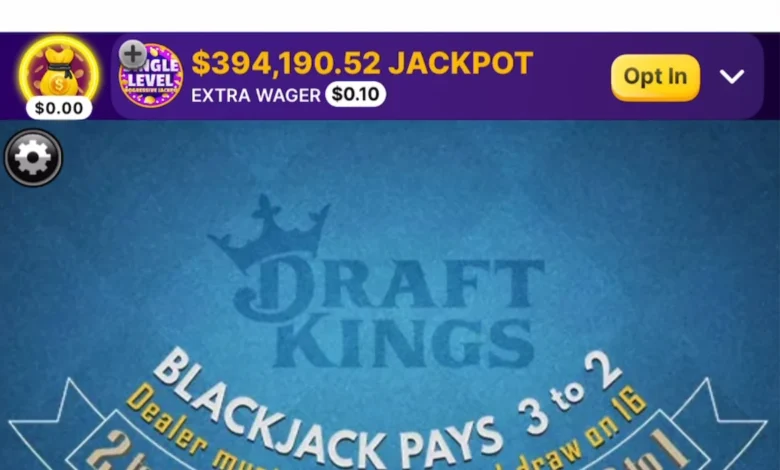
The design of the apps themselves facilitates addictive behavior through what computer scientists term "dark patterns." These are user interface choices engineered to make the betting process as frictionless as possible. For instance, the "Double Down" button in blackjack allows a user to instantly increase their exposure during a hand, mirroring the rapid, trance-like experience of a physical slot machine.
Furthermore, the cross-promotion of iGaming—casino games like roulette and blackjack—within the sports betting app creates a continuous loop of consumption. In states where iGaming is legal, such as New Jersey, the app aggressively suggests "sports-themed" blackjack tables to users who have just placed a bet on a baseball or basketball game. This seamless integration ensures that when a sports season ends or a user grows tired of waiting for a game to conclude, the digital casino is only one click away.

Industry and Regulatory Implications
Critics and public health advocates argue that the industry has shifted the burden of safety onto the consumer, creating a system where a user must possess a high degree of "wherewithal" to police themselves against a product designed to exploit human psychology. Brianne Doura-Schawohl, a prominent gambling reform advocate, suggests that the current model is fundamentally flawed because it expects a profit-driven entity to act against its own financial interests.
The financial stakes are immense. Research from the University of Connecticut indicates that a mere 1.8% of problem gamblers account for over half of total sports betting revenue in the state. This demographic is, by definition, the most valuable to the operators. The tension between this revenue stream and the public mandate for consumer protection has sparked a wave of legislative proposals in states like Massachusetts and Colorado, where lawmakers are exploring stricter mandates on advertising, deposit limits, and the availability of high-risk products like micro-bets.

The Myth of the "Hot Streak"
A critical turning point in the investigation occurred when the account experienced a brief period of variance, or "luck," during the New York Knicks’ playoff run. The account, previously deep in the red, suddenly saw a significant influx of capital. The psychological impact was immediate and profound: it induced a false sense of skill and confidence.
Expert consultants, including recovering gambling addicts and researchers in the field of behavioral psychology, warned that such moments are often the most dangerous. A "win" acts as a powerful reinforcer, validating the initial decision to gamble and making it more difficult for the individual to step away. As the experts noted, "all wins are just future losses." True to form, the experimental account’s success was fleeting, and the subsequent return to a losing trend was swift, once again facilitated by the app’s automated notifications and deposit prompts.

A Call for Structural Reform
As the experiment concluded, the final interaction with the VIP representative was the most telling. Despite 10 weeks of clear, escalating red flags—including constant loss-chasing, deep deposits, and inquiries about gambling limits—the platform remained open to the user. When asked about a hypothetical $25,000 deposit, the VIP host offered to see what could be done to "add something in," demonstrating that even after a full cycle of high-risk behavior, the appetite for the customer’s capital remained unabated.
The findings suggest that the current regulatory landscape, which leaves the details of "problem-gaming plans" to the companies themselves, is insufficient. Without standardized, aggressive protections—such as mandatory opt-out limits rather than opt-in tools—the digital casino environment will continue to prioritize user retention over user well-being. As the industry continues to lobby against restrictive legislation, the evidence from this ten-week trial indicates that for many, the cost of participation is not just financial, but a systemic, engineered erosion of the user’s ability to remain in control.
Related posts: