Heidi Overton Faces Senate Scrutiny Over FDA Policy Future Amid Pressure From Trump and Kennedy Administration


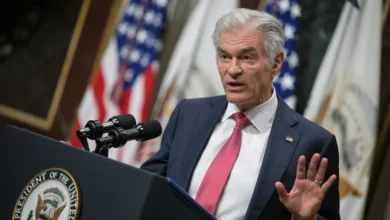
WASHINGTON — Heidi Overton, the physician and former White House aide nominated by President Trump to lead the Food and Drug Administration, underwent a rigorous two-hour confirmation hearing before the Senate Health, Education, Labor, and Pensions (HELP) Committee on Wednesday. The proceedings, which served as a litmus test for the nominee’s independence, focused heavily on how she would navigate the intersection of scientific regulatory integrity and the politically charged health agenda championed by the incoming administration and Health and Human Services Secretary-designate Robert F. Kennedy Jr.
The hearing represented a critical juncture for the FDA, an agency that has increasingly become a focal point for debates regarding public health mandates, pharmaceutical pricing, and reproductive health access. As a preventive medicine physician with deep roots in rural New Mexico and a career trajectory shaped by service in both of Trump’s presidential terms, Overton occupies a unique position. She is viewed by some as a bridge between the institutional stability of the FDA and the disruptive, "Make America Healthy Again" philosophy espoused by the administration.
The Art of the Non-Answer
Throughout the hearing, Overton maintained a disciplined, if somewhat opaque, rhetorical strategy. When pressed by senators on contentious issues—ranging from the potential revocation of mifepristone approvals to the introduction of more stringent vetting for childhood vaccine schedules—Overton consistently steered her responses back to existing agency guidance.
"My commitment is to the rigorous application of science and the statutory mandates that govern this agency," Overton stated early in the session, effectively using the FDA’s own rulebooks as a shield against partisan inquiries.
This tactical avoidance did not go unnoticed. Senator Chris Murphy (D-Conn.) expressed a sentiment echoed by several of his colleagues on the dais, noting, "You’ve done a pretty good job of avoiding answering questions so far." The frustration among committee members highlighted the central tension of the nomination: Senators are seeking a guarantee that the FDA will remain insulated from political pressure, yet Overton’s nomination is explicitly tied to a vision of reform that suggests the status quo is precisely what the administration intends to challenge.
Contextualizing the Regulatory Landscape
The stakes for the FDA commissioner role have rarely been higher. The agency is currently managing an unprecedented workload, overseeing the rapid development of novel gene therapies, addressing supply chain fragility in essential medicines, and responding to public skepticism surrounding vaccine efficacy.
The political backdrop is equally volatile. Robert F. Kennedy Jr., a vocal skeptic of current federal health guidelines, has signaled a desire for a wholesale re-evaluation of how the FDA approves drugs and monitors safety. For Overton, the challenge lies in balancing these demands for reform against the potential for market instability. If the FDA were to abruptly change its stance on longstanding drug approvals or vaccine schedules, the pharmaceutical industry—a pillar of the U.S. economy—could face years of litigation and reduced investor confidence.
Historical data suggests that the FDA’s credibility is its most valuable asset. According to recent public health surveys, trust in federal health agencies dropped significantly following the COVID-19 pandemic. A pivot toward a more politicized review process could, according to policy analysts, further erode the agency’s standing with both medical professionals and the public, potentially complicating the rollout of future life-saving interventions.

Chronology of the Nomination Process
The path to this hearing was accelerated by the administration’s desire to secure leadership across the executive branch early in the term.
- September 2026: Following the formal resignation of the previous commissioner, President Trump announces the nomination of Dr. Heidi Overton.
- Early October 2026: The Senate HELP committee begins its vetting process, reviewing thousands of pages of documents related to Overton’s tenure in the White House and her private medical practice.
- Late October 2026: Initial meetings between Overton and key committee senators reveal a divide in expectations regarding her autonomy from the HHS Secretary.
- Today: The confirmation hearing provides the first public look at how the nominee intends to navigate the competing interests of Congress and the White House.
Industry and Public Interest Reactions
The medical community has been divided in its response to the nomination. The American Medical Association (AMA) has issued statements urging the Senate to prioritize "evidence-based decision-making" and "scientific independence" in the confirmation process, without explicitly endorsing or opposing Overton. Meanwhile, grassroots organizations focused on reproductive rights have expressed alarm, fearing that Overton’s lack of a clear commitment to protecting mifepristone access could lead to a backdoor restriction of the drug via administrative rule changes.
Conversely, some advocates for drug-pricing reform and those critical of the "revolving door" between the pharmaceutical industry and the FDA have suggested that a change in leadership is overdue. They argue that if Overton is willing to challenge the traditional industry-friendly culture of the FDA, the resulting transparency could be a net positive, regardless of the political friction it generates.
The Path Forward: Implications for Policy
The implications of the committee’s eventual vote extend far beyond the leadership of one agency. If confirmed, Overton will be tasked with navigating a series of high-profile challenges:
- Mifepristone and Reproductive Health: The FDA’s approval of abortion medication remains a legal and political flashpoint. Any attempt to alter this status through administrative review would trigger immediate court challenges and potential legislative retaliation from opposition parties.
- Vaccine Oversight: The administration has hinted at a "re-evaluation" of pediatric vaccine schedules. Overton will need to decide whether to support these reviews—which could spark significant public health debate—or defend the existing consensus supported by the CDC and the American Academy of Pediatrics.
- Drug Pricing and Supply Chains: With the U.S. dependent on China and India for a significant percentage of active pharmaceutical ingredients (APIs), the FDA is under pressure to "reshore" production. Overton’s ability to coordinate with trade officials while maintaining drug availability will be a key performance metric.
Analysis: A Delicate Balancing Act
The hearing revealed that Overton is a nominee who favors a methodical, risk-averse approach to public communication. By anchoring her responses in existing agency procedures, she signaled to the scientific community that she is not interested in radical, overnight changes. However, by refusing to explicitly reject the policy goals of her superiors, she also signaled to the White House that she is a loyal executive who understands the administration’s mandate.
This duality may satisfy the committee long enough to secure a confirmation vote, but it likely defers the true test of her leadership to her first 100 days in office. Once in the role, the "Overton era" at the FDA will be defined by whether she views her duty as a gatekeeper of scientific tradition or an agent of political change.
As the Senate prepares for a final vote, the pressure will only mount. Senators will continue to demand clarity, while the administration will expect action. For the nominee, the coming weeks will require a transformation from a cautious, career-driven physician into a decisive leader capable of maintaining the integrity of one of the world’s most powerful regulatory bodies in an era of profound institutional distrust.
The committee’s decision on whether to send her nomination to the full Senate will likely come down to a narrow assessment of her willingness to stand up to political interference. Should she be confirmed, the FDA will enter a period of intense scrutiny, with every approval, rejection, and policy shift analyzed for signs of political influence. For now, the Capitol waits, and the scientific community watches with a mix of anticipation and apprehension, knowing that the outcome of this confirmation will shape the health and medical landscape of the nation for years to come.
Related posts: