The Battle for the Soul of the Smithsonian: An Institution Caught in the Crosshairs of American Political Polarization

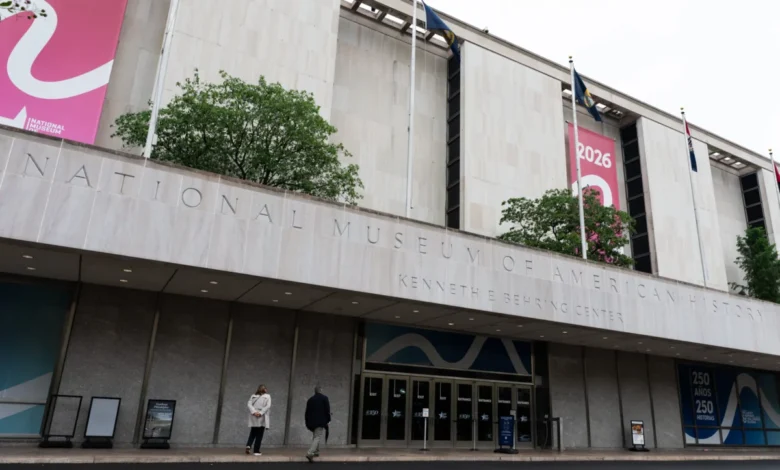
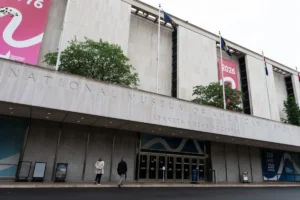
In November 2021, the Smithsonian’s National Museum of American History unveiled an exhibit titled The Electric Dr. Franklin, an exploration of Benjamin Franklin’s seminal contributions to electrical science. While the exhibit celebrated scientific ingenuity, it also introduced a candid assessment of the Founding Father’s personal history, noting that his accomplishments were partially facilitated by enslaved people in his household. The exhibit went further, positing that Franklin may have utilized these enslaved individuals in his electrical experiments—a claim that, while historically speculative, touched a nerve in the increasingly volatile landscape of American cultural politics. By the time the exhibit closed in 2025, it had become a focal point of a federal investigation, symbolizing a deeper, systemic rift over how the nation’s history should be curated, interpreted, and presented to the public.
This controversy is not an isolated incident but the culmination of years of mounting tension regarding the role of the Smithsonian Institution. As the world’s largest museum, education, and research complex, the Smithsonian has long operated under a bipartisan umbrella, serving as the custodian of American heritage for approximately 15 million visitors annually. However, that institutional neutrality has been severely strained as the institution finds itself at the epicenter of a national debate regarding ideological capture, historical accuracy, and the definition of patriotism.

A Chronology of Escalation
The friction between the Smithsonian and federal oversight reached a boiling point in March 2025, when President Donald Trump signed an executive order characterizing the institution as a victim of divisive, race-centered ideology. This administrative mandate set the stage for a series of aggressive interventions. On July 4, 2026, coinciding with the nation’s semiquincentennial celebrations, the White House released a 162-page report titled Saving America’s Story. The document offered a blistering critique, alleging that the Smithsonian had abandoned its mission of straightforward historical education in favor of a political agenda that sought to reframe the American narrative through the lens of identity politics.
The political fallout was immediate. Throughout July 2026, the House Oversight Subcommittee on Delivering on Government Efficiency and the House Administration Committee held high-profile hearings. Lawmakers interrogated Smithsonian leadership, including director Anthea Hartig, over specific exhibit choices that critics deemed inappropriate or radical. These included displays referencing gender identity in children’s literature and artifacts such as a chrome-and-rubber harness associated with subculture sexual practices.
The pressure proved unsustainable for the institution’s leadership. On September 8, 2026, Lonnie Bunch, the first African American to serve as Secretary of the Smithsonian, announced his resignation at age 73. His departure marked a significant turning point, signaling the vulnerability of the Smithsonian’s independence in an era of heightened executive influence.

The Problem of Narrative Coherence
The current crisis is deeply rooted in the institution’s long-standing struggle to define its core mission. Opened in 1964 as the National Museum of History and Technology, the institution was tasked with showcasing American progress. However, as it transitioned into the National Museum of American History in 1980, the lack of a singular, unified narrative strategy left it exposed to shifting academic and political trends.
Critics, including conservative commentators and former board members, have long argued that the museum lacks a cohesive strategy. In 1999, critics lamented that the museum had drifted away from the nation’s "defining moments" and prominent figures in favor of what they described as a "multicultural grievance" narrative. A 2002 blue-ribbon commission, led by former White House aide Richard Darman, recommended a more balanced, chronological approach that would celebrate the nation’s achievements while honestly addressing its failures.
Despite these recommendations, the museum struggled to find a balance. Curatorial focus shifted toward episodic, thematic exhibits—such as "American Enterprise" and "Many Voices, One Nation"—which, while academically rigorous, lacked the overarching narrative thread that many visitors and lawmakers expected. This fragmentation provided a ready-made target for critics who argue that the museum has lost its ability to tell a unifying story of America.

Institutional Shifts and the "Woke" Accusation
The institution’s pivot in the wake of the 2020 pandemic and the social unrest following the murder of George Floyd further accelerated the divide. Internal records from the Board of Regents indicate that Secretary Bunch and other senior leaders prioritized initiatives focused on diversity, equity, access, and inclusion (DEAI). These included the launch of the "Smithsonian Cares" digital resource and discussions regarding the creation of a Chief Diversity Officer role.
While supporters view these changes as a necessary modernization to ensure the museum reflects the diversity of the American experience, opponents view them as the infiltration of "woke" ideology. This perception was reinforced by the adoption of training materials like the "Museums as a Site for Social Action Toolkit," which frames traditional museum practices as complicit in systemic racism and colonialism. For the current administration, these documents serve as evidence that the Smithsonian has become a hotbed for ideological indoctrination rather than a source of objective historical knowledge.
The View from the Hill
The hearings in late July 2026 underscored the intensity of this ideological battle. Republican representatives were uncompromising in their questioning, focusing on the appropriateness of specific artifacts and the language used in exhibit signage. Representative Tim Burchett’s questioning of Anthea Hartig regarding land acknowledgments and the presence of sexualized objects in exhibits highlighted the stark disconnect between the museum’s curatorial choices and the expectations of the legislative branch.

Conversely, Democratic lawmakers defended the institution with equal fervor. Representative Kweisi Mfume’s impassioned declaration to protect the museum against those he claimed were seeking to "destroy" it exemplified the partisan deadlock. The atmosphere in the committee rooms was described by observers as "decorum-less," a far cry from the historically quiet, bipartisan oversight the Smithsonian enjoyed for decades.
Implications and Future Outlook
The implications of this conflict extend far beyond the walls of the National Mall. The Smithsonian is not merely a collection of museums; it is a symbol of American identity. With 62% of its funding derived from federal appropriations—amounting to over $1 billion annually—the threat of budget cuts is a potent tool for political leverage.
The current vacancy on the Board of Regents represents a critical juncture. With three citizen slots currently empty and three more to follow, the composition of the board—which includes the Chief Justice of the Supreme Court and several members of Congress—will dictate the institution’s trajectory. The selection of a new Secretary of the Smithsonian will likely be the most consequential administrative decision in the institution’s history, as it will signal whether the Smithsonian will attempt to return to a traditional, consensus-based model or continue to navigate the turbulent waters of modern identity politics.

Ultimately, the battle over the Smithsonian is a microcosm of the broader American struggle over how to reconcile a complex, often painful past with the desire for a unified national identity. As the museum faces this existential reckoning, it remains caught between the demands of historical revisionism and the imperative of national cohesion. Whether the institution can regain its standing as a trusted, non-partisan guardian of American history remains an open question—one that will likely be decided by the degree to which the American public chooses to engage in the debate over who gets to tell the story of the nation.
Related posts: