The Shadow of Influence: How a Defense Contractor’s Pay-to-Play Scheme Exposed the Fragility of Congressional Ethics


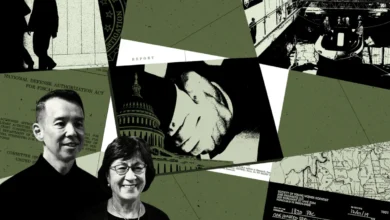
In the waning months of 2019, at a nondescript Corner Bakery in Washington, D.C., a high-stakes negotiation took place that would eventually expose the mechanisms of modern political influence. Scott Reed, the head of the 1820 PAC—a super PAC supporting Sen. Susan Collins—sat down with executives from Navatek, a Hawaiian defense contractor. The meeting, which aimed to secure a $500,000 contribution for the Republican incumbent’s reelection, occurred at a time when Collins faced the most precarious political climate of her two-decade career. Plagued by President Donald Trump’s low approval ratings and trailing her Democratic challenger in fundraising, the Maine senator’s team was aggressively seeking financial lifelines.
The meeting between Reed and Navatek executives, including CEO Martin Kao, was not merely a fundraising endeavor; it was, according to federal investigators, a cornerstone of a sprawling, multi-state pay-to-play operation. While federal law strictly prohibits government contractors from making direct political contributions, the arrangement allegedly involved funneling money through a shell company to circumvent these statutes. In exchange for this financial support, Kao sought more than just goodwill; he allegedly demanded the promise of tens of millions of dollars in future Navy research contracts.
The Rise and Fall of the Navatek Method
Navatek, founded in 1978 by engineer Steven Loui, was originally a boutique firm focused on experimental maritime technology. For years, the company relied on the influence of the late Sen. Daniel Inouye, the legendary Hawaii lawmaker who mastered the art of the congressional "earmark." These budget line items allowed lawmakers to direct funds to specific companies, bypassing competitive bidding processes. Following Inouye’s death in 2012 and the subsequent congressional crackdown on earmarks, Navatek faced an existential crisis.

Martin Kao, who joined the company in 2008 and later acquired it, implemented a new strategy to replace the lost earmarks. Recognizing that while direct earmarks were largely banned, the appropriations process remained opaque and vulnerable to influence. Kao and his team identified a "method" to secure federal dollars: they would partner with universities in the home states of powerful members of the House and Senate Appropriations Committees. By blending research proposals with large campaign donations and the services of high-priced lobbyists, Navatek successfully inserted language into the massive annual defense budget that favored their specific projects.
Internal documents and emails reviewed by federal investigators reveal a systematic approach to influence. Navatek maintained spreadsheets detailing the "specialty" of various lobbyists, assigning them to target specific lawmakers. In many instances, the company’s internal priorities were copied, word for word, into Senate funding reports. By 2020, Navatek had grown from a $10 million firm into a $40 million enterprise with operations in half a dozen states.
A Chronology of Corruption
The intersection of Navatek’s financial growth and political involvement follows a clear, documentable timeline:
- 2018: Navatek initiates contact with Sen. Susan Collins’ office. Kao makes initial campaign contributions. Soon after, Collins includes $8 million for a Navatek boat hull project in the defense budget.
- August 2019: Collins attends a publicity event at Navatek’s Maine headquarters. Kao orchestrates a $40,000 donation drive among his extended family to circumvent individual contribution caps.
- Late 2019: The "Corner Bakery" meeting occurs. Kao, seeking to bolster Collins’ reelection efforts, agrees to provide a $150,000 donation to the 1820 PAC through a shell company, the "Society of Young Women Scientist and Engineers."
- February 2020: Following the donation, Collins’ office helps secure $32 million in naval contracts for Navatek.
- 2020–2022: The Campaign Legal Center flags the shell company donation. Federal authorities launch a probe. Kao is indicted for fraud and illegal campaign contributions.
- 2022–2024: Kao pleads guilty and begins a series of extensive, detailed interviews with FBI agents, providing a roadmap of his influence-peddling operation.
- 2025–2026: Political shifts in the Department of Justice, following the return of the Trump administration, lead to the dismantling of the specialized anti-corruption units that were investigating the case.
Data, Influence, and the "Valley of Death"
The effectiveness of the Navatek strategy was rooted in the military’s "valley of death"—a bureaucratic phase where research projects often languish without being transitioned into actual production. Navatek’s research, while appearing sophisticated in PowerPoint presentations, often failed to result in deployable military hardware. One engineer noted that the firm’s primary deliverable was often nothing more than a white paper or a set of slides.

Despite the lack of tangible output, the financial returns were substantial. In the latter half of 2019 alone, Navatek funneled over $500,000 to a roster of five different lobbying firms. This spending was viewed as a necessary cost of doing business, with one former executive, Eric Schiff, remarking, "Oh my God, all of it is for sale."
Official Responses and Legal Wrangling
The office of Sen. Susan Collins has consistently denied allegations of a quid pro quo arrangement. Annie Clark, deputy chief of staff, stated that the senator’s office "vigorously" denies any bribery or pay-to-play conduct. Clark emphasized that the campaign was not privy to the discussions between Kao and the 1820 PAC and noted that the campaign eventually disgorged the illegal contributions once they were identified.
"The fact that the FBI and the Department of Justice thoroughly examined the Navatek matter demonstrates this," Clark wrote in an email. "These issues were resolved in 2021."
Conversely, the FBI’s perspective shifted significantly as the investigation progressed. Initially focused on the shell company ruse, the investigation expanded under agents Michelle Ball and Kevin Gounaud, who viewed the case as a potential breakthrough in understanding systemic congressional corruption. However, the subsequent purge of these agents by the Trump administration has left the investigation in a state of suspended animation.

The Broader Impact: The Death of Accountability
The collapse of the Navatek investigation highlights a critical vulnerability in American governance. The Supreme Court’s narrowing of the definition of bribery has made it increasingly difficult for federal prosecutors to secure convictions against elected officials, requiring an exceptionally high bar of "extraordinary proof" of a specific, explicit exchange.
Furthermore, the institutional destruction of the FBI’s elite public corruption units, such as CR-15, suggests a broader retreat from federal oversight of congressional ethics. Former Justice Department officials argue that the current administration’s shift has effectively ended, or at least neutered, the government’s ability to combat influence-peddling.
Kao, now serving an 87-month sentence at a federal prison camp, provided the government with a 50-page document identifying dozens of lobbyists and congressional staffers he claimed were complicit in his schemes. While his credibility as a convicted felon was a point of contention for prosecutors, the corroborating evidence—including emails, financial records, and lobbying logs—suggests that his account was not merely the fabrication of a desperate man.
As of late 2026, the investigation into the broader "Navatek method" remains largely shuttered. The case stands as a stark reminder of how easily the mechanisms of federal appropriations can be weaponized by those with the capital to buy influence. Whether or not individual lawmakers crossed the legal threshold into criminal bribery, the case serves as a diagnostic of a system where the "most powerful committees" in the Senate are often the most susceptible to the influence of private interests. For now, the "road map" provided by Kao remains, for the most part, a roadmap to nowhere, as the mechanisms of justice have been redirected away from the halls of Congress.