Federal Firefighting Forces Pushed to the Breaking Point as Extreme Wildfire Season Exposes Critical Resource Gaps

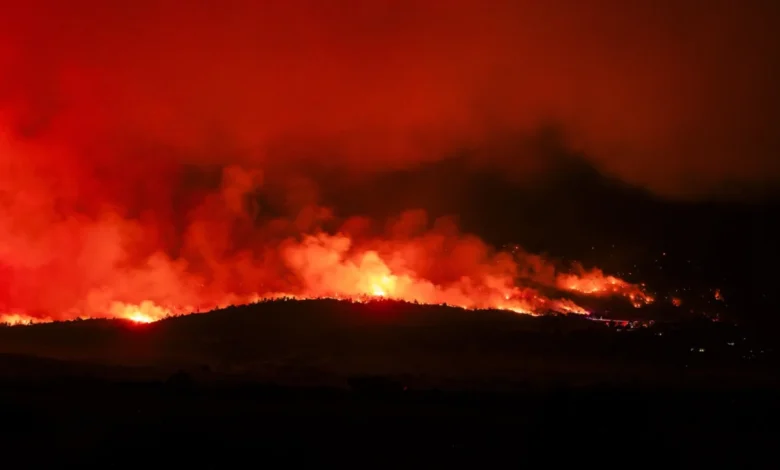
The 2026 wildfire season has emerged as a watershed moment for the United States, revealing a widening chasm between the aggressive suppression mandates of the federal government and the reality of an exhausted, understaffed, and overstretched firefighting workforce. As of mid-September, more than 54,400 fires have scorched upwards of 8.4 million acres across the American West, a figure representing 149 percent of the 10-year average. Amidst this catastrophic environmental landscape, federal firefighters—speaking under the veil of anonymity—report that they are being pushed beyond human limits, with fatal consequences.
The current crisis is not merely a result of climate-driven heat and drought; it is a manifestation of systemic failures in resource management and a top-down insistence on "full suppression" tactics that veteran firefighters argue are increasingly untenable.
A Chronology of Escalation
The 2026 season was marked by early, intense activity that signaled a record-breaking trajectory. By April, federal crews were already deployed on near-nonstop assignments, leaving little time for the recovery necessary to maintain high-level situational awareness. The stress on the system became undeniable by mid-summer, as the country hit "Preparedness Level 5" (PL5)—the highest tier of resource mobilization—for a staggering 48 consecutive days. This duration is nearly double the 10-year average for PL5 status, indicating a national firefighting infrastructure that has been running at maximum capacity for weeks on end without a respite.
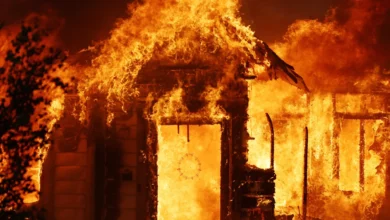
In July, the Aspen Acres fire in Rye, Colorado, became a focal point of this exhaustion. Burning over 73,000 acres, it solidified its place as the eighth-largest fire in Colorado history. It was also the site of a tragic entrapment that claimed the lives of three firefighters, with others suffering severe, life-altering burns. This incident was the most lethal entrapment event in 13 years, serving as a grim indicator of the dangers inherent in current operational demands.
The Human Cost and Operational Strain
The physical and psychological toll on the workforce is reaching a critical threshold. The Wildland Fire Lessons Learned Center, a federal authority, has documented a 20-year high in firefighter entrapments—events where flames unexpectedly overrun safety zones or cut off escape routes. By mid-August, there had been 12 such incidents, an alarming statistic that experts attribute to the combination of extreme fire behavior and the depletion of veteran leadership.
"Firefighting capacity is akin to wages, and the fire environment is akin to inflation—it simply has not kept up," noted one fire captain from the Pacific Northwest. The loss of experienced personnel—specifically those in technical roles like taskforce leaders and division supervisors—has created a void that cannot be filled by seasonal hires. These roles require decades of institutional knowledge to manage complex, large-scale operations safely. When these positions go unfilled, or are backfilled by less experienced staff, the margin for error shrinks drastically, directly increasing the likelihood of injury or death.
Conflicting Narratives: Agency Claims vs. Field Reality
A significant tension exists between the reports from the front lines and the official stance of federal agencies. Tom Schultz, Chief of the US Forest Service, testified before a congressional subcommittee in July, maintaining that the agency remains "fully staffed and equipped to respond aggressively to every unplanned ignition." Schultz has characterized the workforce as being stronger than at any point in recent years.
However, this assertion is sharply contradicted by a bipartisan letter issued in September by Senators Michael Bennet, Alex Padilla, Ron Wyden, Adam Schiff, and John Hickenlooper. The senators warned that the agencies are facing a potential depletion of their combined $6 billion suppression budget well before the end of the fire season. Their communication to the Department of the Interior and the USDA explicitly highlighted that crews are being forced to work extended, unsafe shifts and that "temporary supervisory structures" are being used to compensate for a chronic lack of qualified personnel.
The Shift Toward Aggressive Suppression
The administration’s current policy framework, led by directives from Agriculture Secretary Brooke Rollins and Interior Secretary Doug Burgum, mandates a return to rapid and full suppression. This policy marks a pivot away from more nuanced strategies that allowed for the management of natural fires in remote areas—a practice that forest ecologists argue can reduce fuel loads and create healthier landscapes in the long term.
Critics, including the nonprofit group Firefighters United for Safety, Ethics and Ecology, argue that the "full suppression" mandate is a political response that ignores ecological reality. By prioritizing the immediate extinguishing of every flame, the government is essentially "mortgaging" the future: preventing small burns today leads to the accumulation of volatile vegetation, which inevitably fuels larger, more dangerous "megafires" in the future.
"We are going to kill people trying to put out those last couple percent of a fire, and we are going to spend a lot of money doing it," noted Bobbie Scopa, a retired fire chief and advocate. The push for 100 percent suppression, while politically popular in terms of optics, creates a feedback loop that exhausts finite human and financial resources while failing to mitigate the underlying drivers of wildfire severity.
Analysis of Long-Term Implications
The implications of the 2026 fire season extend far beyond the immediate damage to timber and property. The institutional erosion of the federal firefighting workforce poses a threat to national security and public safety. If the current trend of attrition among experienced leadership continues, the federal government may find itself unable to manage the fire environment of the next decade, which climate modeling suggests will only become more volatile.
Furthermore, the reliance on "surge capacity" and near-constant deployments is unsustainable. Scientists like Timothy Ingalsbee emphasize that the cumulative effects of smoke inhalation, malnutrition, and sleep deprivation significantly degrade the ability of firefighters to make life-or-death decisions. When crews are pushed to the point of cognitive failure, the risk of catastrophic tactical errors rises exponentially.
As the season wanes, the focus for policymakers must shift from the political optics of "aggressive response" to the structural sustainability of the workforce. This includes better pay, improved retention strategies for senior leadership, and, most importantly, a shift in strategy that respects the physical limitations of the personnel. Without a fundamental change in how the government values its wildland fire professionals, the 2026 season may be viewed not as an anomaly, but as the new, grim standard for what happens when policy fails to account for the physical reality of a changing climate.
Ultimately, the fire crisis of 2026 serves as a sobering reminder: the landscape is changing, and the tools used to defend against it must evolve as well. For now, the crews on the ground remain in a state of high alert, navigating a landscape that is increasingly hostile, waiting for a shift in strategy that aligns with the reality of their dangerous, essential work.
Related posts: