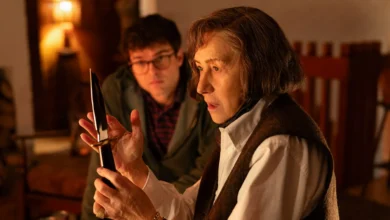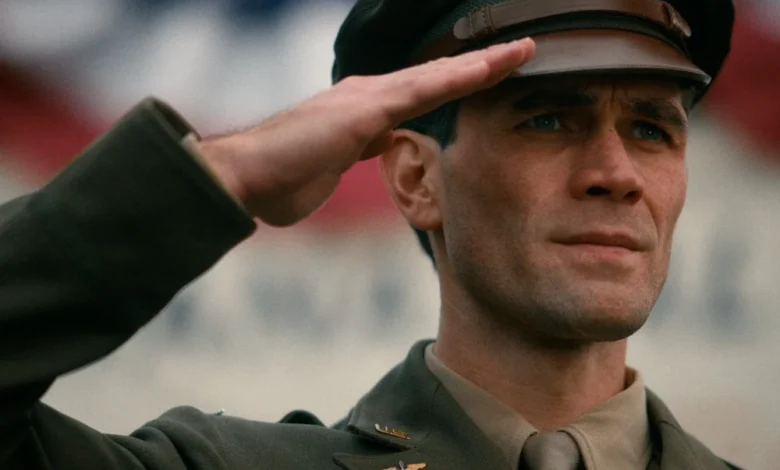
The cinematic exploration of James Stewart’s life in the new biographical feature titled Jimmy has arrived in theaters amid considerable scrutiny regarding its historical accuracy and narrative depth. Directed by Aaron Burns and featuring KJ Apa in the lead role, the film attempts to distill the complex life of one of Hollywood’s most decorated actors into a standard-issue wartime drama. Despite the gravity of its subject—a man who transitioned from the glitz of the Academy Awards to the cockpit of a B-24 Liberator—critics and historians suggest the film relies heavily on sanitized tropes, ultimately offering a superficial portrayal that ignores the psychological complexities defining Stewart’s post-war life.
A Chronology of Conflict and Cinema
The narrative structure of Jimmy adopts an episodic approach, beginning in 1946 during the production of Frank Capra’s It’s a Wonderful Life. This serves as the film’s anchor, utilizing the iconic bridge scene as a thematic touchstone for Stewart’s personal morality. However, the film quickly regresses to 1941, capturing a pivotal moment in American cultural history: the collision between the burgeoning studio system and the urgent demands of the Second World War.
The timeline follows a trajectory that is central to Stewart’s biography:
- 1941: Stewart, having won the Academy Award for Best Actor for The Philadelphia Story, faces intense public and industry pressure regarding his draft status.
- 1942: He formally enlists in the U.S. Army Air Forces, sacrificing his high-profile career at the height of his fame.
- 1943–1945: Stewart serves with the 453rd Bombardment Group, flying 20 combat missions over Germany and occupied Europe, eventually rising to the rank of Colonel.
- 1946: The actor returns to Hollywood, visibly scarred by his experiences, and begins work on the Capra masterpiece that would define his later career.
By focusing heavily on the military service aspect, the film leans into the narrative of the "soldier-actor," yet it struggles to reconcile the stark transition from the silver screen to the reality of aerial combat. While the film correctly identifies the skepticism faced by Stewart—portrayed through characters like studio head Louis B. Mayer and columnist Hedda Hopper—it frames these conflicts within a binary of virtue versus vanity that historical records suggest was far more complicated.
Historical Context and Artistic Direction
The creative direction of Aaron Burns, whose previous projects were produced under the umbrella of Affirm Films, introduces a specific tonal quality to the production. Although the film is not marketed as a faith-based project, there is a clear emphasis on Stewart’s Presbyterian roots and a recurring reliance on religious epiphany as a narrative device.
Critics have noted that the film’s reliance on these motifs acts as a constraint, preventing a more honest examination of the Post-Traumatic Stress Disorder (PTSD) that Stewart suffered—a condition that was, at the time, frequently referred to as "combat fatigue." By glossing over the reality of his trauma, the film portrays Stewart as a monolithic figure of "everyman" decency, ignoring the internal volatility that many of his contemporaries and later biographers described as the true hallmark of his performance style.
Production and Performance Analysis
KJ Apa, best known for his role in the television series Riverdale, takes on the daunting task of embodying an actor known for his distinct vocal cadence and understated physical presence. While Apa captures the auditory mannerisms—the famous drawl and the hesitant, thoughtful delivery—the performance has been characterized as a thin interpretation.
The supporting cast, including Max Casella as Frank Capra and Jason Alexander as Louis B. Mayer, provides a necessary grounding for the film’s historical setting. However, the script—penned by Justin Strawhand—is frequently criticized for its use of "on-the-nose" dialogue. Characters often speak in platitudes that serve to highlight the film’s moralizing tone rather than provide insight into the period’s political climate. For instance, the inclusion of a fictionalized romance with an aristocratic Englishwoman named Julia serves as a narrative filler, distancing the audience from the reality of Stewart’s actual experiences during his deployment in England.
Fact-Based Analysis of Biographical Representation
When analyzing the implications of Jimmy, one must consider the tension between biographical truth and hagiography. James Stewart was indeed a staunch Republican, but his political identity was deeply intertwined with a complex set of values that included a profound sense of civic duty and a distrust of the Hollywood establishment.
The film’s failure to fully explore the friction between his celebrity status and his soldierly identity is a significant missed opportunity. In historical reality, Stewart’s return to Hollywood was not merely a resumption of his career but a grueling process of readjustment. By applying a "smoothly gilded" visual finish to both the battle scenes and the Hollywood soundstages, director of photography James Mather fails to visually distinguish the jarring reality of war from the artifice of the studio system.
Broader Impact on the Biopic Genre
The reception of Jimmy highlights a growing trend in the film industry: the conversion of historical icons into vessels for contemporary "virtue signaling." By reducing a multifaceted individual to an "interchangeable nice guy," the film does little to educate younger audiences about the genuine sacrifices and psychological burdens borne by the Greatest Generation.
Industry analysts suggest that the "faith-adjacent" market is increasingly interested in reclaiming historical figures as symbols of traditional values. While this satisfies a specific demographic, it often comes at the expense of historical nuance. When a film chooses to prioritize a sanitized version of history over the gritty realities of the subject’s life, it risks alienating those who seek a more profound understanding of the person behind the icon.
Conclusion: The Question of Truth in Cinema
The central irony of Jimmy lies in its own dialogue. At a critical juncture in the film, a character asks Stewart if he is "brave enough" to give the audience the truth. The film’s inability to answer that question effectively serves as its primary failing. While it manages to replicate the aesthetic of the 1940s and provides an enthusiastic, if superficial, tribute to one of cinema’s most beloved figures, it lacks the courage to delve into the shadows of its subject.
For audiences familiar with the depth of Stewart’s work in films like Vertigo or The Man Who Shot Liberty Valance—performances that were arguably informed by his experiences in war—the version of Stewart presented in Jimmy will likely feel incomplete. The film stands as a testament to the fact that while a life may be defined by its most heroic moments, its meaning is often found in the complexities that lie beneath the surface. As it stands, Jimmy remains an homage to the public perception of James Stewart rather than a true exploration of the man who lived the life.