The Return of Chunk: 2025 Fat Bear Week Champion Back in Alaska as 2026 Tournament Looms

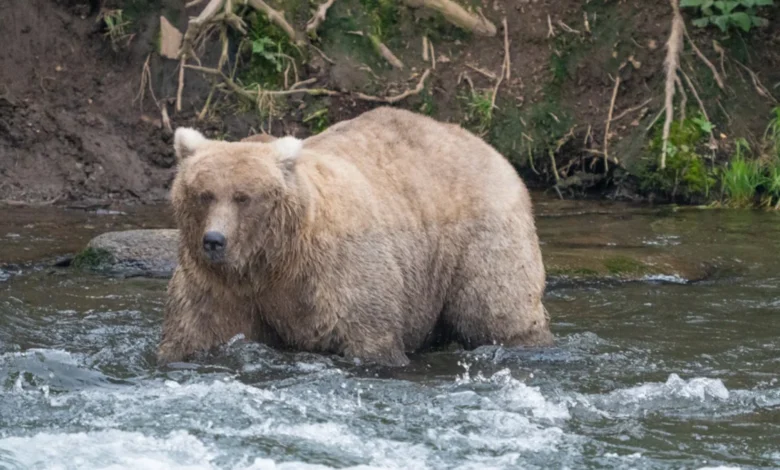
The undisputed heavyweight champion of the wild, Bear #32—affectionately known to millions of global fans as Chunk—has made his official return to the camera frames of Katmai National Park in Alaska. His reappearance on the explore.org live webcams arrives just in time, coinciding with the impending kickoff of Fat Bear Week 2026. As nature enthusiasts, conservationists, and casual observers prepare for the beloved annual celebration of ursine girth, Chunk’s comeback places him squarely back in the spotlight, sparking intense speculation over whether the reigning king will defend his throne.
Main Facts and the Return of a Heavyweight Icon
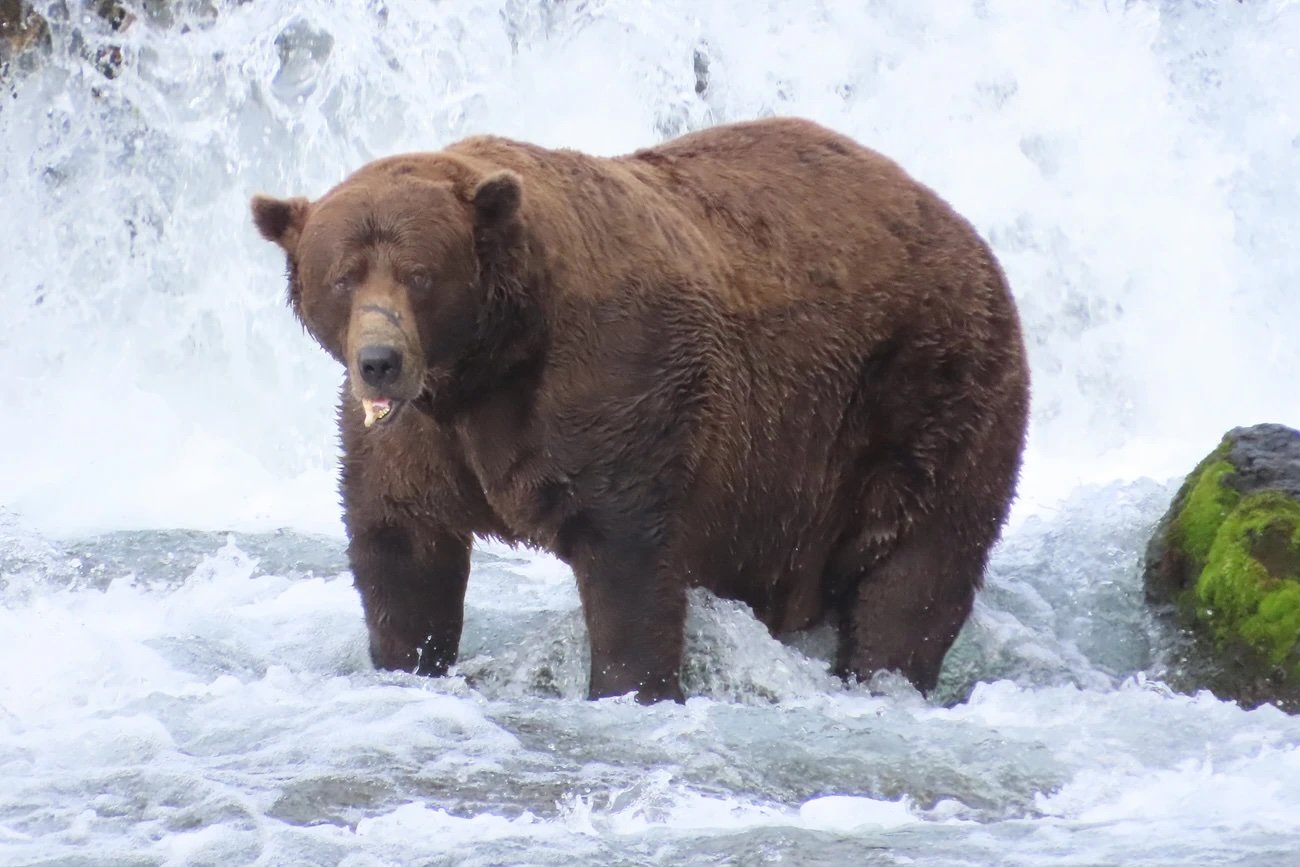
Chunk captured the hearts—and votes—of nearly 100,000 global participants during Fat Bear Week 2025, securing a definitive victory with 96,350 votes, outperforming the runner-up, Bear 856, by roughly 30,000 tallies. Weighing in at an estimated 1,200 pounds during his peak feeding seasons, Chunk is easily recognized by his massive stature, dark brown fur, narrow-set eyes, prominent brow ridge, and a distinctive muzzle scar.
His physical resilience has become a central part of his legendary status. In 2025, Chunk emerged from his winter den bearing a severely broken and misaligned jaw, an injury park rangers and naturalists attributed to a violent territorial confrontation with a rival male brown bear. Despite a compromised mandible, Chunk demonstrated remarkable adaptability. Rather than engaging in risky direct combat over prime real estate, he strategically modified his behavior, leaning on his immense baseline body mass to secure access to productive fishing zones along the Brooks River without needing to fight for every meal.
Chronology of a Champion: From Injury to Early Rising
The timeline of Chunk’s recent activity highlights the unpredictable and resilient nature of Alaska’s brown bear populations.
In early 2025, Chunk’s emergence with a broken jaw shocked observers, who initially feared the injury might permanently hinder his ability to hunt and gorge on migrating sockeye salmon. Instead, he mastered the art of consuming fish despite his structural limitation.
Breaking standard seasonal patterns, park cameras spotted Chunk as early as April. While most brown bears in Katmai typically remain dormant in the spring and do not frequent the rivers in large numbers until the salmon run kicks off in June, Chunk was documented traversing patches of lingering ice. This early sighting underscored his need to secure early-season nutrition and re-establish his territory.
By autumn of 2025, his massive weight gain propelled him through the tournament brackets, culminating in his crowning achievement as Fat Bear Week champion. Now, ahead of the 2026 bracket reveal slated for Friday, September 18, Chunk’s reappearance on the Brooks Falls live streams signals that he has successfully navigated yet another year in the harsh Alaskan wilderness and is primed for the upcoming seasonal feast.
Supporting Data: The Biology of Fat Bear Success
The phenomenon of Fat Bear Week is underpinned by serious biological imperatives. Brown bears in Katmai National Park rely on a biological process called hyperphagia—an extreme, driven state of hunger where bears consume massive quantities of food to pack on essential fat reserves.
During the spring and early summer months, adult male brown bears typically hover around 700 pounds. By the time autumn arrives and the salmon runs peak, these same bears can balloon to more than 1,200 pounds. This dramatic weight gain is not merely cosmetic; it is a matter of life and death. Bears must accumulate enough adipose tissue to sustain them through months of winter hibernation, during which they do not eat, drink, or defecate.
The success of bears like Chunk, who manage to achieve record-breaking weights despite physical setbacks like broken jaws or territorial displacement, offers researchers valuable insights into animal adaptability, ecosystem health, and the sheer caloric abundance of the Bristol Bay watershed, home to one of the world’s most robust salmon runs.
Controversies and Complexities of Katmai Ecosystems
While Fat Bear Week is celebrated as a lighthearted, family-friendly conservation event, the live cameras broadcasting from Katmai National Park also capture the unfiltered, often brutal realities of wild ecosystems. The summer months leading up to the 2026 tournament featured several dramatic and distressing events that drew heavy public engagement and expert analysis.
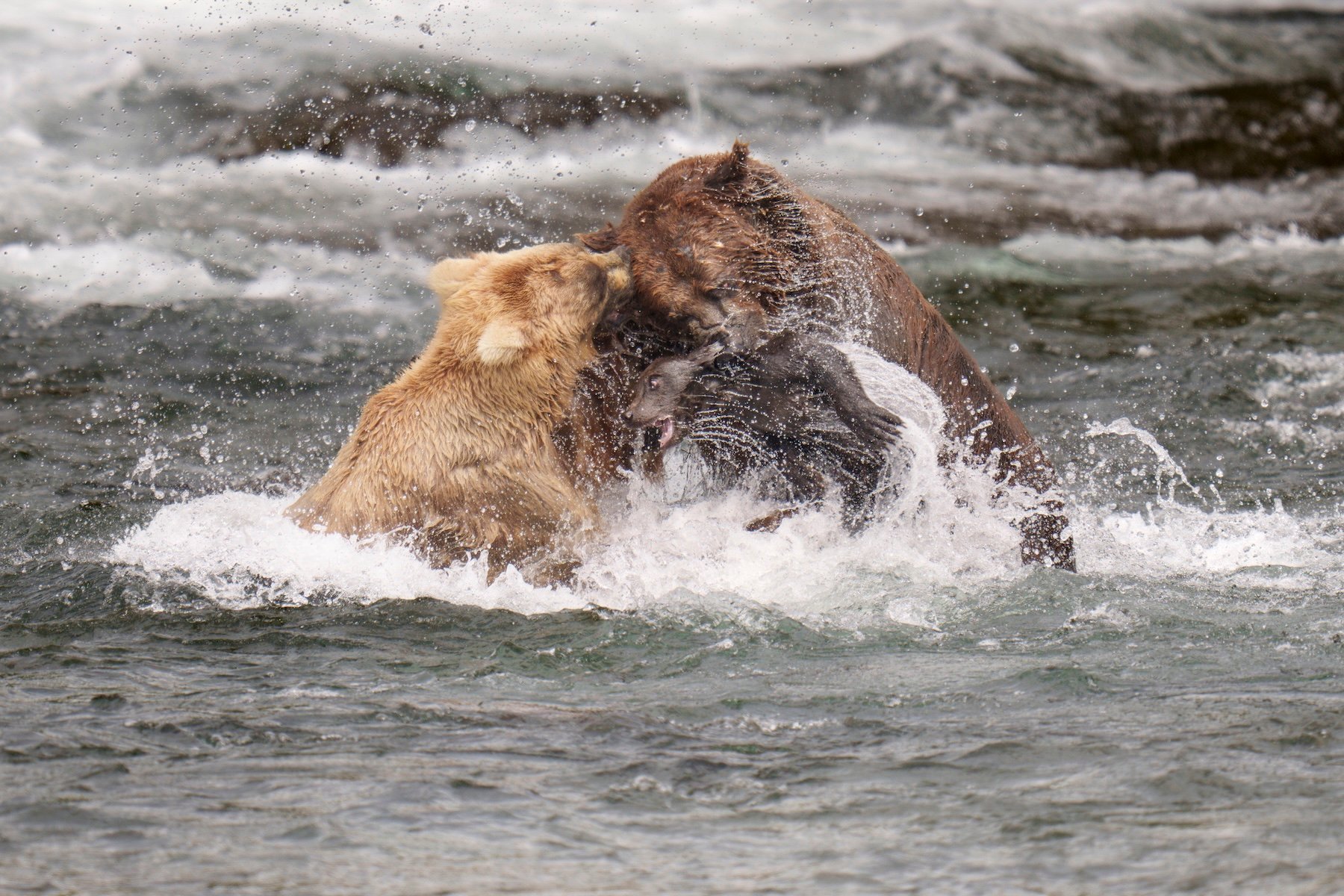
In late July, livestream viewers witnessed a rare and unsettling event when an unrelated adult female bear, designated as Bear #806, attacked, killed, and consumed a young brown bear cub. Days later, another tragedy unfolded when a cub belonging to Bear #335 (Jolly) was killed after following unfamiliar cubs up a tree, prompting an aggressive defense from the resident mother.
Naturalists and park rangers, including Mike Fitz, Christine Loberg, and Sarah Bruce, noted that these incidents represented some of the first documented cases of such behavior at Brooks River. Experts suggest that factors ranging from food scarcity and population density to territorial dominance and rare instances of attempted adoption contribute to these complex behaviors. Such moments serve as an educational reminder for the millions of viewers tuning in that national parks are dynamic, untamed wildernesses rather than staged animal sanctuaries.

Furthermore, Chunk’s own history includes high-stakes drama. In 2024, Chunk finished behind fan-favorite and fierce mother bear Grazer. The two powerhouse bears had previously clashed when Chunk pursued and attacked two of Grazer’s spring cubs after they tumbled over a waterfall—an encounter that resulted in the death of one cub despite Grazer’s ferocious defense. The rivalry between Chunk and Grazer adds a compelling narrative layer to the historical context of the park’s dominant bears.
Official Responses, Conservation, and How to Participate
The Katmai Conservancy and partnering organizations view Fat Bear Week not only as an entertainment vehicle but as a vital educational tool for public conservation. The event draws international attention to the health of the Bristol Bay watershed and the delicate balance required to maintain a thriving salmon and bear population.
Fans looking to support the park can contribute to the Katmai Conservancy’s Otis Fund, named in honor of the legendary Bear #480 (Otis), a four-time Fat Bear Week champion who passed away around 2024. To encourage public giving, explore.org has committed to matching all donations made to the Otis Fund between September 22 and October 3.
The official 2026 Fat Bear Week tournament schedule is set as follows:
- Bracket Reveal: Friday, September 18, 2026
- Voting Period: Tuesday, September 22, through Tuesday, September 29, 2026
- Daily Voting Hours: 12:00 PM to 9:00 PM EDT (9:00 AM to 6:00 PM PDT)
- Official Voting Platform: fatbearweek.org
Broader Impact and Implications
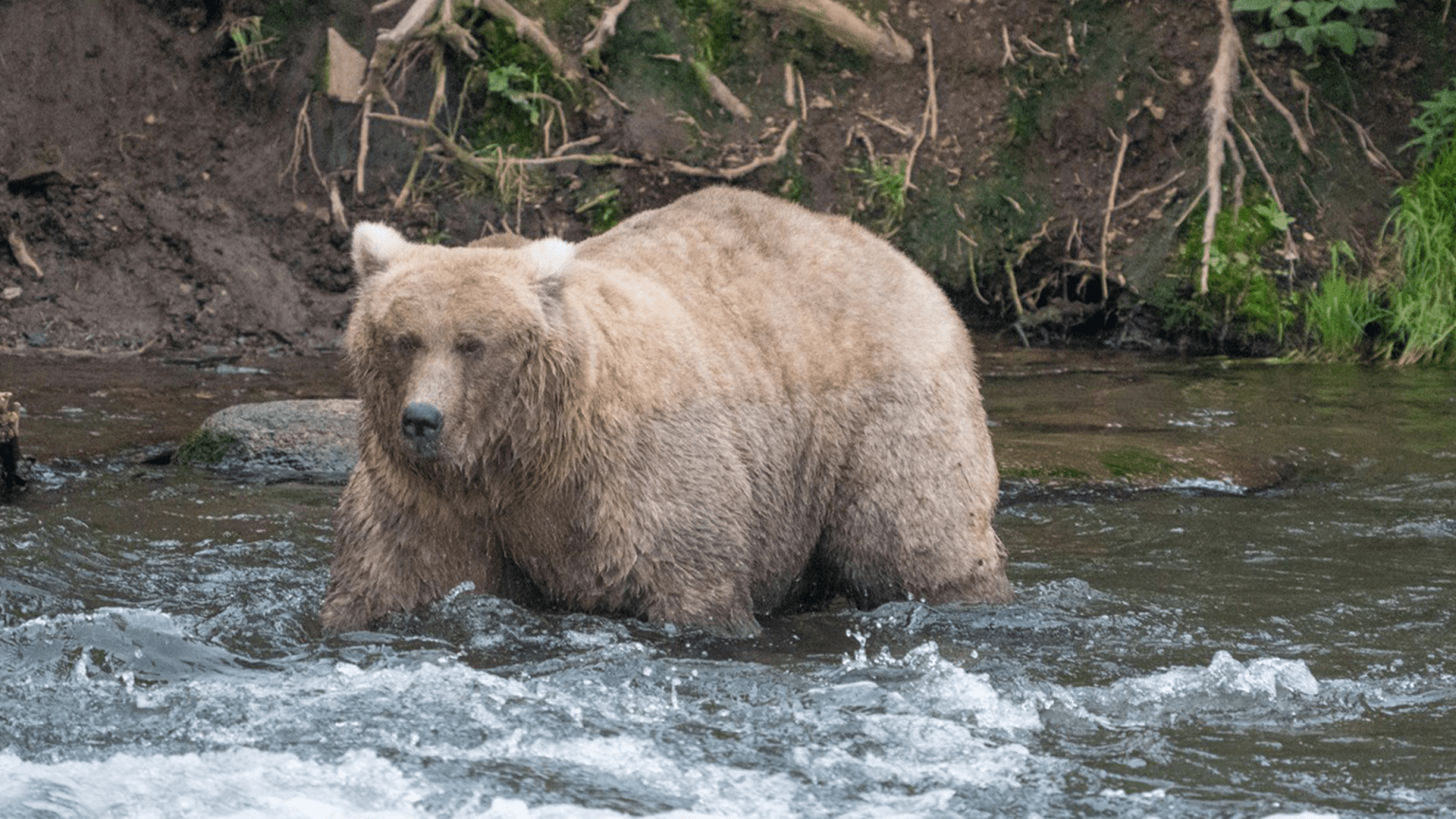
The enduring popularity of Fat Bear Week highlights a modern shift in wildlife conservation, where digital connectivity fosters a deep, personal connection between the public and remote natural habitats. Millions of viewers worldwide track individual bears across multiple seasons, learning their life histories, recognizing their scars, and rooting for their survival.
By transforming ecological monitoring into an interactive public event, Katmai National Park has successfully generated global awareness for habitat preservation, climate resilience, and the protection of salmon-rich river systems. As Chunk steps back in front of the camera lenses, his journey from a severely injured survivor to a reigning champion encapsulates the resilience of nature—and sets the stage for what promises to be one of the most competitive and watched wildlife tournaments in history.