US Open: 3.33am local time and another early-morning finish as Ben Shelton beat Carlos Alcaraz, so does something have to change?

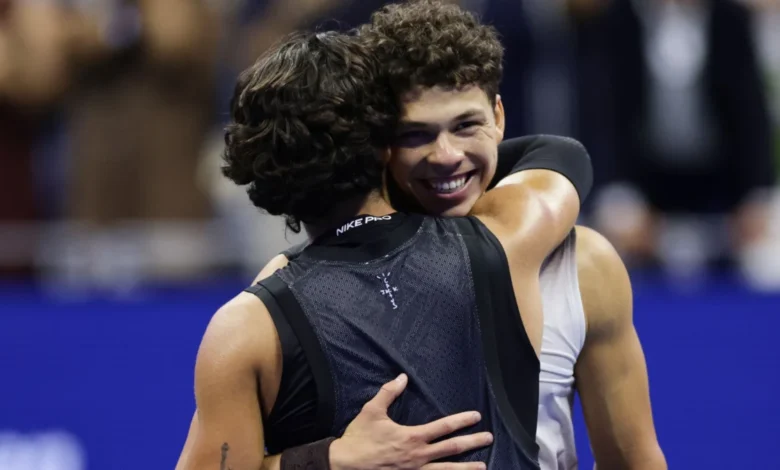
This latest chapter in the US Open’s nocturnal history was not an isolated incident but rather the culmination of a day-long scheduling backlog. Three grueling matches preceding the quarter-final showdown forced the marquee matchup between the American rising star and the Spanish sensation to wait until after 11:00 p.m. to commence. As the match stretched into the early hours of Wednesday morning, the tournament once again found itself under scrutiny, forcing officials, players, and pundits to confront a question that has long simmered in the background of Grand Slam tennis: is the spectacle of a 3:00 a.m. finish worth the physical and professional toll it exacts?
A Chronology of Fatigue
The 3:33 a.m. conclusion to the Shelton-Alcaraz clash now ranks as one of the latest finishes in the history of the sport, though it sits within a pattern of increasingly late endings that have defined recent seasons. The US Open, known for its vibrant, high-energy atmosphere, has embraced the "night session" as a core component of its brand identity. By prioritizing prime-time television slots for North American audiences, organizers have successfully cultivated a unique, carnival-like intensity that players often praise. However, the reality of the schedule often clashes with the physiology of the athletes.
The timeline of the day leading up to the Shelton-Alcaraz match was characterized by high-intensity, back-and-forth tennis that pushed the schedule further into the night. Because tennis matches are not bound by a fixed duration—unlike baseball or basketball—a sequence of close, five-set contests creates a ripple effect that cannot be corrected once the order of play is set. By the time the players walked onto the court, the stadium, while still hosting a dedicated cohort of die-hard fans, had thinned significantly. Even at one-third capacity, the noise was deafening, a testament to the endurance of the New York crowd.
The Human Cost: Player Welfare and Performance
For the competitors, the implications of these finishes extend far beyond the inconvenience of a missed bedtime. Professional tennis is a sport of minute margins, where recovery time, nutrition, and circadian rhythm management are critical to preventing injury and maintaining peak performance.
Aryna Sabalenka, speaking earlier in the tournament, articulated the frustration shared by many in the locker room. When a match ends at 3:30 a.m., the process of cooling down, media obligations, medical assessments, and transportation means that players often do not return to their accommodation until sunrise. This shifts the entire subsequent day, disrupting training cycles and recovery protocols.
Venus Williams, a veteran of decades on the tour, echoed these sentiments following her own late-night ordeal against Sofia Kenin. The sentiment is nearly unanimous among the players: while the atmosphere is undeniably "incredible," the scheduling structure is, in the words of many participants, "not ideal." The physical impact is compounding; when players are forced to play through the night, their immune systems are stressed, and their ability to recover for the next round is severely compromised.
Historical Context and Statistical Trends
The shift toward later finishes is not entirely new, but the frequency has reached a breaking point. The list of the latest finishes in tennis history is dominated by events in the last two decades. The record, held by Alexander Zverev’s match against Jenson Brooksby at the 2022 Acapulco tournament, ended at 4:54 a.m. Other notable outliers include the 2008 Australian Open match between Lleyton Hewitt and Marcos Baghdatis, which concluded at 4:34 a.m.
The inclusion of the 2026 Shelton-Alcaraz match into this historical hierarchy highlights a systemic trend. Modern technology and court lighting have allowed for night sessions that extend well into the darkness, but the human body has not evolved to match the endurance of stadium floodlights. Data suggests that the duration of professional matches has increased over the last twenty years due to advancements in fitness, equipment, and defensive strategies, making it mathematically more difficult to predict when a night session will conclude.
Conflicting Perspectives: Broadcast vs. The Court
The debate is fundamentally a tug-of-war between the commercial demands of global broadcasting and the health requirements of the athletes. Former world No. 1 and tennis icon Martina Navratilova has been one of the most vocal critics, utilizing social media to argue that the current state of affairs is "not normal." Navratilova’s argument is rooted in the idea that no other major sport—whether football, basketball, or even other Olympic sports—routinely expects its athletes to compete at a time when the rest of the world is deep in sleep.
Conversely, former players and analysts like Andy Roddick offer a more pragmatic, if somewhat defensive, perspective. Roddick has pointed out that the logistics of a 25,000-seat stadium like Arthur Ashe are immense. Moving thousands of people in and out of the facility requires a significant buffer, and the sport’s unpredictable nature makes it impossible to guarantee a specific end time. Roddick’s critique of the critics—that they complain without offering viable solutions—highlights the difficulty of the situation. If a tournament cuts the number of matches, it risks losing revenue; if it starts earlier, it loses the prime-time viewership that sustains the sport’s massive prize pools.
Exploring Potential Solutions
As the sport moves forward, various solutions are being proposed by stakeholders to mitigate the risk of "the graveyard shift." Marion Bartoli, a former Wimbledon champion and analyst, has suggested that the structure of the tournament could be refined as it reaches the final stages.
One primary recommendation is to limit the night session to a single match once the tournament reaches the quarter-final stage. During the opening week, when there are dozens of matches and the field is deep, two matches per session may be a commercial necessity. However, in the second week, where matches are statistically more likely to be long, five-set marathons, the risk of a late finish increases exponentially. By reverting to a "one-match-only" format for the night session in the latter half of the tournament, organizers could provide a buffer, ensuring that even if a match goes to five sets, it concludes at a more reasonable hour.
Another potential solution lies in the revision of the warm-up protocols or the introduction of "match tie-break" rules in more scenarios, though this is often met with resistance from purists who argue it alters the integrity of the game. Furthermore, the US Open could consider moving the start time of the evening session forward, though this would inevitably conflict with the working hours of the average fan.
The Road Ahead: Balancing Tradition and Modernity
The US Open, for its part, has attempted to lean into the controversy with a sense of humor, releasing light-hearted templates for fans to give to their employers to explain their absence from work. While these social media gestures soften the blow, they do not address the structural issues at play.
The reality is that the tournament is a victim of its own success. The demand for high-stakes tennis is higher than ever, and the quality of play in the Shelton-Alcaraz match—the athleticism, the shot-making, and the intensity—is exactly what the sport wants to showcase. However, if the sport is to maintain its long-term viability, it must find a way to reconcile the "greatest sports city in the world" atmosphere with the fundamental reality that athletes are human beings.
As the tennis calendar moves toward future Grand Slams, the "3:33 a.m. finish" will likely serve as a turning point. Whether it leads to a formal rule change regarding scheduling or simply prompts a more disciplined approach to the order of play remains to be seen. What is clear is that the sport is at a crossroads. To continue on the current path is to invite further fatigue, potential injury, and a growing disconnect between the players who perform the feats and the systems that govern them. The challenge for the organizers of the US Open and the governing bodies of tennis is to ensure that the sport remains a spectacle without becoming a marathon of endurance that tests the limits of everyone involved.