NASA’s Neil Gehrels Swift Observatory Resumes Science Operations Following Failed Commercial Rescue Mission

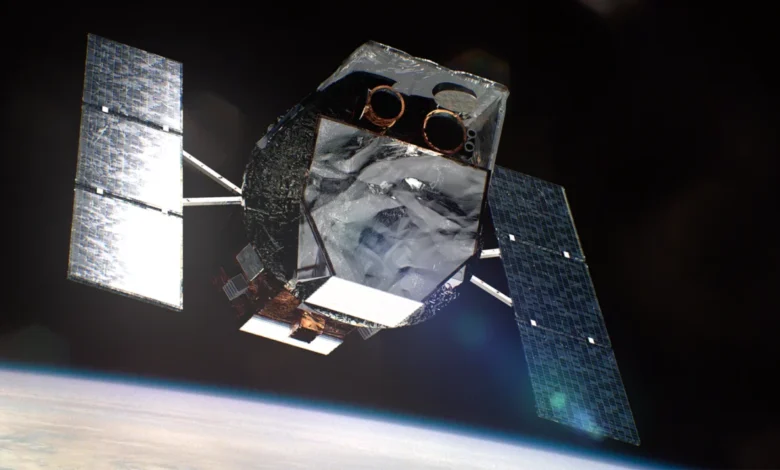
NASA’s Neil Gehrels Swift Observatory is back online and gathering scientific data, resuming operations after months of functioning in a stripped-down, dormant mode. The observatory had been placed in a power-saving configuration while awaiting an ambitious commercial rescue mission that ultimately had to be abandoned.
On August 26, space agency engineers successfully switched on two of the observatory’s primary payloads: the Ultraviolet/Optical Telescope and the X-ray Telescope. A third critical instrument, the Burst Alert Telescope (BAT), remains offline as mission operators work through technical procedures to safely restore its data-collection capabilities in the coming weeks.
The resumption of science operations marks a second wind for a veteran spacecraft that has spent more than two decades revolutionizing our understanding of the high-energy universe. However, this extension is expected to be temporary, as the observatory faces an insurmountable battle against atmospheric drag and orbital decay.
Background Context and the Threat of Orbital Decay
Launched in November 2004, the Neil Gehrels Swift Observatory has been a cornerstone of multi-messenger and time-domain astronomy. It was specifically designed to discover and rapidly study gamma-ray bursts (GRBs)—the most luminous electromagnetic events in the universe, believed to be associated with the deaths of massive stars or the merger of compact stellar remnants like neutron stars.
Unlike many modern satellites operating in low-Earth orbit, Swift lacks an onboard propulsion system or thrusters capable of station-keeping. Consequently, it cannot actively counteract the natural gravitational pull of Earth or adjust its altitude to compensate for environmental changes.
In recent years, heightened solar activity—driven by the peak of the Sun’s 11-year solar cycle—has significantly impacted Earth’s upper atmosphere. As solar radiation heats our planet’s outer atmospheric layers, the atmosphere expands outward into space. This expansion dramatically increased atmospheric drag on the Swift observatory, pulling it downward much faster than mission planners originally anticipated. Without intervention, the increased friction would eventually cause the satellite to lose control, plunge deeper into the atmosphere, and burn up prematurely, cutting short an unprecedented scientific legacy.
The Katalyst Space "Link" Rescue Attempt and Its Demise
To save the observatory, NASA pursued a novel commercial partnership. In 2025, the agency contracted Katalyst Space, a commercial orbital servicing startup, to design, build, and launch a specialized spacecraft named "Link."
The objective of the Link mission was audacious: rendezvous with the aging Swift observatory in low-Earth orbit, physically capture the uncooperative satellite, and use its own xenon-fueled propulsion system to boost Swift into a higher, safer orbit. This would have extended the telescope’s operational life by years, preserving a vital asset for transient astronomy.
However, complex orbital operations carry immense risk. Earlier this month, while conducting in-space maneuvers and capabilities tests to validate its systems for future missions, Link suffered a major anomaly. On August 19, the commercial spacecraft entered an uncontrollable spin, rendering the planned capture maneuver impossible. NASA and Katalyst Space were forced to formally abandon the rescue operation.
Despite failing its primary objective, the Link spacecraft has continued to serve a technical demonstration purpose. Katalyst has used the drifting spacecraft to execute various flight tests, gathering invaluable empirical data on proximity operations, navigation, and propulsion performance that will inform future satellite-servicing architectures.
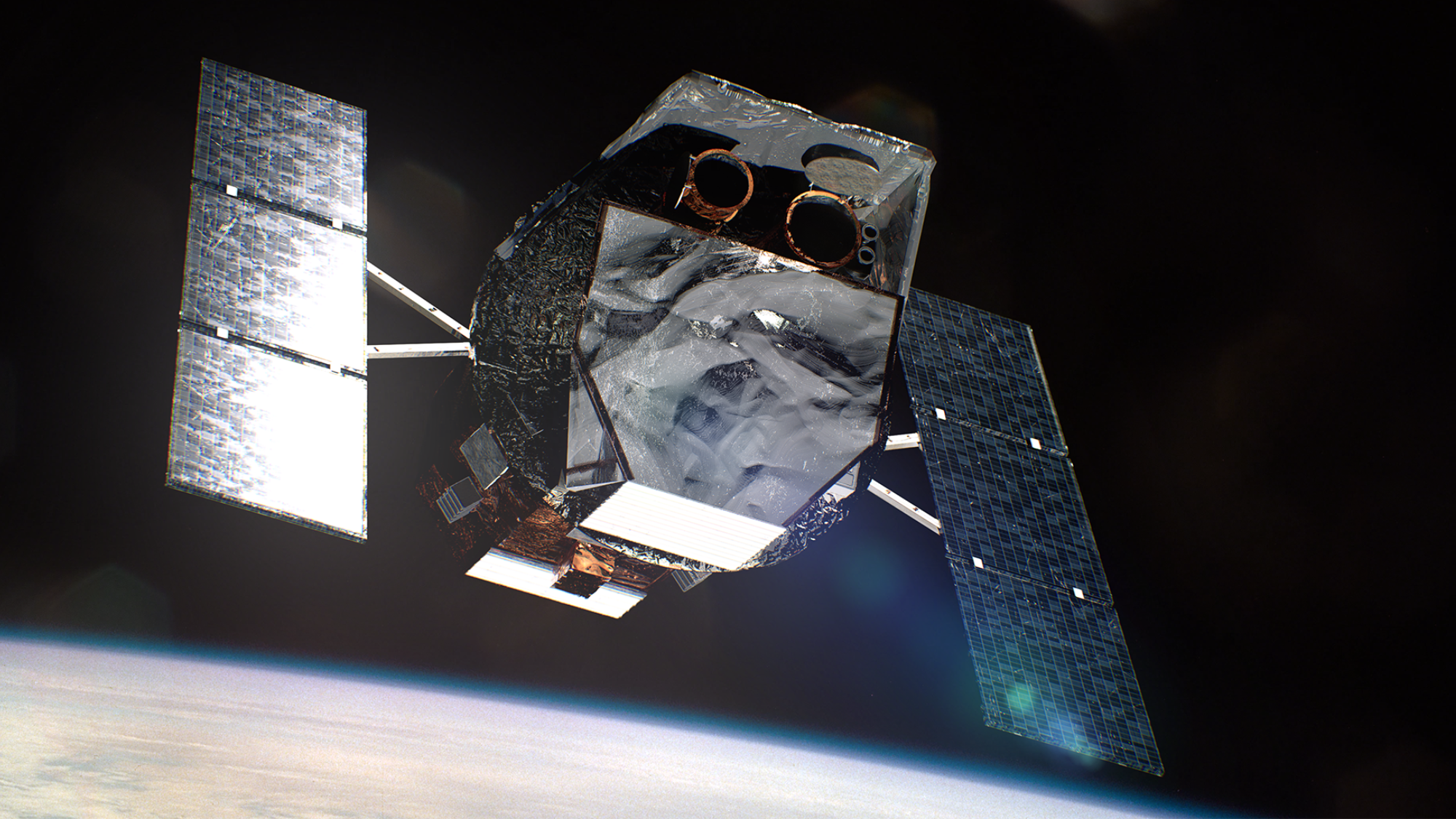
On August 30, Link successfully fired all three of its xenon-fueled thrusters simultaneously, capturing stunning imagery of the target it failed to rescue. At its closest approach, Link hovered roughly nine miles away from Swift. "We got so close, but so far," Katalyst CEO Ghonhee Lee told the Associated Press, summarizing the bittersweet reality of cutting-edge aerospace engineering. NASA officially highlighted these ongoing technical tests in a statement released on September 4.
Current Status and the Timeline Ahead
With the commercial rescue officially off the table, NASA mission managers pivoted to a contingency plan: reactivating the spacecraft’s scientific instruments to extract as much data as possible before the inevitable end of the mission.
With its Ultraviolet/Optical Telescope and X-ray Telescope now fully functional, Swift is operating in a degraded yet productive capacity. According to mission projections, the spacecraft will likely maintain a stable orbit above the critical altitude threshold of 185 miles (300 kilometers) for the next one to two months.
Once Swift dips below this 185-mile threshold, atmospheric drag will intensify exponentially. NASA noted in recent technical updates that operating the telescope at lower altitudes becomes exceptionally difficult due to rapid orbital velocity changes and increased torque from residual atmospheric particles.
At that juncture, the satellite’s historic 22-year mission of scanning the cosmos will officially conclude. Current orbital decay models indicate that the spacecraft will re-enter Earth’s atmosphere and disintegrate safely over uninhabited regions sometime between October and late December of this year.
Implications for Transient Astronomy and Commercial Space Servicing
The winding down of the Swift Observatory marks the end of an era for high-energy astrophysics. Over its lifetime, Swift has contributed to thousands of peer-reviewed scientific papers, detected hundreds of gamma-ray bursts, and provided critical early-warning coordinates that allowed ground-based and space-based telescopes—including Hubble and the James Webb Space Telescope—to capture the afterglows of some of the universe’s most violent phenomena. The loss of its continuous sky-monitoring capabilities will leave a temporary gap in transient astronomy until next-generation wide-field high-energy observatories come online.
Furthermore, the failure of the Katalyst Link mission underscores both the promise and the peril of the nascent commercial in-orbit servicing industry. While servicing, repairing, and refuelling dead or dying satellites represents the holy grail for mitigating space debris and maximizing the return on public and private space investments, executing mechanical rendezvous in the harsh, unpredictable environment of low-Earth orbit remains extraordinarily difficult.
Even though the rescue of Swift ultimately fell short, the data harvested by Katalyst Space during Link’s propulsion and proximity tests will undoubtedly lay the groundwork for more resilient, sophisticated servicing missions in the future. As the astronomical community prepares to say goodbye to one of NASA’s most reliable workhorses, the focus shifts toward applying these hard-earned lessons to protect the next generation of orbital infrastructure.