Midterm Primary Elections Set Stage for Critical 2026 Battles in Nebraska and West Virginia

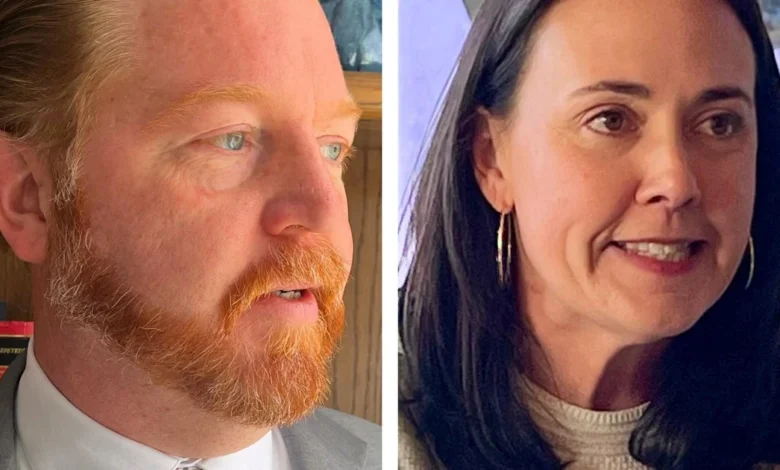
Voters in Nebraska and West Virginia cast their ballots on Tuesday, May 12, 2026, in primary elections that have significantly shaped the landscape for the upcoming midterm general election. The outcomes included hotly contested races for an open U.S. House seat in Nebraska’s 2nd Congressional District, a high-profile U.S. Senate contest in Nebraska, and key gubernatorial and Senate primaries in West Virginia. These results offer initial insights into voter sentiment and the strategic priorities of both major parties as they gear up for battles that could determine the balance of power in Washington.
Nebraska’s Pivotal 2nd Congressional District: A Battleground Emerges
The spotlight in Nebraska fell sharply on the 2nd Congressional District, an Omaha-area seat long targeted by Democrats. The district became an open contest following the announced retirement of five-term Republican incumbent Rep. Don Bacon, effective January 2027. Bacon’s decision to step down has invigorated Democratic aspirations, as the district has shown a historical willingness to support Democratic presidential candidates, voting for them in three of the last five national elections. This electoral pattern, coupled with the district’s demographic shifts, positions NE-02 as one of the most closely watched House races in the country for the 2026 cycle.
On the Republican side, Omaha City Council member Brinker Harding secured the nomination unopposed, consolidating GOP support early. Harding, known for his conservative stance on fiscal policy and local governance, is expected to mount a robust campaign, emphasizing his roots in the community and alignment with traditional Republican values. His clear path through the primary allowed him to conserve resources and begin general election outreach sooner than his Democratic counterparts.
The Democratic primary for NE-02, however, was a crowded and fiercely contested affair. Nebraska State Senator John Cavanaugh and political organizer Denise Powell emerged as the leading contenders from a field of several hopefuls. Their campaigns engaged in a robust debate, not only on policy issues but also on strategic approaches to winning the general election and, notably, the implications for Nebraska’s unique electoral college system.
Senator Cavanaugh, a prominent figure in the state legislature, highlighted his legislative experience and ability to build coalitions across the aisle as key assets. His platform focused on healthcare access, economic development, and environmental protection, appealing to a broad base of progressive and moderate Democrats. Powell, a seasoned political organizer, emphasized grassroots mobilization and a fresh perspective, arguing that her campaign was better positioned to energize the diverse electorate of the 2nd District. She positioned herself as an outsider capable of disrupting established political norms and bringing new energy to the party.
A significant point of contention between the two leading Democrats revolved around the potential consequences of Cavanaugh vacating his state legislative seat. Powell argued that if Cavanaugh were to win the congressional primary and subsequently resign from the state Senate, Republican Governor Jim Pillen would have the authority to appoint an interim replacement. This, she contended, could give Republicans a stronger majority in the state legislature, potentially enabling them to push through changes to Nebraska’s electoral college allocation system. Nebraska is one of only two states (along with Maine) that award some of its electoral votes by congressional district, a system that has historically allowed Democratic presidential candidates to secure at least one electoral vote from the 2nd District, even in a deeply red state. Powell’s campaign suggested that a Republican-appointed replacement in the state legislature could pave the way for a "winner-take-all" system statewide, a move that would significantly diminish Democratic influence in presidential elections and consolidate all of Nebraska’s electoral votes for the Republican candidate.
Cavanaugh’s campaign countered these claims, asserting that such concerns were speculative and that his focus remained squarely on winning the congressional seat. Supporters argued that his legislative track record demonstrated an ability to withstand political pressure and that the state’s electoral system was robust enough to resist last-minute partisan changes. They also pointed to the broader importance of securing a Democratic voice in Washington from a district that has consistently leaned Democratic in presidential contests, despite being represented by a Republican in the House for the past decade.
The outcome of the Democratic primary, with either Cavanaugh or Powell advancing, sets the stage for a critical general election battle against Brinker Harding. Analysts project that this race will be one of the most expensive and closely watched House contests nationwide, with both national parties pouring significant resources into the district. The national political climate, including President Biden’s approval ratings and the broader congressional landscape, will undoubtedly influence voter sentiment in this swing district. The district’s unique electoral college implications add an additional layer of strategic complexity, underscoring the high stakes involved beyond just the House seat itself.
The High-Stakes Nebraska Senate Race: An Independent Challenge Looms
Nebraska’s U.S. Senate primary also drew considerable attention, particularly due to the unusual dynamics surrounding the Democratic nomination and the strong independent candidacy. Senator Pete Ricketts, the Republican incumbent, decisively fended off four primary challengers, consolidating his base and demonstrating the strength of his political machine. Ricketts, a former governor and the son of billionaire Joe Ricketts, received endorsements from prominent Republican figures, including former President Donald Trump, and key agricultural groups like the Nebraska Farm Bureau, which provided significant financial and organizational backing. His campaign, well-funded and highly organized, focused on his conservative record, support for agricultural interests, and alignment with the national Republican agenda. Having been appointed in 2023 to fill the vacancy left by former Senator Ben Sasse’s resignation (who left to become president of the University of Florida) and subsequently winning a special election in 2024 to complete Sasse’s term, Ricketts is now seeking his first full six-year term.
The Democratic primary for the Senate seat, however, was marked by controversy and strategic maneuvering. Cindy Burbank secured the Democratic nomination, as projected by CBS News. However, the Nebraska Democratic Party had previously endorsed Dan Osborn, a former labor leader from Omaha, who is running as an independent in the November general election. This unusual move reflects a strategic calculation by state Democrats to throw their weight behind a candidate they believe has a better chance of unseating Ricketts in a state that has not elected a Democrat to the Senate since Bob Kerrey in 1994 (who served until 2001, not 2006 as originally stated, when Ben Nelson defeated Ricketts).
Osborn’s appeal stems from his strong performance in the 2024 Senate race against Republican incumbent Senator Deb Fischer, where he came within seven points of her, a remarkable feat in a state Trump won by over 20 points. While Ricketts also won his 2024 special election by a larger margin against a Democratic challenger, Osborn’s prior success against an established incumbent has fueled Democratic hopes. His background as a labor leader resonates with working-class voters, and his independent status may attract disaffected Republicans and moderate voters looking for an alternative to the partisan duopoly.
The Democratic primary itself became a flashpoint. Nebraska Secretary of State Bob Evnen had initially sought to remove Burbank from the ballot, alleging she was not a "good-faith" candidate because she openly stated her intention to back Osborn in the general election. Evnen argued that her candidacy was designed to manipulate the primary process rather than genuinely seek the nomination. However, the Nebraska Supreme Court reinstated Burbank’s candidacy, ruling that Evnen’s complaint had been filed too late in the election cycle.
Burbank’s campaign website explicitly accused her primary opponent, pastor William Forbes, of being a "Ricketts plant" designed to divert votes from Osborn. She asserted that Osborn deserved a "fair shot against Ricketts," implying that Forbes’s candidacy was intended to siphon votes from the independent, potentially benefiting the Republican incumbent. Jane Kleeb, chair of the Nebraska Democratic Party, echoed this sentiment on social media, posting, "William Forbes is a Ricketts plant. Don’t let the MAGA Republicans mess with our primary. Vote for Cindy Burbank."
Both Ricketts and Forbes vehemently denied these allegations. Forbes, an anti-abortion pastor, stated he was a lifelong Democrat, despite having voted for Donald Trump multiple times. He insisted his candidacy was legitimate and driven by his convictions, not by any partisan machinations. This narrative highlighted the complex and often contradictory allegiances within the modern political landscape, particularly in states where traditional party lines are blurring.
Further complicating the primary landscape were two candidates from the Legal Marijuana NOW party. One candidate, Early Starkey, and the former party chair accused the other, Mike Marvin, of being a "Dan Osborn plant" – another allegation of strategic ballot placement. Marvin denied this, though the Nebraska Examiner later reported that Cindy Burbank had paid Marvin’s filing fee, which she attributed to a simple clerical error ("Mike’s check was for ten dollars too much"). These controversies underscore the intense strategic maneuvering and suspicion surrounding third-party and minor-party candidacies in high-stakes elections, where every vote and every name on the ballot can potentially influence the outcome.
Despite not being on the primary ballot, Dan Osborn’s campaign has been highly active, raising over $3.8 million this year, demonstrating significant grassroots and potentially national support. He faces an August 3 deadline to collect enough signatures to officially qualify for the November general election ballot as an independent. Senator Ricketts, meanwhile, has amassed over $4.8 million, signaling a well-resourced campaign prepared for a formidable challenge. The general election contest between Ricketts and Osborn is poised to be one of the most compelling Senate races of the 2026 cycle, testing the viability of a well-funded independent candidate against an established Republican incumbent in a deeply conservative state.
West Virginia Primaries: Republican Dominance Continues
In West Virginia, the primaries largely affirmed the state’s strong Republican leanings. Two-term incumbent Republican Senator Shelley Moore Capito easily defeated five primary challengers, including State Senator Tom Willis. Capito, a prominent figure in the Senate and a consistent voice for West Virginia’s coal and energy industries, also received the crucial endorsement of former President Donald Trump, which proved to be a significant advantage in the Republican-dominated state. Her victory ensures she will seek a third term in the Senate, continuing her focus on infrastructure, economic development, and conservative principles.
On the Democratic side, five candidates were on the ballot vying for the nomination to challenge Capito. The Democratic primary in West Virginia typically attracts less national attention given the state’s pronounced shift towards the Republican party in recent decades. The eventual Democratic nominee will face an uphill battle against Capito in a state where Trump consistently wins by wide margins and Republicans hold supermajorities in the state legislature. The Democratic strategy will likely focus on local issues, healthcare access, and attempting to mobilize a dwindling but dedicated base of union workers and rural voters.
Nebraska Gubernatorial Primary Results
Beyond the federal races, Nebraska also held its gubernatorial primary. Incumbent Republican Governor Jim Pillen, who assumed office in 2023, successfully defeated five GOP primary challengers, securing his party’s nomination for a second term. Pillen, a former university regent and businessman, has focused his governorship on fiscal conservatism, agricultural support, and education reform.
Former State Senator Lynne Walz won the Democratic primary for governor, setting up a general election contest against Governor Pillen. Walz, known for her advocacy on education and social issues during her time in the legislature, will face a significant challenge in overcoming the Republican advantage in a statewide race in Nebraska.
Broader Implications for the 2026 Midterms
The primary results in Nebraska and West Virginia offer an early glimpse into the broader political currents shaping the 2026 midterm elections. The open House seat in Nebraska’s 2nd District is a prime example of a target Democrats hope to flip to chip away at a potentially slim Republican majority in the House. The intensity of the Democratic primary there, including the debate over Nebraska’s electoral college system, underscores the high stakes for both national parties.
The Nebraska Senate race, featuring a well-funded independent candidate endorsed by the state Democratic Party, could serve as a bellwether for similar strategies in other conservative states where Democrats struggle to win directly. If Dan Osborn performs strongly, it could encourage more independent candidacies supported by major parties, challenging the traditional two-party framework. This model seeks to leverage local appeal and dissatisfaction with established party politics, especially in states where the dominant party faces internal divisions or an incumbent is perceived as vulnerable.
West Virginia’s primaries, while less competitive for the incumbent, reinforce the Republican party’s solidifying control in traditionally Democratic-leaning states. The continued influence of former President Trump’s endorsements, even two years after a presidential election, highlights his enduring power within the GOP.
As the general election campaigns officially kick off, attention will turn to fundraising, candidate messaging, and the national political climate, including economic conditions, major policy debates, and any unforeseen events. These primaries have set the stage for what promises to be a series of critical and closely watched contests that will ultimately determine the legislative direction of the United States for the latter half of the decade. The upcoming months will see intensified campaigning, increased media scrutiny, and significant financial investment from national party committees and Super PACs as both sides vie for control of Congress and key state offices.