
Whale Song Voice Box
The Symphony of the Deep: Unraveling the Whale Song Voice Box
The ocean’s depths resonate with a language far more ancient and complex than any spoken on land: whale song. While the exact mechanisms behind the production of these profound vocalizations have long fascinated scientists, a key player in this acoustic marvel is the whale’s unique vocal organ, often referred to colloquially as the "voice box," though it differs significantly from its terrestrial mammalian counterpart. Understanding the whale song voice box is crucial to deciphering the intricate communication, social structures, and migratory patterns of these majestic marine mammals. Unlike the larynx of land animals, which houses vocal cords that vibrate to produce sound, whales have evolved a specialized system for sound generation that is adapted to the dense medium of water. This article will delve into the anatomy, physiology, and acoustic properties of the whale song voice box, exploring the differences between baleen and toothed whales, the biological underpinnings of their diverse vocalizations, and the implications of this research for conservation and our understanding of marine ecosystems.
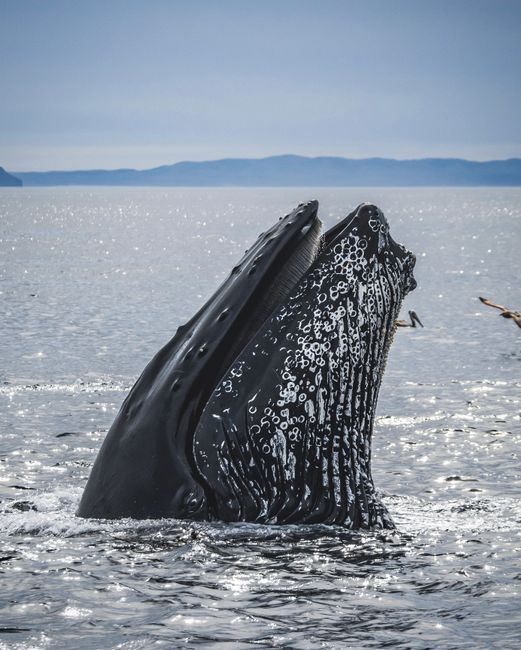
Baleen whales, a group encompassing species like humpbacks, blue whales, and fin whales, produce their iconic songs through a specialized structure known as the U-fold or phonic lip, located within their larynx. This U-fold is not homologous to the vocal cords of terrestrial mammals. Instead, it is a fleshy, U-shaped structure that, when air is forced through it, vibrates and generates sound. The flow of air is facilitated by the whale’s ability to bypass its lungs and directly push air from the trachea through this U-fold. This unique physiological adaptation allows baleen whales to produce incredibly low-frequency sounds, often below the range of human hearing, which can travel hundreds or even thousands of kilometers through the ocean. The tension and shape of the U-fold can be manipulated by surrounding muscles, allowing the whale to alter the pitch and quality of its song. Moreover, baleen whales can create complex sequences of sounds, including moans, groans, grunts, and whistles, forming intricate song patterns that are believed to convey a range of information, from mating calls and territorial defense to social bonding and navigation. The energy required to produce these prolonged and powerful vocalizations is substantial, underscoring their evolutionary significance. Researchers have observed that the production of song is a metabolically demanding process, with individuals dedicating significant energy reserves to this acoustic display. This energetic investment highlights the critical role of song in the life cycle and reproductive success of baleen whales. The acoustic properties of baleen whale song are also shaped by the environment. Low-frequency sounds are particularly effective at propagating through the ocean’s sound channel, minimizing attenuation and maximizing range. This has led to the hypothesis that the songs of baleen whales are not just for short-range communication but serve as a form of long-distance broadcasting, potentially allowing individuals to locate mates across vast oceanic distances or maintain awareness of the presence of others within a dispersed population.
Toothed whales, a diverse group including dolphins, porpoises, and sperm whales, employ a different, yet equally fascinating, mechanism for sound production. They utilize a set of structures called "phonic lips" or "monkey lips" situated within their nasal passages, specifically in the area of the blowhole. These phonic lips are two fleshy folds that vibrate when air is pushed through them, generating a variety of clicks and whistles. The precise anatomical arrangement of these phonic lips and their associated muscles is species-specific, contributing to the distinct vocal repertoires observed across different toothed whale species. The airflow for sound production in toothed whales is managed differently than in baleen whales. They can recycle air within their nasal passages, allowing for prolonged sound production without the need to surface for each breath. This efficiency is particularly crucial for species like sperm whales, which can dive to extreme depths for extended periods. The sounds produced by toothed whales are generally of higher frequency than those of baleen whales. Clicks are primarily used for echolocation, a sophisticated biological sonar system that allows them to navigate, hunt, and perceive their environment in the dark and murky ocean depths. By emitting short, high-frequency clicks and listening to the returning echoes, toothed whales can create a detailed acoustic map of their surroundings, detecting prey, obstacles, and even the texture of the seafloor. Whistles, on the other hand, are more akin to the "songs" of baleen whales and are used for social communication, including individual identification, group coordination, and maintaining social bonds. The ability to modulate the frequency and amplitude of these whistles allows for a nuanced communication system within pods. The complexity of these vocalizations is further enhanced by the rapid and precise control over the phonic lips, enabling the generation of intricate sequences of sounds. Research into the neural control of these vocalizations is ongoing, with scientists seeking to understand the brain regions and pathways responsible for generating and processing these complex acoustic signals.
The study of whale vocalizations has been revolutionized by advancements in hydrophone technology and computational analysis. Hydrophones, underwater microphones, allow researchers to record whale sounds with remarkable fidelity, capturing subtle nuances in pitch, rhythm, and timbre. These recordings are then subjected to sophisticated spectrographic analysis, which visually represents sound frequencies over time. This allows scientists to identify individual call types, patterns, and even potential dialects within whale populations. For baleen whales, the repetitive and structured nature of their songs has led to the hypothesis that they are learned behaviors, passed down through generations. Humpback whale songs, in particular, exhibit remarkable changes over time, with entire populations adopting new song structures within a breeding season. This cultural transmission of song is a fascinating aspect of whale behavior and suggests a level of social learning comparable to that seen in some terrestrial species. The study of these acoustic changes provides insights into the social dynamics and migratory connectivity of whale populations. For toothed whales, the intricate patterns of their clicks and whistles are being decoded through advanced machine learning algorithms. Researchers are attempting to identify individual "signatures" within whistle patterns, analogous to human names, and to decipher the combinatorial rules that govern how different sound elements are combined to convey meaning. This field, known as bioacoustics, is at the forefront of understanding animal communication and has significant implications for marine conservation.
The research into whale song voice boxes is not merely an academic pursuit; it has critical implications for the conservation of these vulnerable marine mammals. Understanding their communication systems helps us to identify critical habitats, migratory corridors, and areas of social congregation. This information is vital for developing effective marine protected areas and mitigating anthropogenic threats such as shipping noise, sonar, and entanglement in fishing gear. Noise pollution from human activities can significantly interfere with whale communication, masking their calls, causing stress, and disrupting essential behaviors like foraging and reproduction. By understanding the frequencies and patterns of whale song, scientists can better assess the impact of this noise and advocate for noise reduction measures. Furthermore, the study of whale vocalizations can help monitor population health and distribution. Changes in song complexity, frequency, or the presence of specific calls can indicate stress, declining populations, or shifts in migratory routes, providing early warning signals for conservation efforts. The ability to distinguish between the vocalizations of different species, and even individuals, allows for more precise population assessments and the tracking of individual whales over time. This can be invaluable for understanding population dynamics, social structures, and the impact of environmental changes on whale populations.
The biological mechanisms underlying the generation of whale song are a testament to the power of evolutionary adaptation. The development of the U-fold in baleen whales and the phonic lips in toothed whales represents distinct evolutionary pathways driven by the need to produce effective sound in an aquatic environment. The low frequencies of baleen whale song are optimized for long-distance propagation, a necessity for animals that roam vast oceanic expanses. The high-frequency clicks and whistles of toothed whales, on the other hand, are ideal for the close-range echolocation and social communication required by these often more gregarious and active predators. The intricate musculature and neural control associated with these vocal organs highlight the sophistication of their sensory and motor systems. Ongoing research continues to refine our understanding of the precise biomechanics of sound production, the neural pathways involved in vocalization, and the cognitive processes that underpin their complex communication. Advances in imaging techniques, such as MRI and CT scans, are providing unprecedented anatomical detail, while genetic studies are shedding light on the evolutionary history of these vocal structures. The sheer diversity of whale vocalizations, from the haunting melodies of humpbacks to the rapid-fire clicks of dolphins, speaks to the incredible adaptive radiation of cetaceans and their remarkable ability to thrive in a wide range of marine environments. The ongoing exploration of the whale song voice box is a journey into the very essence of these magnificent creatures, revealing the depth and complexity of their lives beneath the waves and reinforcing the urgent need for their continued protection. The symphony of the deep, once a mystery, is gradually being understood, offering a glimpse into a world of communication as rich and vital as our own.
