The drainage of the world’s peatlands has emerged as a significant, yet historically underappreciated, driver of global climate change, contributing approximately 2.7 percent of the total human-caused alteration to Earth’s energy budget as of 2020. New research published in the journal Nature indicates that the historical conversion of these carbon-rich wetlands for agriculture, forestry, and infrastructure has created a "climate debt" that will continue to release carbon dioxide into the atmosphere for decades, even if no further land is drained. By analyzing the radiative forcing—the net change in the energy balance of the Earth system—researchers have quantified the dual impact of these ecosystems: the massive release of carbon dioxide (CO2) versus the minor, offsetting reduction in methane (CH4) emissions.
The Physics of Peatland Degradation
Peatlands act as one of the planet’s most effective natural carbon sinks. Composed of partially decayed organic matter accumulated over millennia in waterlogged conditions, they store vast quantities of carbon that would otherwise reside in the atmosphere. When these lands are drained for development, the water table drops, exposing the peat to oxygen. This initiates a process of aerobic decomposition, which converts the long-stored organic carbon into carbon dioxide.
To understand the climate impact, scientists measure the change in the Earth’s energy budget in milliwatts per square meter (mW/m²). In 2020, the cumulative impact of CO2 emissions from drained peatlands was calculated at +83 mW/m². While the drainage also reduces the natural methane emissions typical of waterlogged, anaerobic peatlands—a process that provides a slight cooling effect of approximately -9 mW/m²—the net result is a warming effect of +73 mW/m². When accounting for standard scientific error margins, this radiative forcing represents between 1.8 and 3.6 percent of the total human-induced warming effect on the planet. Put another way, roughly 4 percent of all the carbon historically sequestered in the world’s peatlands has already been liberated into the atmosphere.
Regional Disparities and Historical Context
The footprint of peatland drainage is not distributed evenly across the globe. The historical development of these landscapes reveals distinct regional patterns that have evolved alongside industrial and agricultural expansion.
Europe currently accounts for more than half of the total CO2 emissions derived from drained peatlands. This is largely a consequence of centuries of agricultural reclamation and the systematic draining of bogs for peat extraction—a practice that began in earnest during the industrial expansion of the 18th and 19th centuries. North America contributes approximately 14 percent of the global total, reflecting a different timeline of land-use change.
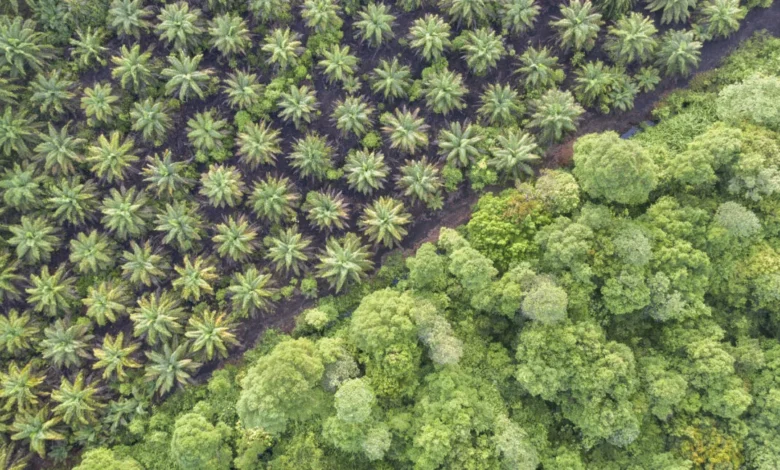
Southeast Asia, however, represents a more recent and aggressive shift. While the region’s historical contribution was low, emissions have surged over the last few decades, primarily due to the conversion of vast peat swamp forests into industrial oil palm and pulpwood plantations. This rapid, modern-day transformation has accelerated the regional release of carbon, making Southeast Asia a primary focal point for international conservation efforts. The divergence in these timelines—Europe’s long-term, cumulative legacy versus Southeast Asia’s acute, recent spike—highlights the complex nature of land-use management on a global scale.
The Commitment of Future Emissions
One of the most concerning findings of the recent study is that the damage to peatlands is not a closed chapter. Draining a peatland is a catalyst for a long-term chemical reaction; once the water table is lowered, the peat continues to oxidize and emit carbon for years or even centuries. Consequently, the world is currently "locked in" to a trajectory of future emissions based on decisions made in the past.

The research team utilized climate modeling to project the radiative forcing effect through the year 2100. Their findings demonstrate that if global peatland water levels remain at their 2020 status, the total warming effect from these lands will nearly double, rising from 73 mW/m² to approximately 138 mW/m² by the end of the century. This indicates that current levels of peatland drainage are essentially "committed" to further warming, regardless of future energy transitions in other sectors.
Mitigation and the Path to Restoration
The study offers a nuanced perspective on the efficacy of potential interventions. If humanity chooses to ignore the current degradation, the radiative forcing will continue its upward climb. However, the model suggests that active intervention is possible. "Moderate restoration"—the act of re-wetting previously drained peatlands—could significantly slow the rate of growth in these emissions. More ambitiously, an aggressive global restoration program could potentially reduce the total radiative forcing effect to levels below those measured in 2020.
The restoration of peatlands involves complex engineering, including the blocking of drainage canals and the restoration of hydrological regimes to re-saturate the soil. This process is not merely a theoretical exercise; in many parts of the world, re-wetting programs are already underway to prevent land subsidence and reduce the risk of catastrophic wildfires, which often serve as the final, violent release of carbon from degraded peatlands.
Broader Climate Implications
The significance of this study lies in its shift in focus toward "slow-moving" climate variables. While much of the climate debate centers on immediate industrial emissions, the "carbon debt" held in soils and wetlands represents a massive, often invisible, liability.
Environmental policy experts suggest that these findings necessitate a change in how land-use change is integrated into national climate inventories. Currently, many nations focus on annual carbon sequestration rates, which often fail to account for the ongoing, multi-decadal carbon loss from historically drained areas. By incorporating the radiative forcing perspective, policymakers can better identify "hotspots" where restoration efforts would yield the highest climate benefit.
Furthermore, the study underscores the reality that the climate system possesses significant "momentum." Because the oxidation of peat is a slow process, the consequences of 20th-century drainage will continue to influence global temperatures well into the 22nd century. This confirms the necessity of proactive land management as a pillar of climate change mitigation.
Conclusion: A Manageable Challenge
The research published in Nature serves as both a warning and a roadmap. It clarifies the extent of the impact caused by centuries of peatland drainage while demonstrating that this process is, unlike some other feedback loops in the climate system, largely reversible.
While it is unrealistic to expect a total return to the landscapes of 1800, the data provides a clear incentive for prioritizing the protection and re-wetting of peat-rich regions. The climate impact of peatlands is an issue where science, policy, and land management intersect, offering a concrete opportunity to mitigate a significant percentage of human-caused warming. As the world navigates the complexities of the climate crisis, the "hidden" carbon locked beneath our feet must move to the forefront of the global conversation. By choosing to restore these critical ecosystems, society can pay down its climate debt, potentially preventing a significant portion of the projected warming expected by the turn of the next century.
Related posts: