The True Cost of Universal Healthcare: Navigating Sticker Shock and the Realities of American Spending

As policymakers in Oregon finalize a comprehensive proposal for a statewide universal healthcare system, a familiar political battlefield has once again materialized. The central point of contention remains the staggering price tag and the corresponding tax increases required to sustain it. According to projections released by the Oregon Universal Health Plan Governance Board, a statewide single-payer program would cost approximately $69.7 billion annually by 2032. This figure has immediately galvanized opposition, with critics decrying the proposal as a fiscally irresponsible expansion of government that would impose an unprecedented burden on taxpayers.
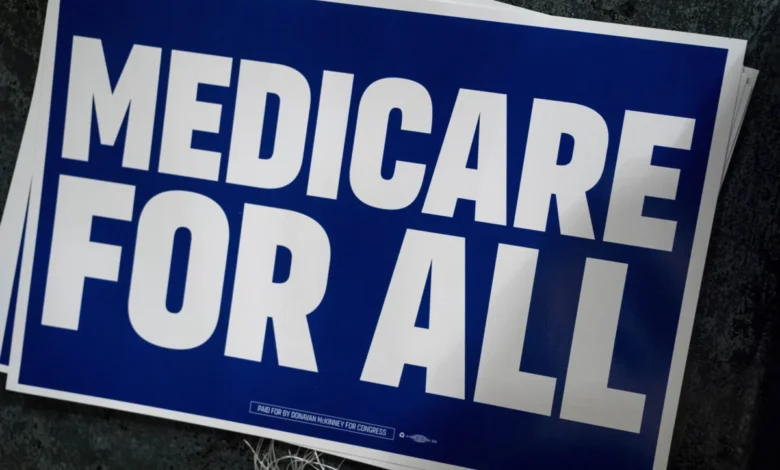
This localized debate mirrors a broader, national struggle over "Medicare for All." Following recent political shifts that empowered progressives and universal healthcare advocates, national discussions have regained momentum. A recent White House cost estimate pegged the price tag of a federal single-payer model at $4.7 trillion annually, or roughly $47 trillion over a ten-year projection window. To opponents, these figures represent an unviable explosion of federal spending. However, proponents, public health researchers, and academic experts argue that focusing exclusively on the gross cost of a government-run system ignores the broader, often obscured financial reality of how healthcare is currently funded in the United States.
The Illusion of Sticker Shock: Re-evaluating Current US Healthcare Spending
To understand the debate surrounding universal healthcare, advocates argue that one must examine what the nation already spends under the status quo. Cynthia Cox, a senior vice president at KFF, a health information nonprofit, emphasizes that trillions of dollars are already funneled into the American healthcare apparatus annually.
"We already do spend trillions of dollars on healthcare," Cox noted. "It’s just that it’s not only spent by the federal government but also by states, individuals, private insurers, and other third-party payers."
Recent data from the Centers for Medicare & Medicaid Services (CMS) reveals that total U.S. healthcare spending from all sources reached approximately $5.3 trillion in 2024. Furthermore, independent federal and actuarial projections indicate that cumulative national health expenditures are on pace to exceed $72 trillion over the decade spanning from 2025 through 2034. While this comprehensive total includes institutional costs such as military and veteran health services, the Indian Health Service, and elective treatments that may not be fully integrated into a standard universal package, the sheer volume of capital moving through the system dwarfs the projected costs of single-payer models.
Proponents argue that under a universal system, increased public sector spending would directly replace—rather than simply stack on top of—the vast sums currently paid by corporations
, employers, and everyday consumers through private insurance premiums, deductibles, copayments, and coinsurance. Consequently, a significant percentage of the population would ultimately experience a net financial benefit, paying less in dedicated health taxes than they currently shell out for disjointed out-of-pocket medical expenses.
Yet, translating these complex economic nuances into persuasive public messaging remains one of the single greatest hurdles for healthcare reform advocates. Without effective communication strategies to alleviate widespread anxieties regarding higher taxes, contemporary single-payer initiatives risk suffering the same premature demise as historical efforts in states such as California, Massachusetts, and Vermont.
A Historical Retrospective: Past Hurdles and Legislative Roadblocks
The path toward universal healthcare is littered with high-profile legislative failures. The structural and political challenges of implementing a single-payer framework were vividly illustrated a decade ago in Vermont. In 2014, then-Governor Peter Shumlin, a Democrat, abruptly halted his state’s ambitious push toward a statewide single-payer system. Although econometric models suggested the plan could eventually generate systemic savings for Vermonters, the immense political capital required to push through the requisite tax increases vanished amid turbulent implementation hurdles associated with the state’s health insurance exchange under the Affordable Care Act.
Similar single-payer ballot initiatives in states like California, Massachusetts, and Oregon have historically struggled to secure broad electoral mandates, frequently failing to capture even a quarter of the voting public’s support. Critics argue these failures stem from an inherent public distrust of government-run monopolies and a profound fear of compounding tax burdens.
Despite these historical setbacks, the political landscape has continued to evolve. Recent electoral cycles have introduced a new cohort of progressive lawmakers to national and state legislatures, including figures who campaigned explicitly on universal healthcare platforms. This political shift has elevated prominent single-payer advocates within federal committees, setting the stage for intense legislative battles leading up to the 2028 presidential election cycle.
John McDonough, a professor of health policy at the Harvard T.H. Chan School of Public Health, points out that the opacity of the current American medical billing system severely complicates public education efforts.
"Most people think that what they pay out-of-pocket or out of their paycheck directly is what it costs, and they’re not as familiar with the larger piece," McDonough explained. "Nobody on Medicare knows what that costs. Nobody on Medicaid knows what it costs. Very few people on the exchanges know. So, with something brand-new, it’s a massive education effort just to get to the starting line."
The Oregon Blueprint: Local Battlegrounds and Economic Projections
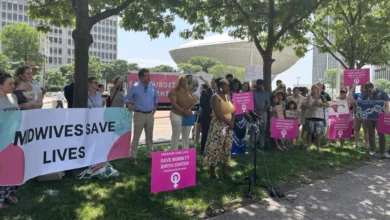
Oregon’s recent engagement with universal healthcare serves as a case study in the polarization surrounding these proposals. On November 23, the Oregon Universal Health Plan Governance Board submitted its exhaustive structural report to the state legislature. The proposal envisions the creation of a public corporation funded through a combination of progressive corporate and personal taxes. This entity would finance a unified healthcare system providing comprehensive coverage to virtually all state residents, entirely eliminating premiums, copayments, and deductibles. The state legislature could vote on the framework as early as next year, or alternatively, route the measure directly to voters as a statewide ballot referendum in 2028.
Unsurprisingly, the proposal has encountered fierce pushback from fiscal conservatives. Oregon Senate Republican Leader Bruce Starr sharply criticized the initiative in a public statement, arguing that the system would expand the overall state budget by 43% and introduce "unfathomable" tax obligations for working families.
"Handing control of hospitals, doctors, and insurance to the same bureaucracy that has failed at basic responsibilities, and layering on double-digit payroll and income taxes, is irresponsible and fiscally unsound," Starr asserted.
Conversely, members of the Governance Board have defended their economic models, maintaining that critics deliberately mischaracterize the transition as a pure net increase in societal costs. An independent economic analysis commissioned from the actuarial consulting firm Milliman concluded that, under the status quo, total annual healthcare spending in Oregon will climb to at least $76.3 billion by 2032. By contrast, the board’s financial projections estimate that the universal health plan would cap expenditures at approximately $69.7 billion that same year, excluding preliminary transition and start-up costs.
Board member Mike Leahy, a former health plan executive, expressed frustration over premature dismissals of the board’s empirical findings during an October board meeting.
"I just don’t want people to—because I’ve seen they’ve already started to—make all kinds of assertions about our work and saying, ‘It’s unaffordable, we can’t do it, end of story,’" Leahy said. "I’d like us to give this plan a chance of happening."
Proponents argue that achievable savings under the Oregon model would be realized by ruthlessly streamlining administrative overhead, utilizing centralized bargaining power to negotiate lower prescription drug prices, and systematically rooting out waste, fraud, and abuse. Architecturally, Oregon’s proposal—much like Vermont’s previous attempt—draws structural inspiration from Taiwan’s highly regarded single-payer National Health Insurance system. Implemented three decades ago, Taiwan’s model relies on balanced contributions from households, corporations, and the state, routinely achieving public satisfaction rates exceeding 90%.
The National Stage: Federal Implications and Strategic Messaging
As the debate transitions back to the national arena, federal policymakers are preparing for renewed clashes over healthcare affordability. While the executive branch under President Donald Trump remains ideologically opposed to government-financed, single-payer health architectures, legislative proponents view the coming years as a vital runway for structural design, economic modeling, and voter outreach.
Stephanie Woolhandler, a professor of public health at the City University of New York’s Hunter College, emphasizes the cognitive dissonance surrounding public perceptions of healthcare inflation.
"People are aware that healthcare is very expensive and that they have trouble getting access to it even if they have decent insurance," Woolhandler noted. "Но if they think $47 trillion is a big number relative to what we’re spending now, they’re mistaken."
Echoing this sentiment, Dr. Deborah Richter, a family physician and board president of Vermont Health Care for All, argues that the fundamental challenge lies in the visibility of the numbers. Under the current fragmented system, consumer costs are heavily masked through employer-sponsored benefit structures, hidden wage suppressions, and unpredictable out-of-pocket liabilities. Universal healthcare proposals consolidate these disparate expenditures into a single, highly visible budgetary figure.
"What people fail to realize is that we’re already paying the entire bill," Richter explained. "So you’re either paying in taxes, Medicare, Medicaid taxes, or you’re paying out-of-pocket for copays and deductibles, or coinsurance. You’re paying increased prices and getting lower wages."
"People get the impression that this is on top of what they’re already paying," she concluded. "And they’re already saying: ‘Oh, my God. I’m paying this. I can’t pay this extra tax.’"
Ultimately, the viability of universal healthcare in Oregon and across the United States will depend less on the absolute scale of its theoretical price tag and more on the political efficacy of its architects. Bridging the gap between macro-level financial transparency and public trust will determine whether single-payer reform remains an elusive policy ideal or becomes the foundation of a restructured American health system.