The landscape of professional football is currently dominated by intense speculation regarding Manchester United’s desperate search for January reinforcements, alongside significant developments in the Premier League, European leagues, and the wider world of rugby union. As clubs prepare for the mid-season window, the pressure is mounting for underperforming sides to secure critical personnel while governing bodies face intense scrutiny over financial and regulatory decisions.
Manchester United: A Strategic Pivot in the Transfer Market
Manchester United’s current situation has reached a critical juncture, with the club reportedly navigating a precarious financial and sporting position. Under the stewardship of Mauricio Pochettino, the club’s leadership is grappling with the reality of a constrained budget—estimated at less than £50 million for the January transfer window. This financial limitation has forced the recruitment team to shift their focus away from high-value targets toward more pragmatic, immediate solutions.
The primary objective for United is to bolster a squad that has struggled to find consistency in the Premier League. Recent reports from the Daily Mail suggest that Brentford defender Nathan Collins has moved to the top of the club’s defensive shortlist. This interest marks a significant departure from previous links to Everton’s Jarrad Branthwaite, whose valuation in excess of £70 million has effectively ruled him out as a viable mid-season acquisition. Additionally, the club has moved on from pursuing Calvin Bassey, who is expected to finalize a new contract at Fulham, signaling his long-term commitment to the London club.
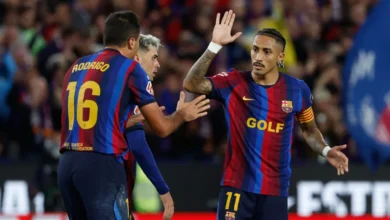
Beyond the defensive line, Pochettino is prioritizing the acquisition of a striker and a left-back. The left-back position has been a point of vulnerability since the summer, when the club failed to secure adequate cover for Luke Shaw. Potential targets include Barcelona’s Alejandro Balde and Manchester City’s Rayan Ait-Nouri, both of whom have been identified as players capable of providing depth and tactical flexibility. Sources indicate that United’s hierarchy is prepared to sanction only two major deals in January, potentially including one loan agreement, to ensure the club remains compliant with Financial Fair Play (FFP) regulations while attempting to climb out of their current league standing.
Premier League Updates: Stability and Emergent Talent
While Manchester United faces volatility, other Premier League clubs are managing their own distinct challenges. Chelsea, under the ownership of their new consortium, has publicly reiterated its support for manager Xabi Alonso. Despite an underwhelming start to the season that has left the fanbase restless, the club’s leadership reportedly remains committed to the long-term project led by the Spanish tactician. This stance reflects a growing trend among elite clubs to resist the "revolving door" culture of managerial appointments, opting instead for structural stability.
In North London, Tottenham Hotspur is celebrating a success story in the development of teenager Luca Williams-Barnett. The young forward, who recently made a significant impact on his first Premier League start with a goal and an assist, is reportedly on the brink of signing a long-term contract. This news is a major blow to Chelsea and Borussia Dortmund, both of whom had been tracking the youngster’s progress. The deal underscores Spurs’ commitment to nurturing home-grown talent as a cornerstone of their long-term strategy.
Elsewhere, Arsenal has received a major injury boost following the health scare involving goalkeeper David Raya. The Spaniard, who suffered a shoulder injury during a high-stakes fixture against Newcastle, was able to drive himself home, suggesting that the initial fears regarding the severity of the injury may have been overstated. His availability will be crucial for Mikel Arteta’s side as they look to maintain their challenge for the top four.
Scottish Football and European Developments
The landscape of Scottish football is currently dominated by interest in Celtic’s young forward, Camilo Duran. Leeds United, currently looking to strengthen their attacking options, has been monitoring the player’s development throughout the current season. Analysts suggest that any move for Duran would likely occur during the summer, though intense scouting suggests a formal inquiry may be imminent.
Simultaneously, the Scottish Football Association is at a crossroads regarding its youth development reforms. A scheduled vote on radical changes to the structure of the youth game has been delayed until the end of the season. The decision follows intense lobbying from clubs and stakeholders who argue that a mid-season transition would cause unnecessary disruption to the current youth campaign.
In Germany, Bayern Munich is facing a public relations crisis regarding the contract of Jamal Musiala. The German international, currently sidelined due to a diagnosis of ‘neurological dysfunction,’ has found his future at the club under the microscope. Reports alleging that the club is attempting to slash his wages during this period of medical uncertainty have drawn fierce criticism from FIFA’s professional players’ union. The situation has raised broader questions regarding the duty of care clubs owe to their players when injury or illness interrupts their ability to perform.
Global Governance: The FIFA World Cup Controversy
Beyond the pitch, the governance of world football remains a contentious subject. The Telegraph and The Times have published detailed investigations into a project led by FIFA President Gianni Infantino regarding the potential sell-off of World Cup commercial rights. The investigation alleges a plot that could have seen the rights to FIFA’s premier tournaments floated on stock exchanges, potentially netting tens of millions of pounds for top executives while risking the surrender of nearly half of the organization’s commercial rights for the next century. The revelation has sparked calls for greater transparency within the governing body and has renewed debates over the commercialization of international football.
The International Rugby Union Landscape
The world of rugby union is similarly fraught with high-stakes tension. New Zealand Rugby has provided a rare vote of confidence for All Blacks head coach Dave Rennie, despite the team suffering five defeats in a single calendar year—a statistical low not seen since 1998. The backing implies that the governing body views Rennie as the man to lead the team into the upcoming World Cup, prioritizing continuity over a change in leadership during a rebuilding phase.
In South Africa, the coaching staff is facing scrutiny for comments made by assistant coach Mzwandile Stick. Stick utilized his mother tongue, Xhosa, during a press conference to clarify his stance on remarks regarding Irish fly-half Sam Prendergast, effectively attempting to avoid the linguistic misinterpretations that often plague high-profile sports interviews. Despite this, there is speculation that he may still face disciplinary action, similar to the path taken by Rassie Erasmus, for his critiques of international match officials.
Finally, the commercial side of the sport is facing a reality check. Reports indicate that nearly half of the Allianz Stadium at Twickenham could be empty for the opening night of the Nations Championship finals. This potential lack of attendance highlights the challenges sports governing bodies face in filling large venues for non-traditional tournament formats, raising concerns about the long-term sustainability of the current international rugby calendar.
Implications for the Future
As the January window approaches, the collective narrative across these sports points to a period of consolidation and caution. Manchester United’s restricted spending and the scrutiny facing FIFA’s leadership suggest that the era of unfettered spending and opaque decision-making is under intense pressure. Clubs and organizations are being forced to justify their actions not just to their fans, but to regulators and the broader public.
For the footballing world, the coming months will serve as a litmus test for whether traditional giants can adapt to modern financial constraints without sacrificing their competitive edge. In the realm of rugby, the focus remains on whether historic institutions can evolve their commercial models to meet the demands of a changing global audience. In both instances, the decisions made in the boardrooms over the next few weeks will dictate the sporting trajectories of these organizations for years to come.