Inside Anthropic’s Record-Breaking IPO: How Early Bets by Notable Capital, Gic, and Baillie Gifford Paid Off

The venture capital ecosystem is built on calculated risks, but few gambles in recent memory match the sheer magnitude of the bets placed on Anthropic, the artificial intelligence research and safety company behind the Claude model family. When Notable Capital—formerly known as GGV Capital before its structural separation from its China operations in 2024—allocated roughly 10% of the U.S. portion of its $1 billion-plus fund into Anthropic’s Series E financing round, the move was met with widespread skepticism across the investment community.
At the time, Claude’s creator was widely perceived as trailing its dominant market rival, OpenAI. The competitive landscape had grown even more volatile following the release of DeepSeek’s R1 model just weeks prior, a development that sent shockwaves through the industry by threatening to upend the economic models of closed-source AI competitors. Furthermore, Anthropic’s entry valuation of $61.5 billion represented by far the highest valuation threshold that the predominantly early-stage venture firm had ever crossed in its 25-year history.
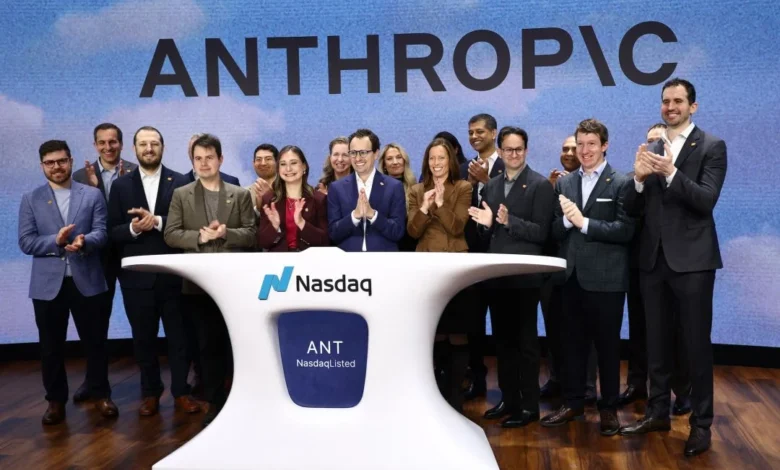
Yet, less than two years after those initial doubts, the narrative has fundamentally shifted. On Wednesday, Anthropic priced its initial public offering at $81.3 billion—marking the largest IPO in financial history—and achieved a fully diluted valuation of approximately $1.5 trillion before public trading commenced the following day. For firms like Notable Capital, GIC, and Baillie Gifford, those early-stage and growth-stage investments have translated into astronomical paper returns, validating a thesis centered on developer preference, enterprise monetization, and the enduring necessity of U.S.-based technological infrastructure.
The Developer-First Thesis: Notable Capital’s Early Conviction
The skepticism surrounding Notable Capital’s Series E investment was rooted in traditional venture capital metrics. Early-stage and multi-stage investors are typically conditioned to enter companies at much lower valuations to secure venture-scale multiples upon exit. Committing such a massive percentage of a flagship fund into a nearly $62 billion enterprise felt, to many limited partners, like chasing a high-priced asset near its peak.
However, internal analysis by a Notable Capital team comprising managing partners Hans Tung and Glenn Solomon, alongside principal Dan Cahana, yielded a very different conclusion. By analyzing developer trends and software deployment metrics, the team discovered a critical shift in user behavior: software engineers and technical early adopters were increasingly bypassing OpenAI’s ChatGPT in favor of Anthropic’s Claude. According to their data, developers were utilizing Claude roughly 70% of the time, representing a dramatic reversal from the figures recorded just one year prior.
“We just knew that for AI, the developer is at the center because they’re the early adopters,” Hans Tung, co-founder of the firm, explained in an interview.
Beyond developer traction, Notable Capital’s leadership relied on geopolitical and macroeconomic foresight. Having navigated the intricate complexities of U.S.–commercial and Sino-American regulatory relations firsthand, the firm’s partners were convinced that mission-critical enterprise applications would permanently require secure, domestic, closed-source models. That conviction transformed a seemingly reckless financial outlay into a foundational pillar of Notable’s portfolio strategy. With the recent IPO generating a paper return of roughly 15 times their initial capital, Notable’s limited partners are no longer questioning the wisdom of the bet.
Strategic Dining and Sovereign Wealth: GIC’s Multi-Billion Dollar Scaling Strategy
Notable Capital was far from alone in identifying Anthropic’s long-term trajectory. Traditional late-stage investors and sovereign wealth funds, which historically target predictable cash flows and lower-risk asset classes, mobilized billions of dollars as Anthropic’s commercial momentum accelerated.
Singapore’s sovereign wealth fund, GIC, began tracking Anthropic’s market positioning throughout 2024. However, the turning point for the sovereign fund occurred in early 2025 during an informal meeting at Che Fico, an upscale Italian restaurant in San Francisco. Chris Emanuel, head of technology investments at GIC, sat down with Anthropic Chief Financial Officer Krishna Rao. During the dinner, Rao presented detailed operational metrics demonstrating that continuous model iterations were directly driving exponential enterprise adoption.
“Claude Code was just released then,” Emanuel noted, referencing the developer tool that quickly gained traction across software engineering teams. “It was very early, but even then, we could see signs that it was really popular with developers.”
That meeting catalyzed a multi-stage capital commitment. GIC made its maiden investment during Anthropic’s Series F funding round, which was officially announced in September 2025 at a staggering $183 billion valuation. Driven by sustained enterprise growth, GIC’s conviction deepened to the point where the sovereign fund co-led Anthropic’s Series G alongside Coatue at a $380 billion valuation. GIC subsequently returned as a co-lead for the pre-IPO funding round, which valued the company at $965 billion.
In total, across these three successive funding rounds, GIC deployed more than $4.5 billion into Anthropic. Following the historic public offering, that concentrated capital accumulation secured the sovereign fund a direct equity stake equal to approximately 1% of the newly public corporation, according to individuals familiar with the fund’s financial disclosures.
Consistent Execution and Enterprise Expansion: Baillie Gifford’s Long-Term View
For institutional growth investors, the decision to back a capital-intensive artificial intelligence lab requires rigorous evaluation of operational discipline and revenue quality. Lilian Li, head of U.S. growth investments at Baillie Gifford, spent nearly two years studying Anthropic and conducting extensive dialogues with its executive team before deploying capital into the company’s Series F round.
Baillie Gifford’s entry was predicated on observable financial and operational indicators: specifically, that Anthropic was demonstrating consistent execution against its stated product roadmap while simultaneously capturing robust revenue streams and maintaining compelling gross margins.
Following Baillie Gifford’s initial investment, Anthropic systematically expanded its commercial footprint beyond core developer tools. The company successfully penetrated highly regulated and complex vertical markets, including legal services, life sciences, enterprise workspace orchestration via applications like Cowork, and advanced cybersecurity infrastructure.
“It’s actually quite incredible how consistent they have been with how quickly everything’s been changing,” Li observed.
Acting on this thesis, Baillie Gifford committed a cumulative $1.5 billion across three separate funding rounds. This calculated allocation has yielded substantial paper gains for the investment manager, mirroring the financial windfall experienced by dozens of other institutional backers who braved what once appeared to be astronomical valuations.
Timeline of Anthropic’s Meteoric Rise to the Public Markets
The journey from a challenger AI lab to a record-breaking $1.5 trillion public entity unfolded at an unprecedented velocity, reshaping the global technology and venture capital landscape:
- Late 2024: Notable Capital participates in Anthropic’s Series E round at a $61.5 billion valuation, committing roughly 10% of its U.S. fund despite external market doubts and competition from emerging open-source models.
- Early 2025: GIC leadership meets with Anthropic CFO Krishna Rao in San Francisco, setting the stage for institutional sovereign investment driven by expanding enterprise adoption metrics.
- September 2025: Anthropic closes its Series F funding round at a $183 billion valuation, drawing major capital inflows from GIC, Baillie Gifford, and other global institutional managers.
- Mid-to-Late 2025: The company accelerates its vertical expansion into legal tech, life sciences, and enterprise cybersecurity while launching developer-centric tools like Claude Code. Subsequent funding rounds, including a Series G at $380 billion and a pre-IPO round at $965 billion, push private valuations toward unprecedented heights.
- November 2026: Anthropic prices its initial public offering at $81.3 a share, securing $81.3 billion in total proceeds—the largest IPO in history—and achieving a fully diluted market valuation of approximately $1.5 trillion as public trading commences.
Market Implications and the Future of AI Valuations
The successful flotation of Anthropic at a $1.5 trillion valuation serves as a watershed moment for the artificial intelligence industry and the broader venture capital asset class. For years, critics warned of an artificial intelligence market bubble, citing eye-watering private valuations, massive compute infrastructure costs, and intense pricing pressure from open-source alternatives.
However, the liquidity event demonstrates that market-leading foundation model providers can successfully transition from capital-consuming research laboratories into highly monetized enterprise software giants. By proving that continuous enterprise adoption and high gross margins can justify multi-hundred-billion-dollar private valuations, Anthropic has redefined the ceiling for venture capital exits.
Furthermore, the willingness of institutional giants like GIC and Baillie Gifford, alongside forward-looking venture firms like Notable Capital, to deploy billions of dollars into late-stage private rounds signals a permanent structural shift in how private markets operate. Mega-rounds are no longer merely speculative plays; they are foundational bridges connecting early technological innovation directly to sovereign-scale public market debuts. As the dust settles on Wall Street following the largest IPO in history, the investment thesis championed by these firms—prioritizing developer loyalty, execution consistency, and enterprise integration—has been decisively vindicated.