Sao Paulo Grand Prix promises high-stakes drama as grid penalties scramble the field for Sunday’s showdown at Interlagos

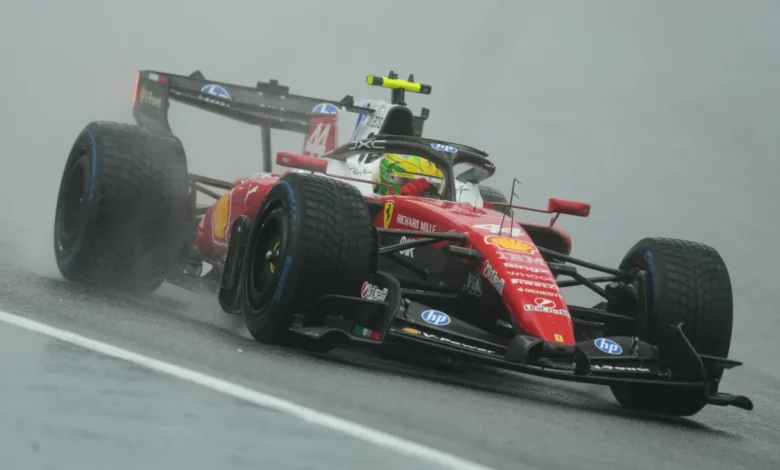
The iconic Autódromo José Carlos Pace in São Paulo is primed for a classic encounter this Sunday, as a volatile combination of a shuffled starting grid and a high probability of rain threatens to turn the 2025 Sao Paulo Grand Prix into a tactical masterclass. For the third consecutive year, Lando Norris has secured pole position at this historic venue, anchoring a front row that features the newly crowned F1 world champion, Kimi Antonelli. While the headline acts occupy the front of the grid, the narrative of this weekend is arguably defined by the chaos behind them, with a series of engine-related penalties forcing championship heavyweights into a desperate scramble from the back of the pack.
A Grid Turned Upside Down
The traditional order of the Formula 1 grid has been thoroughly dismantled by strategic power unit changes. Red Bull’s Max Verstappen and Ferrari’s Lewis Hamilton, two of the sport’s most formidable drivers, find themselves relegated to the rear of the field due to technical penalties. Compounding the misery for Ferrari, Charles Leclerc will start 14th, burdened by a 10-place grid penalty.
Mercedes’ George Russell, who displayed blistering pace during a wet and chaotic qualifying session, was left lamenting a strategic miscalculation by his team that cost him the pole. Compounding his frustration, Russell will start seventh after incurring a five-place grid penalty for the installation of a new internal combustion engine. This alignment has prompted Mercedes team principal Toto Wolff to characterize the race as a "reverse grid" scenario. "It is an exciting prospect," Wolff noted. "Our priority is to secure the necessary points for the Constructors’ Championship, but in these conditions, it is truly a case of the floodgates opening. We are ready to race."
The Starting Order: A New Breed of Front-Runners
The top 10 for Sunday’s race reflects the shifting dynamics of the 2025 season, with young talent and established challengers capitalizing on the misfortune of the grid leaders:
- Lando Norris (McLaren)
- Kimi Antonelli (Mercedes)
- Liam Lawson (Racing Bulls)
- Nico Hulkenberg (Audi)
- Isack Hadjar (Red Bull)
- Oliver Bearman (Haas)
- George Russell (Mercedes)
- Fernando Alonso (Aston Martin)
- Alex Albon (Williams)
- Oscar Piastri (McLaren)
Historical Context and the Verstappen Factor
Max Verstappen is no stranger to the high-pressure environment of Interlagos. In 2024, the Dutchman delivered a legendary performance, clawing his way from 17th on the grid to secure a victory in rain-soaked conditions. His ability to navigate the 4.3km circuit—characterized by its elevation changes and technical corners—has historically been unparalleled. However, Verstappen remains cautious about his prospects for Sunday.
The Dutchman noted that the technical regulations surrounding the new "Overtake Mode" might limit his ability to scythe through the field as he has in years past. "The Overtake Mode doesn’t really provide the same advantage here," Verstappen explained. "Everyone is draining their battery from the final corner to Turn 1, and with everyone utilizing their wings, the relative effect of the deployment is diminished. It will be harder to overtake once we reach cars with similar lap times."
The Technical Evolution: Overtake Mode vs. DRS
Since the start of the 2025 season, Formula 1 has replaced the traditional Drag Reduction System (DRS) with the sophisticated "Overtake Mode." This system is activated when a driver is within one second of the car ahead, allowing for a temporary surge in electric motor output. Unlike the old system, which relied on wing geometry, Overtake Mode allows the following car to maintain higher speeds beyond the standard 180mph regulatory cap, pushing the limit up to 209mph. At a circuit like Interlagos, where the run to Turn 1 is crucial, the efficiency of energy deployment will be the deciding factor for those attempting to recover from the back of the grid.
Hamilton’s Redemption Arc
Lewis Hamilton, who famously navigated from 20th to fifth in the 2021 Sprint and subsequently won the Grand Prix, faces a different challenge this year. His Ferrari machinery has struggled to match the pace of the front-runners throughout the weekend. Despite this, Hamilton remains optimistic, citing the potential for inclement weather as his greatest ally. "It will be tricky conditions, but I love racing in the rain," Hamilton stated. "I treated qualifying as a test session to ensure the engine was healthy and the car felt balanced. I feel prepared for the challenge."
Constructors’ Championship Implications
The race holds significant weight beyond individual glory. Mercedes is currently in a prime position to secure their ninth Constructors’ Championship since 2014. With Antonelli starting second and Russell seventh, a strong finish for the Silver Arrows—specifically outscoring Ferrari by three points or more—will mathematically seal the title. Ferrari, starting from the mid-to-back pack, faces an uphill battle to keep their championship hopes alive. Charles Leclerc, however, remains defiant. "My strength in the junior categories was always wet driving," Leclerc observed. "If we can find the right operating window for the car, we can certainly fight for much better than a top-six finish."
Norris and the McLaren Upgrade Path
Lando Norris, fresh from his pole position, is wary of the threat posed by Kimi Antonelli. McLaren has introduced a comprehensive upgrade package this weekend, including a new front wing, rear wing, beam wing, and floor geometry. Early data suggests the car is performing well, but Norris believes that the dry-weather pace of the Mercedes is currently superior.
"I expect a battle regardless of the weather," Norris admitted. "If it stays dry, the fight will be even tougher because I don’t believe we quite have the raw speed of the Mercedes. That’s why I am hoping for a dark, gloomy, and wet day. In the rain, it becomes less about the car’s absolute performance and more about who can push to the absolute limit. That is where I see our opportunity."
The Final Countdown
As the teams finalize their preparations, the weather remains the ultimate variable. The Interlagos circuit is notoriously difficult to predict, with microclimates often resulting in sudden downpours that can last for mere minutes, forcing teams to make split-second decisions on tire strategy.
The build-up to the 2025 Sao Paulo Grand Prix begins at 3:30 PM on Sunday, with lights out scheduled for 5:00 PM. The event is set to be a defining moment in the 2025 calendar, serving as the final leg of the current triple-header. Whether the race ends in a tactical chess match on a drying track or a chaotic sprint through a tropical deluge, the narrative of the championship and the history of this legendary circuit ensure that the eyes of the sporting world will be firmly fixed on São Paulo.
Following the race, the "Chequered Flag" reaction show and "Ted’s Notebook" will provide in-depth analysis of the maneuvers and strategies that defined the afternoon. For fans and analysts alike, the question remains: can the titans of the sport overcome the grid penalties and the elements to produce another historic finish, or will the new generation of stars—Norris and Antonelli—cement their dominance at the top of the standings? Regardless of the outcome, the Sao Paulo Grand Prix promises to be a testament to the unpredictable and exhilarating nature of modern Formula 1.