As American voters head to the polls this Tuesday, the nation’s electoral infrastructure faces a test of unprecedented magnitude. For the first time in modern history, the federal government—under the explicit direction of the Trump administration—has engaged in a sustained campaign to assert direct control over state-run election administration. This shift has created a climate of profound uncertainty, pitting federal law enforcement agencies against local election officials and triggering a flurry of emergency litigation in states from California to Alaska.
The administration’s strategy, characterized by the Department of Justice (DOJ) and the Department of Homeland Security (DHS) as a necessary crackdown on noncitizen voting, has been framed by critics and voting rights experts as a calculated effort to undermine public trust in the democratic process. Despite the absence of empirical evidence to support claims that widespread illegal voting is tipping the scales in favor of Democrats, federal authorities have utilized investigative resources, grand jury subpoenas, and civil litigation to pressure states into changing how they verify voter rolls and process ballots.

A Chronology of Escalating Federal Pressure
The tension between the White House and state election offices has intensified steadily since the administration took office. The trajectory of this conflict can be broken down into several key phases:
- Initial Data Demands: Early in the administration’s term, federal authorities initiated a campaign to force states to surrender unredacted voter registration files. This move was framed as a security measure but was widely criticized by state secretaries of state as an overreach of federal power into state-managed databases.
- Targeting Mail-in Voting: As the midterms approached, the administration pivoted to restricting mail-in ballot procedures, arguing that the modality is inherently susceptible to fraud. This led to a series of legal challenges aimed at invalidating specific types of mail-in ballots.
- The "Noncitizen" Investigation: Throughout the fall, the DHS and DOJ began a massive operation to cross-reference voter rolls with immigration records. This effort led to the improper flagging of eligible U.S. citizens, causing localized confusion and, in some cases, the wrongful removal of voters from registration lists.
- Legal Confrontations: In late October, the federal government filed a high-profile lawsuit against California, seeking to block the counting of over 20,000 ballots from voters labeled "likely noncitizens." The case reached a peak on Friday when a federal judge issued a restraining order against the DOJ, characterizing its demands for records as an intimidation tactic.
- The Alaska Precedent: Most recently, the administration attempted to intervene in a U.S. Senate race in Alaska, seeking to prevent the state from certifying results based on the presence of a second candidate sharing a name with the incumbent. This was largely interpreted by legal scholars as an attempt to establish a legal theory that would allow the federal government to block the certification of election results nationwide.
The Role of Data and the Accuracy of Federal Claims
The core of the federal government’s justification for its current interventions rests on the assertion that thousands of noncitizens are active on state voter rolls. However, independent audits and state-level investigations have repeatedly contradicted these figures.
For instance, when the DOJ presented a list of 20,000 "likely" noncitizens to California officials, a subsequent analysis by Los Angeles County revealed that a significant portion of those individuals were, in fact, naturalized citizens or voters who had never cast a ballot. Similar discrepancies emerged in Washington state, where Secretary of State Steve Hobbs dismissed a federal list of 400 names as "not reliable," noting that it included duplicate entries, U.S. citizens, and individuals who had never registered to vote.

Data experts suggest that the "noise" created by these claims serves a political rather than an administrative purpose. By characterizing legitimate voter databases as "fraudulent," the administration creates a pretext for "election integrity" operations that, while legally thwarted in many instances, succeed in generating doubt among the electorate.
Official Responses and the "Silent" Gap
The federal government maintains that its actions are strictly within the scope of its constitutional mandate to protect the integrity of federal elections. A spokesperson for the DHS emphasized that Immigration and Customs Enforcement (ICE) is "not planning operations targeting polling locations," though they added that the agency reserves the right to perform "intelligence-driven targeted enforcement" if a safety threat arises.
However, the reality on the ground has been more volatile. In Leon County, Florida, the appearance of U.S. Customs and Border Protection vehicles at an early voting site—despite prior assurances from federal authorities that this would not happen—sparked an FBI investigation and widespread outcry. While the agents were later reported to have been visiting the site to cast their own votes, the optics of heavily marked federal law enforcement vehicles at a polling location exacerbated existing anxieties.

The resignation and termination of high-level officials within the Election Assistance Commission (EAC) have further complicated the situation. Ben Hovland, a former commissioner, has warned that the administration’s rhetoric is designed to encourage voters to "throw their hands up" and sit out the election, thereby lowering turnout in key districts.
Implications for Election Security and Public Trust
The broader impact of these events is a weakening of the traditional "federal-state partnership" that has governed U.S. elections for decades. Previously, the Cybersecurity and Infrastructure Security Agency (CISA) acted as a central hub for sharing threat intelligence, helping local officials counter both cyberattacks and physical security threats. Under the current administration, CISA’s influence has been significantly curtailed.
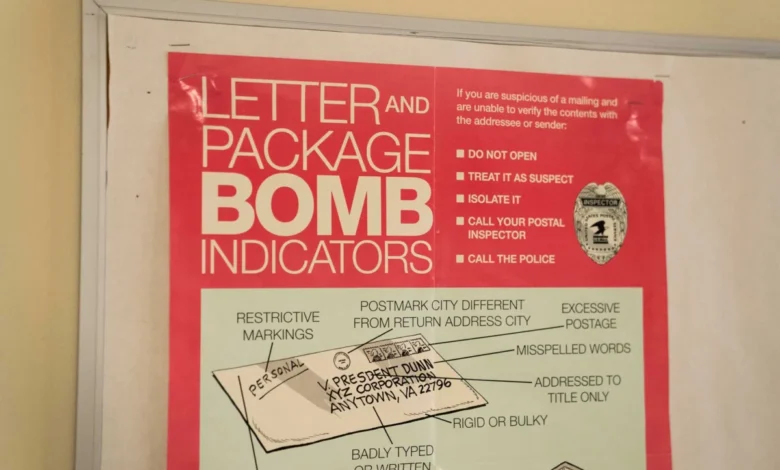
This has left local election offices to fend for themselves. In the face of threats, including the mailing of suspicious white powders to election offices in states like Arizona, local officials have had to rely on private nonprofits and state-level security resources. Derek Tisler of the Brennan Center for Justice noted that this decentralization is inherently dangerous: "States acting on their own just do not have the same power or the same comprehensive intelligence picture that a fully functional federal agency provides."

Furthermore, the "war-gaming" being conducted by state attorneys general, such as Washington’s Nick Brown, highlights the severity of the crisis. These officials are actively preparing for a scenario in which the federal government attempts to seize ballots or block the certification of votes. While such scenarios remain hypothetical, the fact that legal counsel is preparing for them underscores the erosion of democratic norms.
The Outlook for Postelection Challenges
As the focus shifts from the polls to the counting process, legal experts are bracing for a wave of postelection litigation. The administration’s aggressive use of the justice system in the lead-up to the election—specifically the attempts to influence certification processes in Alaska and California—suggests that the government may be testing legal theories for broader application.
Election law experts point to the possibility that if the election results do not align with administration preferences, there could be attempts to pressure state boards or even the U.S. Congress to block the seating of new members. While law professors such as Notre Dame’s Derek Muller argue that such efforts would likely fail in the face of constitutional challenges and congressional rules, they acknowledge that even an unsuccessful challenge could delay the transition of power and further polarize the country.

Ultimately, the 2026 midterms are shaping up to be a defining moment for American governance. The question is no longer just about which party will win the legislative majority, but whether the mechanisms of election administration can withstand the pressures of a federal government that has decided to prioritize intervention over institutional support. As polling stations close and the tallying begins, the eyes of the world are fixed on whether the result will be accepted, or if the "noise and confusion" of the campaign season will manifest as a constitutional crisis in the weeks to follow.