House Democrats Renew Demands for Transparency Following Reports of Hundreds of U.S. Citizens Detained by Immigration Authorities

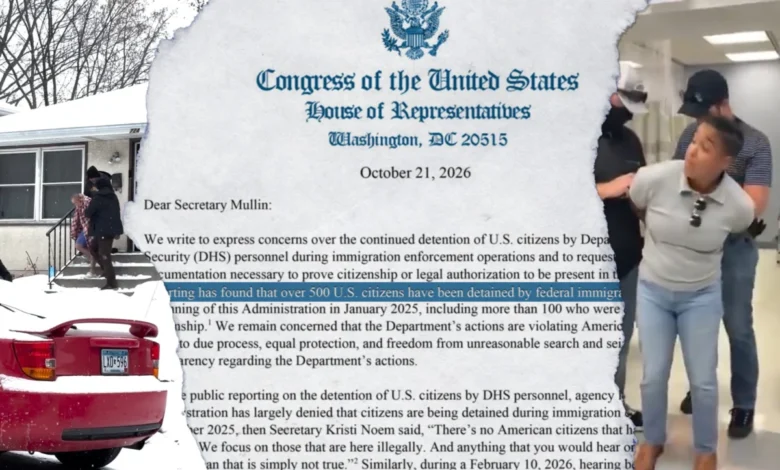
A coalition of House Democrats is intensifying its oversight efforts regarding the Department of Homeland Security (DHS), demanding clear explanations from the Trump administration concerning the detention of hundreds of U.S. citizens by immigration enforcement agents. Building upon a comprehensive investigation by ProPublica, the lawmakers are seeking granular data on how federal agencies verify citizenship during enforcement operations and why so many American citizens have been caught in the crosshairs of immigration detention protocols.
The effort, led by California Representative Lou Correa and supported by 39 other members of Congress, was formalized in an October letter addressed to DHS Secretary Markwayne Mullin. The correspondence serves as a follow-up to a long-standing impasse between legislative oversight committees and the executive branch, marking a significant escalation in the struggle to define the boundaries of federal immigration authority when it encroaches upon the civil liberties of citizens.
The Scope of the Crisis: Defining the Undercount
The core of the congressional inquiry rests on data indicating that at least 500 American citizens have been held by immigration agents in recent years. However, both lawmakers and civil rights advocates argue that this figure is almost certainly a conservative estimate. Because the federal government lacks a centralized, transparent system for tracking and reporting the detention of U.S. citizens, the true scale of the problem remains obscured by administrative silence.
The implications of these detentions extend far beyond mere administrative error. Expert analysis suggests that these incidents represent a systemic disregard for constitutional protections. Investigations have revealed that in more than 100 documented cases, American citizens were subjected to interrogations regarding their citizenship status without adequate cause. Even more alarming are reports of 63 Americans detained while exercising their right to record law enforcement, 36 individuals held for over 24 hours without access to legal counsel or family, and approximately a dozen citizens who were erroneously deported, a group that predominantly included children.
Chronology of Congressional Oversight
The current tension is the latest chapter in a multi-year effort by Democrats to address the civil rights implications of immigration enforcement. The timeline of this oversight is as follows:
- Early 2025: Congressional Democrats began a concerted push for details regarding interactions between Immigration and Customs Enforcement (ICE) and U.S. citizens following initial reports of widespread wrongful detention.
- Mid-2025: A series of investigative reports revealed that over 170 citizens had been detained against their will, prompting the launch of a wide-ranging, joint congressional investigation into DHS practices.
- October 2025: Representative Lou Correa and 39 colleagues formally requested a breakdown of detained citizens and documentation on how agents are trained to distinguish between non-citizens and those protected by U.S. citizenship.
- November 2025: Representative Teresa Leger Fernández introduced the Justice for Citizens Wrongfully Detained by ICE Act, a legislative proposal designed to provide a legal pathway for citizens to sue immigration agents for wrongful arrests and violations of their Fourth and Fifth Amendment rights.
Official Responses and the Rhetorical Divide
The response from the Department of Homeland Security has remained consistent, characterized by a firm denial of systemic failure. DHS officials have maintained that the agency does not target U.S. citizens for arrest and that their immigration enforcement operations remain "highly targeted."
However, this official stance has met with fierce criticism from both legislators and advocacy groups. In their letter to Secretary Mullin, the House members stated, "We remain concerned that the Department’s actions are violating American citizens’ constitutional rights to due process, equal protection, and freedom from unreasonable search and seizure, and request transparency regarding the Department’s actions."
Conversely, the Trump administration has framed the congressional inquiry as a distraction from broader immigration enforcement priorities. A spokesperson for the agency provided a pointed retort to the ongoing investigations, suggesting that the Democratic lawmakers’ concerns are misplaced. The spokesperson stated, "These members of Congress have shown more concern for criminal illegal aliens who’ve broken our laws and destroyed any possibility of ever remaining in our country than they ever have for Rachel Morin, Laken Riley, Jocelyn Nungaray, and the true victims of illegal alien crimes in America."
Analyzing the Constitutional Implications
The detention of U.S. citizens by immigration authorities raises profound questions regarding the Fourth Amendment, which protects against unreasonable search and seizure, and the Fifth Amendment, which guarantees due process. Legal scholars note that while immigration agents have broad authority, that authority is not absolute when it conflicts with the rights of citizens.
The failure to establish a robust verification process before initiating detention can lead to "chilling effects," where individuals fear that exercising their constitutional rights—such as filming police or refusing to answer questions without counsel—will result in extrajudicial detention. When an agency as powerful as ICE or Customs and Border Protection operates without sufficient checks on its ability to identify citizenship, the risk of violating the rights of innocent people increases exponentially.
The proposed legislation by Rep. Leger Fernández, the "Justice for Citizens Wrongfully Detained by ICE Act," seeks to address the current lack of accountability. By lowering the threshold for citizens to seek legal recourse, proponents argue that the bill would force the agency to implement more rigorous internal controls to avoid the financial and reputational costs of litigation.
The Broader Impact: Transparency and Trust
The standoff between the legislative and executive branches underscores a fundamental disagreement over the priorities of federal immigration policy. For proponents of the current enforcement model, the occasional detention of a citizen is viewed as an unfortunate, but statistically negligible, byproduct of a system designed to apprehend those in the country illegally. For opponents, these hundreds of cases represent a systemic erosion of civil liberties that demands immediate reform.
As the investigation continues, the focus will likely remain on the data requested by the 40 House members. If the DHS fails to provide a comprehensive account of how many citizens have been detained and the specific training protocols utilized by agents in the field, the pressure from Congress is expected to intensify.
Furthermore, the involvement of independent investigative bodies has provided a baseline of evidence that the government can no longer ignore. As public scrutiny grows, the DHS will face increasing pressure to adopt more sophisticated, non-intrusive methods for verifying identity. Without such changes, the potential for further constitutional clashes remains high, leaving the agency caught between its mandate to enforce immigration law and the fundamental rights of the very citizens it is sworn to protect.
Conclusion
The effort to reconcile immigration enforcement with the protection of U.S. citizens is reaching a critical juncture. With legislative action currently underway to provide legal remedies for wrongful detention and a continued demand for transparency from the DHS, the issue is poised to remain at the forefront of the national immigration debate. The outcome of this conflict will likely set a precedent for how federal agencies interact with the public, and whether constitutional protections can be maintained in an era of heightened immigration enforcement. Whether through administrative reform, judicial intervention, or new legislation, the consensus among observers is that the current status quo—marked by opacity and documented instances of wrongful detention—is increasingly viewed as unsustainable by the legislative branch.