The Evolution of Practical Luxury: How Nissan’s Design Strategy for the 2027 Rogue Hybrid Prioritizes Usability and Aesthetic Appeal

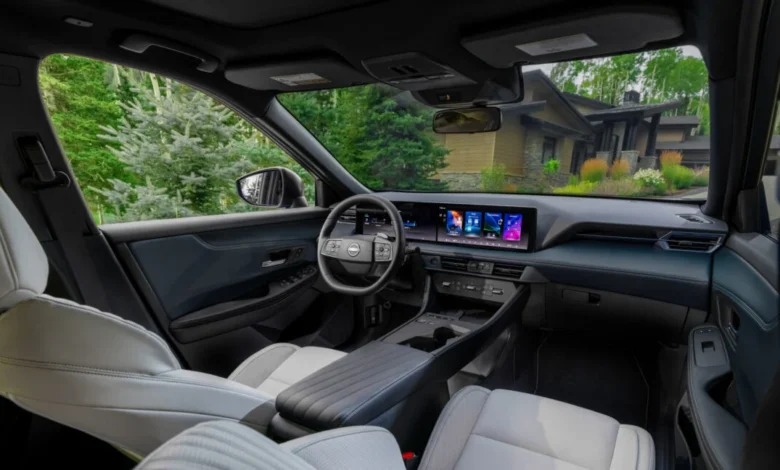
In the highly competitive landscape of the global automotive market, the family SUV segment remains the primary battleground for manufacturers. Nissan’s strategy for the 2027 Rogue Hybrid represents a calculated shift in design philosophy, moving away from the stark minimalism seen in its all-electric counterparts toward a more utilitarian, human-centric approach. Under the direction of design lead Patel, the new Rogue seeks to reconcile the often-conflicting demands of high-functionality engineering and modern visual sophistication. By rejecting the industry-standard trend of "Piano Black" plastic finishes and embracing tactile, ergonomic controls, Nissan is betting that consumers are increasingly prioritizing usability over the ephemeral appeal of digital-first, buttonless interiors.
A Strategic Pivot in Interior Design
The design of the 2027 Nissan Rogue Hybrid serves as a rebuttal to the prevailing automotive design trends of the mid-2020s. While many competitors have pivoted toward touch-heavy, glass-screen-dominated cockpits—often sacrificing physical switches in the pursuit of a "clean" look—Nissan has opted for a more traditional, tactile interface. This decision is rooted in extensive consumer research suggesting that family-oriented drivers prefer the immediate, intuitive nature of physical buttons and switches.
One of the most distinct features of the new interior is the seating upholstery. Drawing inspiration from the quilted construction of modern puffer jackets, the seats offer a unique texture that provides both visual interest and practical comfort. This aesthetic choice is not merely decorative; it serves to soften the cabin’s atmosphere, moving away from the sterile, cold environments often associated with minimalist electric vehicles (EVs) like the Nissan Ariya. Furthermore, the deliberate omission of "Piano Black" trim—a surface notoriously difficult to keep clean, prone to fingerprints, and susceptible to scratches—signals a commitment to long-term durability and owner satisfaction.
Chronology and Development
The development of the 2027 Rogue Hybrid did not occur in a vacuum; it is the culmination of a multi-year effort to refine Nissan’s internal design language for mass-market vehicles.
- 2024: Nissan initiates the design phase for the next generation of the Rogue platform, emphasizing the hybrid powertrain as a transitionary technology for families not yet ready for full electrification.
- 2025: Early prototypes are subjected to rigorous human-factor testing, focusing specifically on ingress and egress, cargo management, and the frequency of interaction with the dashboard interface.
- Late 2025 – Early 2026: Design teams finalize the "90-degree door" engineering solution, a significant structural change intended to facilitate easier access for car seats and passengers with limited mobility.
- October 2026: The vehicle is formally unveiled, positioning itself as a high-volume, practical SUV that bridges the gap between traditional combustion engines and the convenience of EV-like driving dynamics.
Supporting Data and Market Context
The family SUV segment is characterized by a unique set of requirements. According to industry data from the Automotive Consumer Insights group, approximately 68% of SUV buyers in the mid-size segment rank "storage versatility" and "easy entry" as their top two priorities, often outpacing performance metrics like acceleration or top speed.
Nissan’s decision to engineer rear doors that swing open to a full 90-degree angle addresses a critical pain point in the segment. In current market models, rear doors often stop at roughly 65 to 75 degrees, creating a cramped aperture for parents maneuvering bulky child safety seats. By expanding this to 90 degrees, Nissan is directly targeting the specific physical demands of the family demographic. This engineering choice requires significant structural reinforcement of the B-pillar and door hinges, representing a considerable investment in chassis development that is often overlooked in luxury or "image-conscious" vehicle segments.
Official Perspectives on Functional Beauty
Patel, the design lead on the project, has framed this approach as an attempt to find beauty within the constraints of mass-market utility. "One of the exciting things and one of the really big challenging things of doing a car or doing design for a product that is a usable everyday product is when you can make that product beautiful," Patel stated during the product launch.
This philosophy aligns with the Bauhaus movement’s core tenet: form should follow function. However, Patel acknowledges that the "everyday" nature of the vehicle complicates the design process. "There’s so much more that goes into our everyday usable products in terms of cost, engineering, usability, feasibility, everything," he explained. The struggle, according to the design team, is in fighting for every millimeter of space to ensure the cabin remains clutter-free while maintaining a visual profile that does not look "prosaic" or boring. By focusing on smart storage solutions—such as integrated cubbies and easily accessible surface areas—the design team has attempted to elevate the "utility" aspect of the SUV to an art form.
The Broader Implications for the SUV Segment
The 2027 Rogue Hybrid acts as a barometer for a potential market correction. For several years, the automotive industry has been obsessed with digital minimalism, often leading to "screen fatigue" among drivers who find touch-sensitive controls distracting and inefficient while driving. Nissan’s move to retain physical switches for essential functions suggests that the industry may be reaching a saturation point for digital interfaces.
Furthermore, the focus on "easy-to-clean" surfaces reflects a growing demand for sustainability and longevity. As families keep their vehicles for longer periods, the material quality and ease of maintenance have become significant value drivers in the secondary market. By designing a cabin that resists wear and remains functional over a decade of use, Nissan is positioning the Rogue Hybrid as a robust, value-oriented asset rather than a disposable piece of technology.
Analysis: Engineering for the Human Experience
From an engineering standpoint, the 2027 Rogue Hybrid represents a sophisticated balancing act. To achieve the desired level of usability, Nissan had to integrate a high-density hybrid battery system without compromising the cargo floor height or rear-passenger legroom. The decision to prioritize door geometry over pure aerodynamic efficiency illustrates a strategic choice to sacrifice a marginal gain in fuel economy for a massive gain in user experience.
The implications for the broader industry are clear: manufacturers who can successfully marry high-tech efficiency with low-tech accessibility are likely to dominate the family segment. While premium brands may continue to push the boundaries of digital cockpits, the mass-market segment appears to be moving toward a "functional luxury" model. This approach recognizes that for the average family, a car is not merely a statement of style, but a mobile workspace, a shuttle, and a storage unit combined.
Conclusion
As the 2027 Nissan Rogue Hybrid enters the market, its performance will likely be measured not just by its hybrid fuel efficiency, but by how well its design holds up to the rigors of daily life. By stripping away the trend-chasing elements like piano black plastic and over-reliance on touchscreens, and instead focusing on ergonomic, high-quality, and accessible design, Nissan is attempting to define the new standard for the family SUV. The success of this model will undoubtedly influence future product cycles, potentially forcing other manufacturers to reconsider their own design priorities in favor of the practical, the intuitive, and the durable. Whether this "new utility" becomes the industry standard remains to be seen, but for now, it represents a significant, thoughtful departure from the status quo.