Japan IP Market Returns to Cannes in 2027 Following Successful Strategic Alliance Between TIFFCOM and Cannes Film Market

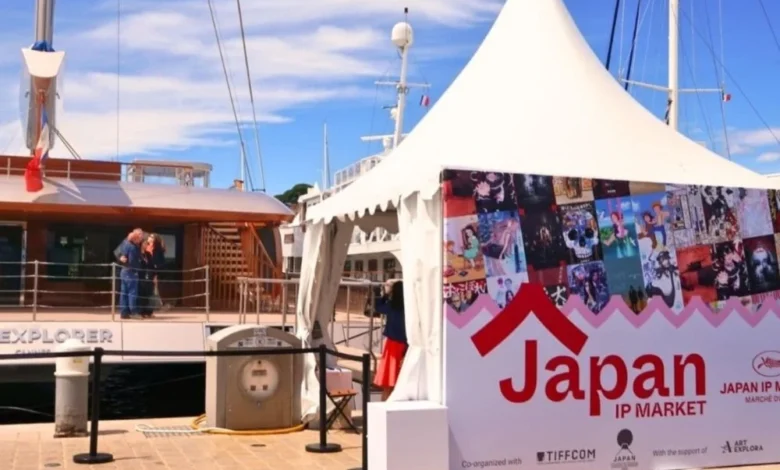
The Japan IP Market is officially slated to return to the French Riviera for a second consecutive year, with organizers confirming that the 2027 edition will take place from May 14–15 during the Cannes Film Market. This recurring initiative represents a deepened strategic partnership between the Cannes Film Market and TIFFCOM, the content marketplace associated with the Tokyo International Film Festival (TIFF). The announcement, made during a high-level conference at TIFFCOM in Tokyo, underscores a long-term commitment to bridging the gap between Japan’s formidable creative output and the global production landscape.
The decision to solidify this event as a permanent fixture follows a period of significant growth for Japanese intellectual property (IP) on the international stage. By leveraging the unparalleled attendance numbers at Cannes—widely regarded as the most influential film market in the world—Japanese rights holders aim to transition from sporadic licensing deals to sustained, multi-territory co-production models.
A Chronology of the Japan-Cannes Partnership
The genesis of this collaboration can be traced back to 2026, when Japan was selected as the “Country of Honor” at the Cannes Film Market. This designation was not merely symbolic; it served as a catalyst for a series of industry-focused initiatives designed to elevate Japanese content beyond traditional anime and manga exports. The inaugural Japan IP Market was launched as a pilot program during that 2026 tenure, providing a dedicated space for face-to-face negotiations between Japanese studios and international stakeholders.
Following the success of that pilot, organizers spent the latter half of 2026 and early 2027 assessing the long-term viability of a dedicated bridge between Tokyo and Cannes. The formalizing of the event for May 2027 signifies a transition from a temporary promotional campaign to a permanent fixture in the global content calendar. Industry leaders have characterized this progression as a necessary evolution for a Japanese industry that is increasingly eager to modernize its international distribution and adaptation strategies.
The Strategic Value of the Japan IP Market
The Japan IP Market operates on a multifaceted model, incorporating one-on-one meetings, project pitching sessions, and high-level industry panels. The core objective is to move beyond the traditional "content export" model, where Japanese companies simply license existing finished products to foreign broadcasters or platforms. Instead, the focus has shifted toward "co-development," where international producers participate in the early stages of project development to ensure content is optimized for global audiences.
The inaugural event in 2026 featured a diverse cross-section of the Japanese industry, including industry titans such as Kadokawa, Shochiku, and Toei Company. These firms, which possess vast catalogs of manga, light novels, and classic cinema, are now actively seeking international partners capable of translating these assets into live-action adaptations, high-budget series, and transmedia projects. The inclusion of high-profile figures, such as Fujimura Tetsu—the executive producer behind the global phenomenon "One Piece"—served as a validation of the market’s potential to attract elite talent.
Official Perspectives on the Global Expansion
The enthusiasm for the 2027 return is shared by leadership on both sides of the partnership. Guillaume Esmiol, executive director of the Cannes Film Market, emphasized that the initiative is built upon the lasting momentum generated during Japan’s tenure as the Country of Honor.
“The success of Japan as the Country of Honor demonstrated the transformative power of a focused national presence,” Esmiol noted. “The Japan IP Market is a direct outcome of that collaboration. It provides a permanent, structured environment that extends beyond the fleeting nature of a single edition, giving Japanese rights holders, who have historically been somewhat insular, direct access to the global marketplace.”
From the Japanese perspective, the partnership is viewed as an essential component of the country’s broader cultural export strategy. Shiina Yasushi, executive adviser at UNIJAPAN and CEO of TIFFCOM, highlighted the sheer scale of the Cannes market as its primary draw. "To transform Japanese IP into truly global content, we must engage directly with the international professionals who define the current landscape of film and television production," Yasushi stated. "Cannes is the largest market attached to any festival in the world; there is no substitute for the density of decision-makers present there."
Ikeda Kaori, managing director of TIFFCOM, added that the feedback from the 2026 edition indicated a robust global appetite for Japanese source material. "Producers and partners from around the world are expressing a heightened interest in the diversity of our IP," said Kaori. "By bridging the gap between Cannes in May and the Tokyo IP Market in October, we are creating a continuous feedback loop that allows us to nurture projects over the course of the year, rather than just in short bursts."
Market Analysis: The Shift Toward International Co-production
The current climate of the entertainment industry provides a favorable backdrop for this initiative. As global streamers and traditional studios alike scramble to secure high-quality, pre-proven IP, Japanese content—which boasts some of the highest-rated narrative foundations in the world—is in high demand.
However, historical hurdles have included language barriers, complex copyright structures, and a traditional preference for the domestic Japanese market. The Japan IP Market addresses these friction points by providing:
- Legal and Licensing Clarity: Assisting international producers in navigating the intricacies of Japanese copyright law and rights management.
- Cultural Adaptation Consulting: Facilitating dialogues on how to adapt Japanese narratives for Western audiences without losing the essence of the original work.
- Networking Efficiency: By hosting a curated event, the market reduces the time and travel costs for both Japanese rights holders and international acquisition executives.
Alexandra Zakharchenko, head of industry programs at the Cannes Film Market, noted that the market’s goal is to turn "interest into acquisitions." She observed that while international interest in Japanese content has been rising for years, it has often remained at the surface level. "By bringing stakeholders together in an environment dedicated to deal-making, we are helping to facilitate concrete adaptation deals that might otherwise have stalled due to a lack of direct contact," she said.
Future Implications and Economic Impact
The implications of this ongoing collaboration extend beyond the two-day event in May. If the Japan IP Market continues to demonstrate success, it could serve as a blueprint for other national film industries seeking to enhance their footprint at the Cannes Film Market. Furthermore, it creates a predictable and reliable touchpoint for international producers, who now know that they can access a concentrated selection of Japanese content and talent at a specific time each year.
As the industry moves toward 2027, the focus for the organizers will shift to curating the next roster of companies and projects. While specific titles and participants have yet to be disclosed, the expectation is that the 2027 edition will feature an even broader range of genres, from animation and horror to drama and science fiction.
The synergy between the Tokyo International Film Festival and Cannes represents a significant shift in how regional markets interact with global hubs. By fostering a culture of collaboration, rather than simple transaction, the Japan IP Market is positioning itself as a vital engine for the next generation of international co-productions. With the 2027 dates set, the global film community will once again turn its attention to the Palais des Festivals in Cannes to witness how the next wave of Japanese creativity will be integrated into the international cinematic canon. As the project pipeline grows, the sustained efforts of TIFFCOM and the Cannes Film Market promise to solidify Japan’s status as an essential, rather than peripheral, player in the global entertainment economy.
Related posts: