East of Eden: Zoe Kazan Reimagines the Steinbeck Classic for a Modern Era

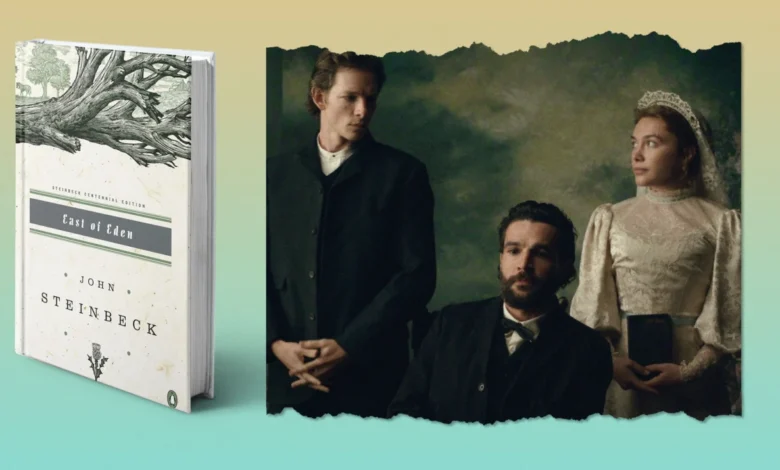
The literary landscape has long been defined by the monumental weight of John Steinbeck’s 1952 masterpiece, East of Eden, a sprawling family saga that has haunted readers for generations. With the October 1 premiere of the seven-episode Netflix adaptation, creator and writer Zoe Kazan has finally brought her lifelong obsession with the text to the screen. Unlike previous attempts to distill the novel’s massive scope into a singular film, this series aims to capture the novelistic depth that Kazan believes has been missing from prior interpretations. By focusing on the intricate psychological architecture of the characters rather than mere period spectacle, the production seeks to bridge the gap between mid-century literature and contemporary social discourse.
A Legacy Reimagined
The history of East of Eden in Hollywood is inextricably linked to the 1955 film directed by Elia Kazan—Zoe’s own grandfather. While that classic introduced a generation to the story, featuring an iconic performance by James Dean, it focused on only a small fraction of the source material. For Zoe Kazan, who first read the book at the age of 15, the 1955 film felt like a missed opportunity to explore the novel’s more complex themes, such as the generational cycles of trauma, the mystery of the character Cathy Ames, and the essential contributions of the characters Lee and Samuel Hamilton.

For two decades, the desire to revisit the material sat with her. The catalyst for the project’s development occurred when Kazan, a mother, began re-evaluating the stories she felt were worth the time away from her family. Upon requesting the rights from her agents, she secured the project, setting in motion an adaptation process that prioritized a deep-dive character study over a truncated, plot-heavy condensation.
The Creative Philosophy: Character as Plot
Kazan made her intentions clear to the production team early on: the success of the series would not be measured by the authenticity of the costumes or the precision of the wigs, but by the audience’s emotional connection to the Trask and Hamilton families. She tasked her department heads with ensuring that the characters remained the primary focus, arguing that if viewers walked away discussing the aesthetics rather than the human stakes, the production would have failed its core mission.
The casting of Christopher Abbott as Adam Trask, Mike Faist as Charles Trask, and Florence Pugh as the enigmatic Cathy Ames was instrumental in this approach. Kazan noted that observing the chemistry between Abbott and Faist provided her with a newfound understanding of the brothers’ complex love for one another. Similarly, Pugh’s portrayal of Cathy—a character often reduced to a caricature of villainy—offered a fresh perspective. Kazan’s script highlights that Cathy, for all her deception, is frequently the only person telling the truth, a nuance that aligns with modern understandings of female agency and societal gaslighting.

Contextualizing the Narrative
The adaptation operates as an “advanced form of reading,” utilizing the seven-hour runtime to cover ground that a two-hour film simply cannot. This is particularly evident in the treatment of Lee, the Chinese-American character whose presence was often relegated to the background in previous iterations. Hoon Lee, who portrays the character, expressed his surprise at the script’s depth during his audition, noting that he initially assumed certain sequences were modern inventions rather than faithful renditions of Steinbeck’s text.
This tension between historical fidelity and contemporary resonance is central to the show’s mission. Co-showrunner Jeb Stuart emphasized that the series was designed to speak to the present day. By examining the patterns of behavior and the systemic forces that shape the characters, the showrunners aim to make the 19th-century setting feel immediate and urgent. Stuart noted that the goal was for audiences to recognize the characters not as relics of a period piece, but as reflections of their own siblings, neighbors, and selves.
The Significance of Cathy Ames
Perhaps the most significant departure from traditional interpretations is the handling of Cathy Ames. In the novel, Steinbeck describes Cathy with imagery that suggests a profound dissociation—a psychological response to being sexualized and targeted from a young age. Kazan, drawing on her own experiences as a woman in the public eye, chose to treat these moments not as mere backstory, but as essential context for Cathy’s entire existence.

Florence Pugh’s approach to the role reflects this intensity. Pugh described the process as a need to “fall in love” with the character, regardless of her actions, to understand the fundamental "why" behind her behavior. This performance, coupled with the show’s deliberate pacing, forces the audience to confront the uncomfortable realities of trauma and survival, echoing themes that remain, unfortunately, relevant in today’s political climate regarding women’s rights and bodily autonomy.
A Timeline of Adaptation
The journey from Steinbeck’s manuscript to the streaming era has been marked by several significant milestones:
- 1952: John Steinbeck publishes East of Eden, an epic spanning the Salinas Valley, detailing the rise and fall of two generations of families.
- 1955: Elia Kazan directs the first feature-film adaptation, starring James Dean, which wins critical acclaim but covers only the final act of the novel.
- 1981: An eight-hour television miniseries attempts a broader scope, airing on ABC, though it struggled with the limitations of the era’s production values.
- 2024-2025: Zoe Kazan’s production begins development, focusing on a seven-part narrative structure that emphasizes internal psychological states over broad, sweeping action.
- October 1, 2026: The series debuts on Netflix, joining a wave of prestige adaptations of classic literature, including new takes on Sense and Sensibility and Wuthering Heights.
Broader Impact and Industry Trends
The success of this adaptation is part of a larger trend in the entertainment industry: the "re-lensing" of classic literature. As streaming platforms seek high-value intellectual property, they are increasingly turning to authors like Steinbeck, Brontë, and Austen. However, the success of these projects is no longer guaranteed by the pedigree of the source material alone. Modern audiences demand a perspective that acknowledges the limitations of the original authors’ eras, particularly regarding race, gender, and social status.

By choosing to lean into the "painful progress" of human history—a concept borrowed from Tony Kushner’s Angels in America—Kazan has created a bridge between the past and the present. The series does not shy away from the racist descriptions or the dated social structures present in the original text; instead, it uses them as friction to generate a more profound, albeit difficult, conversation about human nature.
Conclusion: A Call to Read
Despite the depth of the series, Kazan is clear that the screen adaptation is not a replacement for the book. She views the show as a gateway, hoping that viewers who find themselves moved by the struggles of the Trask family will be compelled to seek out the original 1952 novel. In an era where attention spans are frequently criticized for being short, the decision to produce a slow-burn, character-driven epic is a bold bet on the intelligence of the audience.
Whether or not the series manages to shift the collective understanding of Steinbeck’s work, it stands as a testament to the idea that some stories are truly inexhaustible. As Kazan noted, there is a "beautiful, generous invitation" in this material—a reminder that while we are shaped by our histories and the actions of those who came before us, we still possess the capacity for choice. In the final analysis, the series is a success not because it replicates the book, but because it honors the spirit of inquiry that first drew readers to the Salinas Valley over seven decades ago. East of Eden is currently available for streaming on Netflix, providing a new entry point into one of the most vital stories in the American canon.