Sean Parker Returns to the Music Industry with Stability AI and a Commitment to Legal Compliance

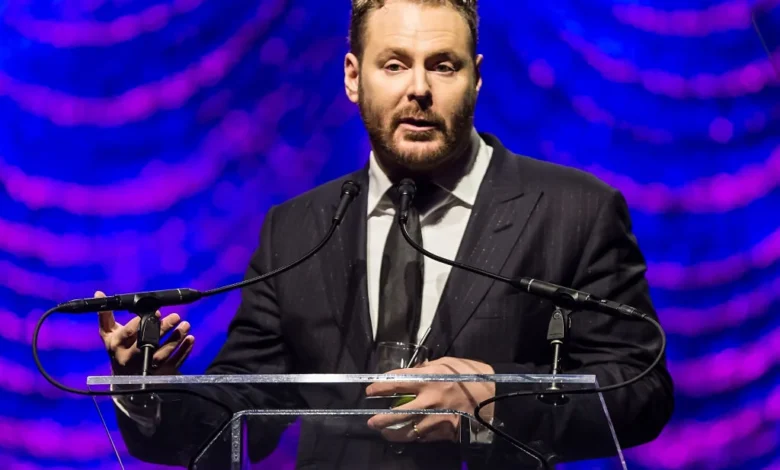
Sean Parker is once again making waves in the global music industry, more than two decades after he upended the traditional recording business as the co-founder of the peer-to-peer file-sharing pioneer Napster. This time, however, the billionaire entrepreneur is taking a radically different approach. In interviews with industry publications, Parker has emphasized that his latest venture into artificial intelligence and music is entirely compliant with copyright law. Acknowledging the chaotic legal battles that ultimately brought down Napster in the early 2000s, Parker has openly conceded that the old Silicon Valley mantra of "ask for forgiveness rather than permission" is a strategy he has firmly left behind.
The strategic pivot represents a fascinating full-circle moment for Parker, whose early career was defined by fierce opposition from major record labels and music publishers. Today, rather than disrupting traditional business models through unauthorized distribution, Parker and his collaborators are positioning themselves as vital partners to the very establishment that once fought to dismantle his earlier creation. Through targeted investments, strategic partnerships, and licensed data agreements, Parker’s modern enterprise aims to reshape how music is produced, edited, and scaled in the generative AI era.
From Image Generation to Audio Innovation: The Stability AI Turnaround
The vehicle for Parker’s latest industry reentry is Stability AI, the prominent generative artificial intelligence startup widely known for creating the open-source image-generation model Stable Diffusion. Two years ago, Stability AI found itself teetering on the brink of financial collapse. Beset by reckless overspending, soaring computational costs, and severe internal turmoil that ultimately resulted in the ouster of founder Emad Mostaque, the company was in desperate need of a lifeline.
Parker stepped in during this critical juncture, joining an $80 million rescue financing round to stabilize the struggling enterprise. Alongside him was his longtime friend and collaborator Prem Akkaraju, a seasoned media executive who assumed the role of chief executive officer at Stability AI. Together, Parker and Akkaraju initiated a comprehensive corporate restructuring, shifting the company’s long-term vision away from purely visual generative tools toward high-demand enterprise applications, most notably in the audio and music production sectors.
Building Bridges with the Major Labels
The culmination of this strategic transformation materialized in late August, when Stability AI announced a substantial $76 million fresh funding round. Crucially, this capital infusion was not sourced solely from traditional venture capital firms; it included strategic investments from three of the world’s largest music conglomerates: Sony Music Group, Warner Music Group, and Universal Music Group.
As part of this landmark agreement, the major record labels licensed portions of their extensive commercial catalogs to serve as training data for Stability AI’s upcoming audio models. This cooperative framework stands in stark contrast to the adversarial dynamics that characterize many current legal disputes between copyright holders and AI developers. By securing formal licensing agreements before releasing commercially viable music generation tools, Stability AI has effectively insulated itself from the copyright infringement lawsuits that have plagued numerous other artificial intelligence startups.
Cutting-Edge Audio Models and Advanced Capabilities
Following the successful funding round and licensing agreements, Stability AI wasted little time rolling out its newly developed suite of audio technology. The company has officially released three specialized audio models alongside dedicated AI music-editing software designed for professional producers, sound engineers, and independent artists.
Current iterations of the software allow creators to generate fully realized instrumental tracks or concise musical snippets simply by entering descriptive text prompts. However, the company’s product roadmap indicates that much more sophisticated features are on the horizon. According to Parker and development leads at Stability AI, an upcoming software update will introduce multimodal input capabilities. This advancement will enable users to hum a specific melody, tap out a rhythm, or beatbox a drum pattern directly into the application, which the AI will then interpret and expand into a polished musical arrangement.
A Chronological Look at Sean Parker’s Technology Journey

To understand the weight of Parker’s current endeavor, it is essential to examine the distinct chronological phases of his entrepreneurial career:
1999–2001: The Napster Era
At the age of 19, Parker co-founded Napster alongside Shawn Fanning. The peer-to-peer file-sharing network allowed millions of users to exchange MP3 music files directly over the internet, bypassing traditional retail channels. The platform achieved unprecedented viral growth but immediately triggered massive pushback from the Recording Industry Association of America (RIAA) and major artists like Metallica and Dr. Dre. Legal battles culminated in a federal court injunction ordering the shutdown of the network’s core file-sharing service, leading to bankruptcy filings by 2002.
2003–2004: The Birth of Plaxo and the Facebook Phenomenon
Following the collapse of Napster, Parker co-founded Plaxo, an online address book and social networking service that utilized early viral marketing strategies. Although Plaxo achieved moderate success, Parker’s most influential post-Napster involvement occurred when he became the founding president of Facebook in 2004. Working closely with Mark Zuckerberg, Parker helped secure early venture capital funding and guided the fledgling social network through its critical formative expansion phase in Silicon Valley.
2010–2022: Philanthropy, Health Tech, and Venture Investment
During the subsequent decade, Parker turned his attention toward large-scale philanthropic initiatives, establishing the Parker Foundation with a $600 million endowment focused on global public health, civic engagement, and life sciences. He also founded the Parker Institute for Cancer Immunotherapy, directing substantial private capital toward breakthrough medical research. Throughout this period, he maintained a lower profile regarding consumer-facing software, occasionally investing in select technology ventures.
2024–Present: The Stability AI Rescue and Music Industry Return
Facing a distressed Stability AI in 2024, Parker invested heavily to rescue the generative media pioneer. By installing Prem Akkaraju as CEO and brokering landmark training data agreements with Sony, Warner, and Universal Music Group in August 2026, Parker successfully transitioned back into the music industry—this time as an enterprise partner rather than an existential threat.
Industry Reactions and Market Implications
The broader reaction from the creative and corporate communities has been one of cautious optimism tempered by lingering skepticism regarding the long-term role of generative AI in creative arts. While labor unions representing musicians and songwriters have raised valid concerns about the displacement of human labor and the fair compensation of artists, the explicit participation of major record labels in Stability AI’s funding round suggests a pragmatic industry stance. Rather than attempting to halt the advancement of generative audio technology entirely, industry leaders appear determined to secure financial stakes and establish regulatory guardrails through direct collaboration.
Financial analysts note that by aligning with established copyright holders, Stability AI has carved out a distinct competitive advantage in a crowded market. Many competing generative audio startups face existential threats from impending litigation, as copyright owners increasingly target companies that train models on unlicensed copyrighted material. Stability AI’s proactive licensing model eliminates this legal overhang, making the company an attractive partner for enterprise clients seeking legally sound AI integration.
Economic Analysis: The Shift Toward Legally Compliant AI Models
The economic implications of Parker’s venture extend far beyond the immediate beneficiaries of the funding round. As regulatory scrutiny intensifies globally regarding the sourcing of training data for large language and media models, the cost of acquiring legitimate licenses is becoming a major barrier to entry in the artificial intelligence sector.
Well-funded startups backed by visionary billionaires like Parker possess the necessary capital to negotiate multi-million-dollar catalog agreements with legacy media companies. Smaller enterprises, conversely, may find it increasingly difficult to compete on an equal footing if courts establish strict legal precedents requiring prior authorization for all training data inputs. Consequently, the strategy deployed by Stability AI may well become the industry standard, signaling the gradual maturation of the generative AI market from a "wild west" phase into a heavily regulated, corporate-integrated ecosystem.
Looking Ahead: The Future of AI-Assisted Composition
As Stability AI prepares to launch its next wave of audio-editing tools—including multimodal capabilities that allow intuitive human-AI collaboration through humming and beatboxing—the boundaries between human creativity and machine generation will continue to blur. For Sean Parker, the journey from building the service that terrified the 2000s music industry to financing the infrastructure that officially marries AI with major label catalogs represents a remarkable transformation. Whether today’s artists and producers will embrace these tools as collaborative instruments remains to be seen, but one reality is clear: Parker is playing this game strictly by the book.