Federal Reserve Inspector General Report Clears Agency of Criminal Wrongdoing in Multibillion-Dollar Renovation Project

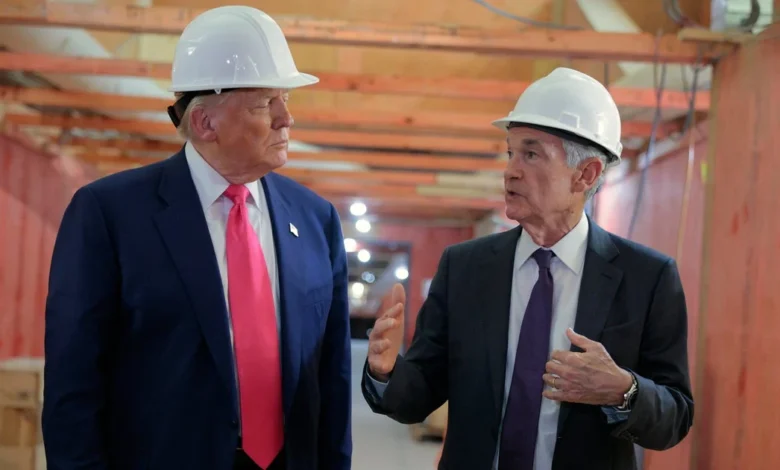
The Federal Reserve’s long-standing, multi-billion-dollar headquarters renovation project has officially been cleared of criminal misconduct by the agency’s internal watchdog, though the project remains under a cloud of scrutiny regarding its management and ballooning costs. In a comprehensive 121-page report released on Wednesday, Inspector General Michael Horowitz concluded that while the renovation of the Marriner S. Eccles building and its auxiliary structures was plagued by poor oversight and spiraling expenses, there was no evidence of criminal activity or administrative malfeasance that would warrant referral to the U.S. Attorney General.
The report serves as a pivotal conclusion to a turbulent year-long internal investigation, which was launched in July 2025 at the direct request of then-Federal Reserve Chairman Jerome Powell. The inquiry was initiated during a period of intense friction between the White House and the central bank, marked by President Trump’s public condemnation of the renovation as a “disgraceful” misuse of taxpayer-adjacent funds.
A Chronology of Conflict
The tension surrounding the renovation project reached a fever pitch in early 2026. The investigation, which eventually drew in the Department of Justice, was characterized by high-stakes legal maneuvering. In January 2026, it was revealed that the Federal Reserve had been served with federal grand jury subpoenas related to the construction project. These subpoenas sought to examine the veracity of testimony provided by Jerome Powell during a June 2025 hearing before the Senate Banking Committee, where he defended the project’s management and fiscal planning.
Allegations of deception were fueled by external critics, most notably Bill Pulte, head of the Federal Housing Finance Agency, who publicly lobbied Congress to investigate Powell. However, the U.S. District Court in Washington, D.C., eventually moved to quash the subpoenas issued by U.S. Attorney Jeanine Pirro, citing that the legal actions appeared to be a pretext intended to influence the Federal Reserve’s monetary policy decisions—specifically regarding the central bank’s reluctance to rapidly slash interest rates at the time.
By April 2026, the criminal investigation was officially shuttered by federal prosecutors, effectively paving the way for the confirmation of Kevin Warsh as the next Federal Reserve chair. With the criminal shadow lifted, the focus shifted entirely to the administrative findings of the Inspector General.
Analyzing the Cost Overruns
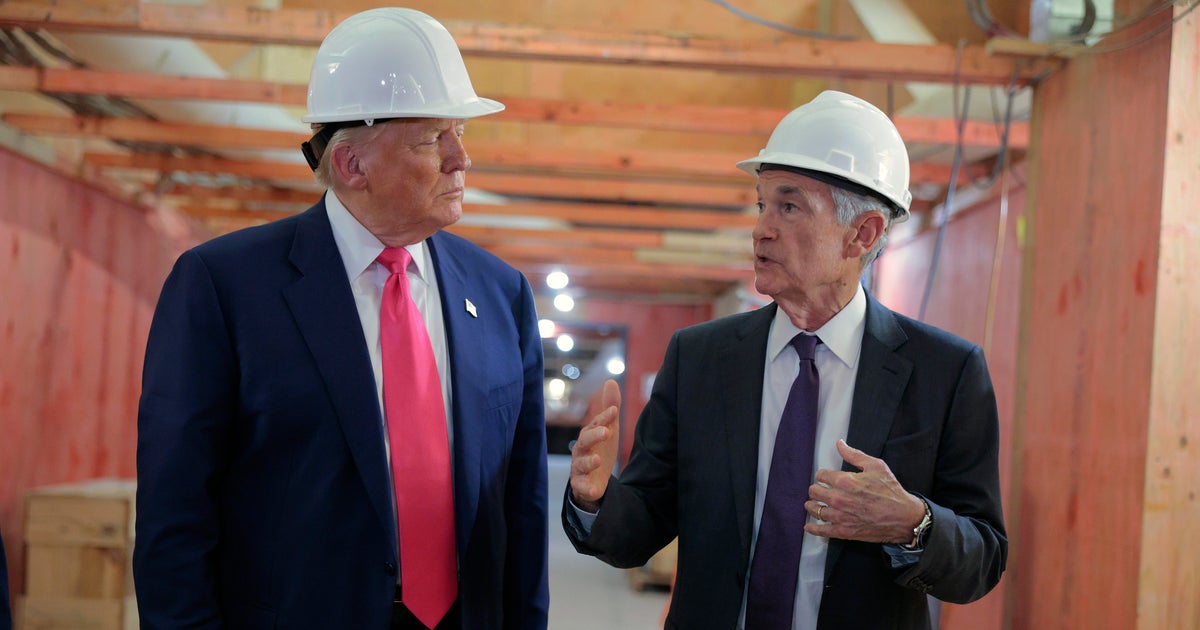
The renovation project, which encompasses the historic Eccles Building and the surrounding campus, was first authorized in 2017. Over the course of nearly a decade, the initial projected cost of $1.9 billion has surged to approximately $2.5 billion. The Federal Reserve has consistently attributed these increases to a confluence of factors, including supply chain volatility, the discovery of extensive asbestos in the aging structure, unforeseen soil contamination, and a series of design changes mandated by various oversight agencies.
The Inspector General’s report confirms that inflation was indeed a significant driver of these costs, yet it finds that the actual overruns significantly outpaced standard inflationary benchmarks. A primary point of contention identified by the IG was the Fed’s failure to establish a "guaranteed maximum price" with its general contractor until years into the project, even after the majority of construction awards had already been distributed.
Furthermore, the Board of Governors struggled to provide a clear, evidence-based assessment of how inflation specifically impacted the bottom line. When requested to justify these costs, the Board submitted a memo from senior economists stating that using indices like the Producer Price Index to evaluate specific project costs could be "misleading," a response the IG report highlighted as evidence of insufficient governance and a lack of rigorous financial accountability.
Design Features and Public Perception
The aesthetic choices of the renovation—including rooftop gardens, private dining facilities, marble finishes, and a private elevator for the Chairman—became a focal point of criticism from the White House Office of Management and Budget. In a letter dated July 2025, OMB Director Russell Vought characterized the project as a "very luxurious situation."
Despite the intense political optics surrounding these features, the Inspector General’s report offered a more pragmatic assessment. The investigation concluded that these high-end design elements did not, in a material sense, contribute to the massive construction cost increases. Instead, the report points to systemic weaknesses in project management, including a lack of proper pre-planning and incomplete oversight mechanisms, as the true culprits behind the fiscal strain.
Official Responses and Future Oversight
Kevin Warsh, having assumed a leadership role, has signaled a shift in how the Federal Reserve will manage the remainder of the project. In a formal response to Inspector General Horowitz, Warsh confirmed that the agency has retained the General Services Administration (GSA) to act as an external advisor. The GSA will report directly to the Board of Governors, providing a layer of oversight that was clearly lacking in previous iterations of the project.
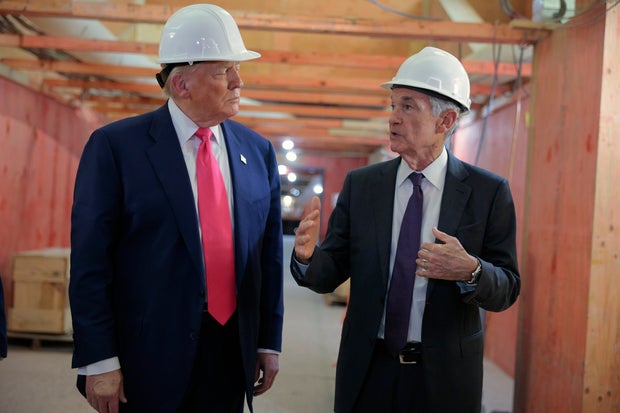
Warsh has also announced that the Board will initiate a full, comprehensive audit of the construction process. This audit aims to identify any services that were billed but never rendered, with the intent to pursue financial remedies or reimbursements for the Fed. "We will determine the value of any services not received, and pursue appropriate remedies," Warsh stated in his communication to the IG.
Broader Implications for the Federal Reserve
The conclusion of this investigation does not entirely absolve the Federal Reserve of its past management failures. The Inspector General’s report references two previous audits—from 2021 and 2022—that had already identified warning signs, such as unreliable cost estimates and weak cost-control measures. That these issues persisted into 2026 suggests a deeply rooted cultural or structural deficiency in how the institution handles large-scale capital projects.
For the central bank, the implications are twofold. First, the incident has highlighted the vulnerability of independent agencies to political pressure when they fail to maintain transparent, best-in-class fiscal management. The use of federal subpoenas as a potential tool for political leverage serves as a stark reminder of the fragile balance between institutional independence and public accountability.
Second, the project serves as a case study in the risks of massive, long-term public works. The failure to lock in costs early, combined with the lack of an electronic, agile modification system for contracts, allowed a project that began with specific budget parameters to drift by hundreds of millions of dollars. As the Federal Reserve looks toward the scheduled 2027 completion date, the involvement of the GSA is likely a necessary, if overdue, measure to restore public confidence in the stewardship of its resources.
While the threat of criminal indictments has vanished, the reputation of the Fed’s administrative oversight remains under repair. The next twelve months of construction, now under the watchful eye of the GSA and a renewed commitment to an audit-focused approach, will be the final test of the Board’s ability to rectify the management deficiencies that defined the past decade of the Eccles Building renovation.
Related posts: