Tennessee Is Investing Millions in New Youth Prisons While the Rest of the Country Moves Toward Reform

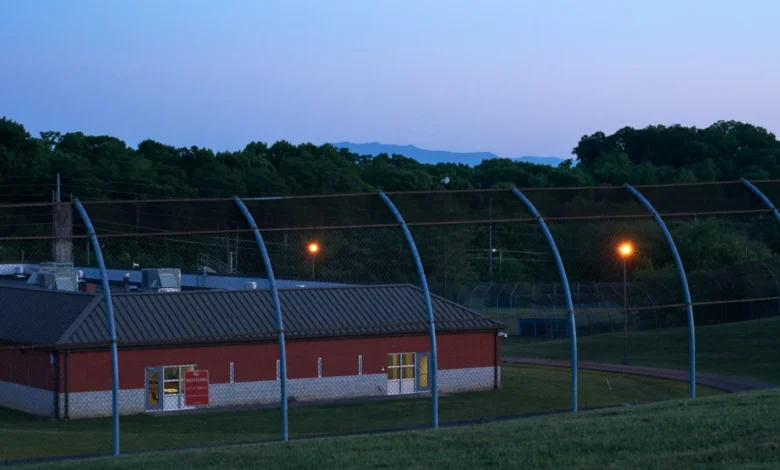
Across the United States, a quiet but significant paradigm shift has been reshaping the juvenile justice landscape. As juvenile crime rates have plummeted over the last two decades, states from coast to coast have moved to shutter massive, high-security youth prisons, favoring community-based rehabilitation programs that data suggests are more effective at preventing recidivism. Yet, in a striking divergence from this national trajectory, Tennessee’s Department of Children’s Services (DCS) has committed $360 million to the construction of two new juvenile correctional facilities. These sites, projected to house up to 256 beds, are slated to begin construction this fall, with anticipated opening dates in 2028 and 2029.
The decision has ignited a fierce debate between state officials, who cite a desperate need for bed capacity, and reform advocates, who argue that the state is doubling down on a failed model of incarceration. The tension underscores a broader struggle in the American South: how to balance public safety concerns with the growing body of evidence that institutionalizing youth often exacerbates the very behavioral issues it seeks to correct.
A National Trend Toward Decarceration
The American approach to juvenile justice has undergone a radical transformation since the turn of the millennium. Federal data from the Office of Juvenile Justice and Delinquency Prevention (OJJDP) reveals that the number of the highest-security facilities for minors has declined by more than 40% between 2000 and 2022. This shift is not merely a result of falling crime rates; it is driven by rigorous academic research demonstrating that large, congregate care facilities are counterproductive.
The consensus among child welfare experts is that incarceration in high-security, prison-like settings—often characterized by barbed wire, isolation, and punitive disciplinary measures—frequently results in higher rates of future criminality. Conversely, states that have invested in the "Missouri Model"—a system of small, regional, therapeutic centers—have reported higher rates of high school graduation and lower rates of re-arrest. Despite this, Tennessee remains committed to expanding its physical footprint for youth detention, a strategy that proponents of reform claim is rooted in an outdated philosophy of deterrence.
The Justification for Expansion
The DCS maintains that the expansion is a matter of logistical necessity rather than ideological preference. In recent years, the state has struggled to accommodate the volume of youth ordered into custody by the courts. The department has, at times, been forced to utilize unconventional and temporary housing solutions, including administrative office buildings, to hold teenagers overnight.
State officials point to a 2026 study conducted by the Tennessee Advisory Commission on Intergovernmental Relations (TACIR) as evidence of the necessity for these new facilities. The report highlights an upward trend in police reports of violent juvenile offenses, such as motor vehicle theft, aggravated assault, and firearms-related crimes, since 2013. According to the agency, this uptick necessitates a larger, more permanent infrastructure to ensure that youth are securely held.
However, the state’s reliance on these figures has been challenged by researchers. Josh Rovner, a senior research analyst at The Sentencing Project, notes that while reports to police may have risen, the actual number of youth entering the juvenile justice system has declined. "The argument that is made is that juvenile crime is worse than ever, or that the kids are out of control," Rovner stated. "The data simply does not back that up."
Chronology of a System Under Scrutiny
The push for new facilities comes amidst a backdrop of increasing legal and public pressure regarding the state’s current treatment of incarcerated youth:
- 2013–2024: The period cited by state-commissioned studies showing a rise in reports of violent crime, though the number of youth arrests has consistently trended downward during the same window.
- 2024: A significant lawsuit was filed by Disability Rights Tennessee and other advocates, alleging that the state’s current juvenile justice system fails to provide constitutionally mandated mental health and educational services, often mismanaging the bed space it currently possesses.
- 2024: A bipartisan legislative effort to establish independent oversight of juvenile facilities was introduced in the Tennessee General Assembly. The bill sought to strip the DCS of its sole authority to sanction facilities, citing a conflict of interest, but the measure ultimately failed.
- Fall 2025: Construction is scheduled to commence on the two new $360 million facilities.
- 2028–2029: Projected completion and opening of the new facilities.
The Disconnect Between Data and Detention
A closer inspection of the data reveals a nuance often lost in political rhetoric. While police reports have increased, the number of arrests for violent juvenile crimes has actually decreased across most categories since 2013. Murder cases represent the sole exception, rising from 15 in 2013 to 26 in 2024—yet even this figure remains below the peak levels observed in 2018.
Critics of the new prison construction argue that the DCS is conflating "reports" with "system entries." Furthermore, the lack of a centralized tracking system in Tennessee prevents the state from accurately measuring recidivism, making it difficult to assess whether current incarceration methods are achieving any rehabilitative success. "We are building prisons for a problem that is better solved by community investment," one advocate noted, requesting anonymity due to ongoing litigation.
The Rehabilitative Question
The DCS asserts that the new facilities are being designed with a focus on rehabilitation, featuring specialized spaces for behavioral health, educational support, and job training. However, the existing system, primarily operated by private contractors like Wayne Halfway House, faces significant criticism. A recent investigation by WPLN and ProPublica highlighted instances where serious incidents at these facilities were not reported to the state, and a 2024 lawsuit alleged that some facilities denied youth access to mental health therapy and education as a form of punishment for behavioral issues.
Daniel Macallair, executive director of the Center on Juvenile and Criminal Justice, argues that the size of the proposed facilities—one of which is planned to hold 160 beds—is antithetical to rehabilitation. "Any facility with more than 10 kids becomes unwieldy," Macallair said. "Research shows that larger facilities inevitably become more correctional and less therapeutic. They are not humane places; they never have been."
Implications of Independent Oversight
Perhaps the most contentious element of the debate is the issue of oversight. Currently, the DCS acts as both the administrator of the juvenile system and the regulator of the facilities it contracts with. This dual role has been described by lawmakers and advocates as a "fox guarding the henhouse" scenario.
The failed 2024 oversight bill, which would have empowered an independent body to suspend licenses and enforce standards, faced stiff opposition from lobbyists representing private facility operators. The defeat of this legislation has left the state without a robust, independent mechanism to ensure transparency. Experts like Michele Deitch of the University of Texas at Austin emphasize that without such an external body, the state cannot guarantee the safety or the rehabilitative quality of its institutions.
Conclusion: A Diverging Path
As Tennessee moves forward with its $360 million investment, it remains a significant outlier in the American justice reform movement. The state’s insistence that national trends are irrelevant to its local needs reflects a deeply entrenched belief in the necessity of secure detention. However, the combination of declining youth arrest rates, ongoing litigation regarding the quality of care, and the lack of independent oversight suggests that the path ahead may be fraught with challenges.
For the youth caught within this system, the coming years will be a test of whether these new facilities can indeed deliver on their promise of rehabilitation, or whether they will simply become larger, more permanent iterations of the very institutions that the rest of the nation is moving to leave behind. With construction set to begin, the state’s focus on infrastructure over reform will remain a focal point of public policy debate for years to come.
Related posts: