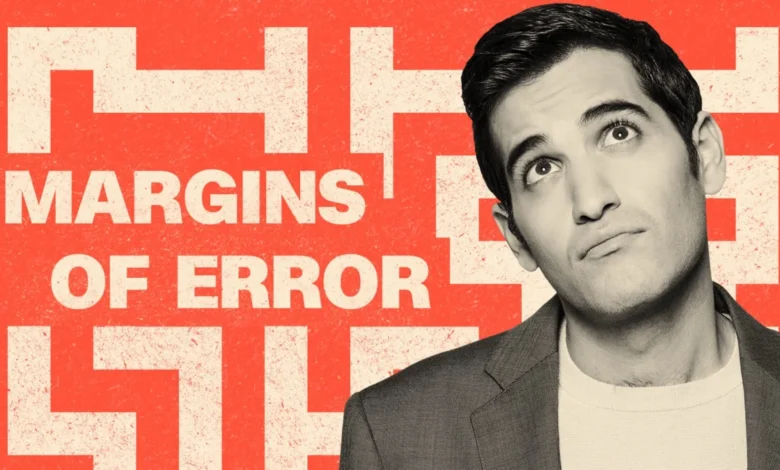
CNN’s "Margins of Error," hosted by renowned data analyst Harry Enten, has emerged as a compelling podcast that meticulously unpacks the often-overlooked numerical underpinnings of human behavior, societal trends, and our most deeply held beliefs. Far from a dry statistical lecture, the program transforms complex data into accessible narratives, challenging listeners to look beyond surface-level observations and question what the numbers truly reveal about our world. Enten, known for his insightful analysis on CNN, brings his signature curiosity and analytical rigor to a diverse array of topics, demonstrating that data is not merely a collection of figures but a powerful lens through which to understand the nuances of the human experience. From the economic implications of happiness to the cultural significance of regional accents, "Margins of Error" consistently delivers thought-provoking explorations that illuminate the hidden truths within the digits.
The Mission: Decoding the Human Equation Through Data
At its core, "Margins of Error" serves as a masterclass in data literacy, encouraging listeners to engage critically with the statistics that permeate daily life. Harry Enten’s mission is to push past simple calculations and explore the deeper meanings embedded in vast datasets. He posits that nearly every facet of our existence, upon closer inspection, reveals a wealth of information waiting to be analyzed and understood. This approach helps demystify seemingly mundane or complex phenomena, offering fresh perspectives on everything from personal habits to global trends. The podcast distinguishes itself by making data not just understandable, but genuinely engaging, often through Enten’s characteristic blend of earnest inquiry and relatable anecdotes.
The podcast leverages Enten’s expertise in polling and statistical analysis, honed over years of covering political trends and public opinion for CNN and previously FiveThirtyEight. His ability to translate intricate methodologies into digestible insights is central to the show’s appeal. By inviting "very smart people"—experts, academics, and even individuals with unique real-world experiences—Enten fosters a multi-faceted exploration of each subject, ensuring that the data is contextualized by expert opinion and human stories. This collaborative approach enhances the podcast’s credibility and provides listeners with a comprehensive understanding that goes beyond mere numbers, delving into the psychological, sociological, and economic implications of the data. The show’s premise is built on the understanding that while data provides objective measurements, the "margins of error" also account for the human element and the inherent variability in complex systems.
A Chronology of Curiosity: Exploring Diverse Data Frontiers
Since its inception, "Margins of Error" has tackled a broad spectrum of subjects, each episode delving into a specific question or phenomenon through the lens of data. The following chronology highlights some of the key discussions and their broader implications, demonstrating the podcast’s breadth and depth of inquiry:
Pains, Trains and Automobiles (July 5, 2022)
This episode zeroed in on the universal frustrations of travel, exploring how data and innovation are being leveraged to alleviate common annoyances. Enten and his guests delved into the likelihood of stress associated with travel, from cramped legroom on flights to soaring gas prices and opaque service fees. Research from organizations like the American Psychological Association often highlights travel as a significant source of stress for many individuals, driven by factors such as unpredictability, financial concerns, and logistical complexities. The discussion moved beyond merely identifying problems to investigating potential solutions, such as the application of artificial intelligence (AI) to create optimal road trip routes. For instance, data scientists like Randy Olson have famously used algorithms to map the most efficient cross-country road trips, demonstrating the tangible benefits of computational optimization in reducing travel time and fuel consumption. The episode also examined the science behind faster airplane boarding processes, a topic of extensive operational research aimed at improving efficiency and passenger experience, with various methods like the "reverse pyramid" or "Wilma" method being studied. Looking to the future, the podcast considered unconventional fuel sources like kelp, touching upon the broader imperative for sustainable transportation solutions in an era of climate consciousness and fluctuating energy markets. The implications here extend to global logistics, environmental policy, and consumer welfare, highlighting how data-driven innovations are critical for navigating the complexities of modern mobility.
Why are Losers the Favorites? (June 28, 2022)
Enten explored the intriguing psychological phenomenon of human attraction to underdogs. Citing studies that suggest a public preference for the underdog over the favorite, the episode delved into the reasons behind this bias, which extends far beyond sports and politics into the fabric of the human experience. Psychologists have long observed that individuals tend to empathize with and support those perceived as disadvantaged, a phenomenon rooted in fairness and social justice. Guests included Neil Paine of FiveThirtyEight, an expert on sports analytics, and Nadav Goldschmied, a researcher specializing in the underdog effect, whose work has explored how perceived disadvantage can lead to increased support. Former Buffalo Bills player Coy Wire, now a CNN sports anchor, offered a firsthand perspective on being underestimated and the resilience it fosters. The discussion involved a "serious analysis" of what truly constitutes "America’s Team," challenging conventional wisdom that often points to historically dominant franchises like the Cowboys or Yankees by examining metrics beyond mere win-loss records, such as national fan base distribution and cultural impact. This episode illuminated the sociological and psychological underpinnings of collective identity, empathy, and the innate human desire to root for those perceived as less powerful. The implications touch on brand loyalty, political campaigning, and even personal motivation, demonstrating how narrative and perception can significantly influence public sentiment.

Forecasting the Future of Weather (June 21, 2022)
Acknowledging that weather forecasts are an indispensable part of daily life, Enten investigated the remarkable improvements in meteorological prediction. Despite occasional frustrations when forecasts are incorrect, the episode highlighted that forecasting accuracy is at an all-time high. The National Oceanic and Atmospheric Administration (NOAA) consistently reports significant advancements in forecast accuracy over recent decades, driven by better observational data and sophisticated numerical weather prediction models. Harry explored the scientific advancements and technological innovations—such as supercomputing and satellite imagery—that have revolutionized weather prediction over the past few decades. He also delved into the critical challenge posed by climate change, discussing how increasingly erratic and extreme weather patterns are making long-term predictions more complex and vital. Climate models, while powerful, face new uncertainties with unprecedented shifts in global temperatures and atmospheric conditions. This episode underscored the intersection of environmental science, public safety, and data modeling, emphasizing the continuous evolution of our understanding of Earth’s climate systems and the pressing need for accurate information in a rapidly changing world. The implications extend to disaster preparedness, agricultural planning, and global economic stability.
The Mysterious Disappearance of Love, Sex and Romance (June 14, 2022)
This episode tackled a more intimate, yet equally data-rich, subject: the apparent decline in love, sex, and romance in modern society. Enten explored statistics that paint a picture of decreasing sexual activity, a growing number of singles, and a perceived reduction in romantic gestures. Data from sources like the General Social Survey and studies published in journals like Archives of Sexual Behavior have indicated a decline in sexual frequency among certain demographics in the U.S. over the past few decades. Adopting the persona of "Sherlock Harry," he investigated potential culprits, ranging from societal shifts and economic pressures to the pervasive influence of technology and dating apps. In a particularly immersive segment, Enten even attended a "Bridgerton Ball" to observe modern interpretations of historical romance and how contemporary society engages with idealized notions of love. The episode touched upon broader demographic trends, changing social norms around relationships, and the impact of evolving lifestyle choices on intimate connections. The implications for future societal structures, mental health, and the evolving definition of partnership were central to this deep dive into the human heart, suggesting a re-evaluation of what constitutes romantic fulfillment in the 21st century.
Why Americans Won’t Give an Inch on Metric (June 7, 2022)
Enten explored the enduring mystery of why the United States remains one of the few countries globally that has not fully adopted the metric system, alongside Liberia and Myanmar. The podcast highlighted America’s unique "hybrid world" of liters and gallons, inches and centimeters, and pounds and kilograms. The investigation uncovered a complex interplay of national pride, historical inertia, economic considerations, and political resistance that has stymied attempts at conversion. The cost of retooling industries, updating infrastructure, and retraining the populace has historically been a significant barrier, estimated in the billions or even trillions of dollars for a complete overhaul. Moreover, a sense of cultural identity and historical legacy often overrides arguments for global standardization, with the imperial system being deeply ingrained in American culture and commerce since colonial times. This episode provided a fascinating look at how deeply ingrained cultural norms can resist even seemingly logical universal standards, revealing the multifaceted forces that shape national policy and public behavior. The implications touch on international trade, scientific collaboration, and educational paradigms, as the U.S. continues to operate on a different measurement system than most of its global partners.
When Did ‘Diet’ Become a Dirty Word? (May 31, 2022)
This episode delved into the shifting semantics of the beverage industry, specifically the disappearance of "diet" labels in favor of "zero sugar." Harry, a self-professed fan of diet soda, investigated the reasons behind this marketing evolution. The discussion explored whether this was merely a "war of words" or if there were genuine product differences. The analysis touched upon evolving consumer perceptions of health, wellness, and artificial sweeteners. Market research indicates a growing consumer skepticism towards "diet" products, often associated with artificiality and a restrictive mindset, while "zero sugar" is perceived as a more positive, health-conscious alternative that focuses on what is not present rather than what is being restricted. The episode examined the psychological impact of branding and how companies adapt their language to align with contemporary consumer values, reflecting broader trends in clean eating and ingredient transparency. The implications extend to public health messaging, food marketing strategies, and the broader cultural conversation around sugar consumption and artificial ingredients, demonstrating how linguistic framing can significantly influence consumer choice and product success.
Cashing in on Happiness (May 24, 2022)
Enten explored the age-old question of the relationship between money and happiness. The episode sought to determine "how much money do we need to be happy" and whether pursuing six-figure incomes is truly necessary for contentment. Harry interviewed Matt Killingsworth, a researcher who developed an app to track happiness in real-time, providing empirical data on daily well-being. The discussion highlighted research by Killingsworth and Nobel laureate Daniel Kahneman, which suggests that while income correlates with happiness up to a certain point (often cited around $75,000 to $100,000 annually in older studies, though Killingsworth’s more recent work suggests a linear relationship beyond this for most individuals, particularly in terms of "experienced well-being"), beyond that threshold, the correlation flattens or even plateaus for some. A key takeaway was the importance of spending money on experiences rather than material possessions as a more reliable path to joy, a concept supported by numerous psychological studies on experiential purchases. Harry even tested this theory by participating in a high-flying trapeze session with Trapeze School New York, offering a personal demonstration of experiential happiness. This episode provided valuable insights into behavioral economics, positive psychology, and the pursuit of well-being in a consumer-driven society.
Harry Makes a Spectacle of Himself (May 17, 2022)
This episode examined the cultural perception of eyeglasses. Enten observed the rising prevalence of glasses wearers and the shift from a historical stigma (e.g., "four eyes" stereotypes) to a more positive, even fashionable, perception. The podcast explored the origins of these stereotypes and investigated the popular notion that people who wear glasses are inherently smarter. While no definitive, causal link to intelligence was established, the episode delved into how eyewear has become a strategic accessory, particularly for defense attorneys who might advise clients to wear glasses in court to project an image of trustworthiness or intelligence, leveraging subconscious biases. Harry also visited Dr. Craig Moskowitz of Moskowitz Eye Care, gaining insights into ocular health trends and the evolution of eyewear as both a medical necessity and a style statement. The prevalence of myopia, for instance, is increasing globally, making glasses a common sight, which in turn normalizes and even glamorizes their use as a fashion accessory. The implications touched upon social psychology, fashion trends, and the subtle ways visual cues influence perception in various contexts, including legal settings, highlighting the power of non-verbal communication.
Bursting the Bath Time Bubble (May 10, 2022)
Enten tackled the surprisingly contentious debate surrounding personal hygiene: how often do we truly need to bathe? The episode revealed that the answer might be less frequent than many assume, challenging ingrained societal norms. Scientific consensus, often cited by dermatologists, suggests that daily vigorous scrubbing may not be necessary and can even strip the skin of beneficial oils and bacteria, potentially leading to dryness or irritation. The podcast traced the complicated history of washing, from the elaborate baths of Ancient Rome to modern practices, highlighting how hygiene has evolved alongside public health understanding and cultural preferences. Harry consulted experts to differentiate between hygienic necessity and societal expectations, exploring the science of skin health and the human microbiome. In a bold experiment, he even experienced life without deodorant, offering a unique, albeit aromatic, firsthand account of the social and biological implications. This episode challenged listeners to reconsider deeply ingrained habits, shedding light on the scientific basis (or lack thereof) for certain daily routines and the powerful influence of social conditioning on personal care practices. The implications extend to public health education, consumer product markets, and individual lifestyle choices, prompting a re-evaluation of what "clean" truly means.
Related posts: