Spirit Airlines, the pioneer of the ultra-low-cost carrier (ULCC) model in the United States, officially announced the cessation of all flight operations early Saturday morning. The decision marks the end of an era for the budget airline, following a second, unsuccessful attempt to navigate Chapter 11 bankruptcy and the total collapse of emergency bailout negotiations with the Trump administration. The airline, which had been a staple of the American aviation landscape for decades, cited an insurmountable liquidity crisis driven by volatile fuel prices and a fundamental shift in consumer travel preferences as the primary reasons for its liquidation.
The company released a formal statement confirming that it would begin winding down operations immediately. Spirit’s leadership indicated that despite exhaustive efforts to restructure debt and secure a federal lifeline, the financial math no longer supported the continuation of the business. The suddenness of the announcement left thousands of passengers stranded and sent shockwaves through the aviation industry, signaling a potential consolidation or reconfiguration of the low-cost travel sector.
The Final Collapse: A Liquidity Crisis
The airline’s downfall was accelerated by a "sudden and sustained rise in fuel prices" that occurred over the last several weeks. For an airline operating on razor-thin margins, fuel represents the single largest variable cost, often accounting for nearly 30% of total operating expenses. Spirit CEO Dave Davis, in a somber address to stakeholders, noted that the airline required "hundreds of millions of additional dollars" in immediate liquidity to maintain day-to-day operations—capital that the company was unable to secure from private lenders or government sources.
"The sudden and sustained rise in fuel prices in recent weeks ultimately has left us with no alternative but to pursue an orderly wind-down of the Company," Davis stated. "Sustaining the business required hundreds of millions of additional dollars of liquidity that Spirit simply does not have and could not procure. This is tremendously disappointing and not the outcome any of us wanted."
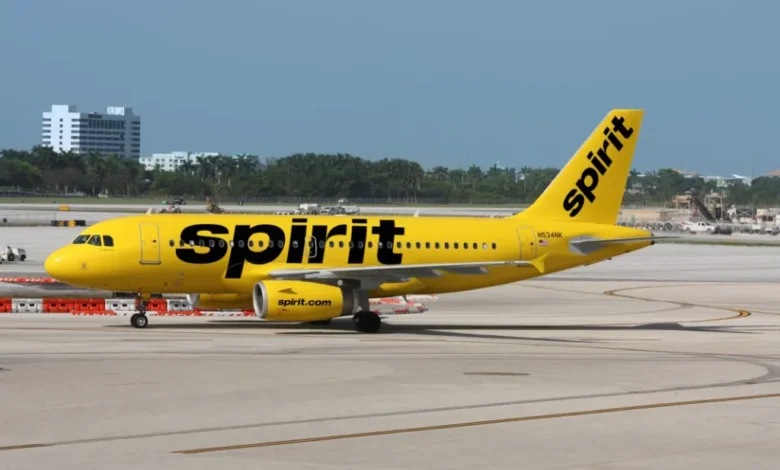
By Saturday morning, the Spirit Airlines website had been updated with a stark message: "Spirit Is Winding Down All Operations." The notice explicitly advised customers not to travel to airports, as all scheduled flights had been canceled and check-in counters would be unstaffed. The airline’s fleet of yellow-liveried Airbus aircraft, once a symbol of affordable travel, began the process of being ferried to storage locations or returned to lessors.
Chronology of a Crisis: From Profitability to Liquidation
The demise of Spirit Airlines was not an overnight event but the culmination of several years of compounding financial pressures. To understand the collapse, one must look at the timeline of the airline’s struggle to adapt to a post-pandemic economy.
- 2019: Spirit Airlines records some of its most profitable years, dominating the "no-frills" market and forcing legacy carriers to introduce "Basic Economy" to compete.
- 2020-2021: The COVID-19 pandemic halts global travel. While Spirit benefits from some federal relief, the recovery is uneven. Unlike legacy carriers, Spirit lacks a lucrative business-class segment to bolster revenue as leisure travel remains volatile.
- 2022: JetBlue Airways launches a $3.8 billion hostile takeover bid for Spirit, aiming to create the fifth-largest airline in the U.S.
- January 2024: A federal judge blocks the JetBlue-Spirit merger on antitrust grounds, arguing that the disappearance of Spirit would lead to higher fares for budget-conscious travelers. The ruling leaves Spirit without a clear path to long-term viability.
- June 2024: Spirit enters its first round of Chapter 11 bankruptcy protection to restructure approximately $1.1 billion in debt.
- October 2024: Mounting losses and engine issues with the Pratt & Whitney Geared Turbofan (GTF) fleet force the airline to ground dozens of planes, further slashing revenue.
- Late 2024: A second Chapter 11 filing is initiated as the airline fails to meet the terms of its initial restructuring. Negotiations for a federal bailout begin but eventually stall.
- Saturday Morning: Spirit Airlines announces a total wind-down of operations.
Supporting Data: The Financial Weight of the Collapse
The scale of Spirit’s financial instability is evident in its recent quarterly filings. For the fiscal year preceding the shutdown, the airline reported a net loss of over $400 million. The company’s debt-to-equity ratio had reached unsustainable levels, and its cash reserves were dwindling at a rate of several million dollars per day.
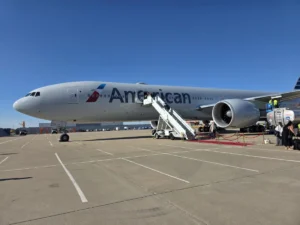
Furthermore, the industry-wide shift toward "premium" travel significantly disadvantaged Spirit. Data from airline industry analysts suggest that while domestic travel demand remained high, the growth was concentrated in premium economy and business class segments—areas where Spirit did not compete. Major carriers like Delta, United, and American Airlines reported record revenues from their loyalty programs and premium cabins, while Spirit’s "unbundled" model, which charges for everything from carry-on bags to water, saw declining interest among travelers willing to pay more for a "full-service" experience.
The grounding of Spirit’s Airbus A320neo fleet due to Pratt & Whitney engine inspections also played a critical role. At its peak, nearly 20% of Spirit’s fleet was out of service, yet the airline remained responsible for lease payments and maintenance overhead, creating a massive drain on capital with no offsetting passenger revenue.
The Failed Federal Lifeline
A significant factor in the timing of the shutdown was the failure of talks with the Trump administration. Spirit had sought a specialized loan package or a direct cash infusion under the premise that its collapse would decrease competition and lead to an immediate spike in airfares for low-income Americans.
Sources close to the negotiations suggest that the administration was hesitant to provide a "targeted bailout" for a single carrier that had already failed to restructure successfully in bankruptcy court. The administration’s stance reportedly focused on market-driven solutions rather than government intervention for a company with a history of negative cash flow. Without the federal guarantee, private equity firms and existing creditors refused to provide the "debtor-in-possession" financing necessary for the airline to continue flying through a liquidation process.
The Death of the "Spirit Effect" and Market Implications
Economists have long referred to the "Spirit Effect"—the phenomenon where a low-cost carrier’s entry into a market forces all other airlines to lower their prices. With Spirit’s exit, there are significant concerns regarding fare hikes on routes where Spirit was a primary competitor.
The impact will be felt most acutely in "fortress hubs" and secondary airports. Spirit was the largest carrier at Fort Lauderdale-Hollywood International Airport (FLL) and held significant market share in Orlando (MCO), Las Vegas (LAS), and Detroit (DTW). The loss of Spirit’s capacity—roughly 5% of the total U.S. domestic seat share—is expected to lead to a 10% to 15% increase in fares on popular leisure routes in the short term.
Rival low-cost carriers, such as Frontier Airlines and Allegiant Air, are expected to move quickly to capture Spirit’s former market share. However, these airlines are facing their own headwinds, including rising labor costs and the same fuel price volatility that crippled Spirit. Southwest Airlines, which recently transitioned away from its open-seating model to a more traditional assigned-seating and premium-heavy strategy, is also positioned to absorb some of the displaced passengers, though at a higher price point.
Official Responses and Passenger Fallout
The Department of Transportation (DOT) issued a statement shortly after the announcement, emphasizing that Spirit Airlines is legally obligated to provide refunds to all passengers whose flights have been canceled. "We are monitoring the situation closely to ensure that Spirit Airlines fulfills its obligations to consumers," a DOT spokesperson said. "Under federal law, if an airline cancels a flight, the passenger is entitled to a full refund to the original form of payment."
Despite these assurances, the logistical reality for travelers is grim. Because Spirit has ceased all operations, there are no "re-booking" options on Spirit flights. Passengers are being forced to purchase last-minute tickets on other airlines at peak "walk-up" prices. In major hubs like Fort Lauderdale, thousands of passengers found themselves stranded with no clear path home.
Labor unions representing Spirit’s pilots and flight attendants expressed heartbreak over the news. The Air Line Pilots Association (ALPA) released a statement noting that the shutdown puts thousands of highly skilled aviation professionals out of work. "Our focus is now on supporting our members and their families during this incredibly difficult time and ensuring that their contractual rights are protected during the liquidation process," the union stated.
Broader Impact on the Aviation Industry
The liquidation of Spirit Airlines serves as a cautionary tale for the ultra-low-cost model in a high-cost environment. The "bare fare" strategy, which relied on high volume and low operating costs, has been squeezed from both ends: by rising costs of fuel and labor, and by a consumer base that increasingly values reliability and amenities over the absolute lowest price.
Furthermore, the failure of Spirit may signal a period of intense consolidation in the U.S. airline industry. With Spirit gone, the "Big Four" (Delta, United, American, and Southwest) control an even larger portion of the domestic market. Regulatory scrutiny of future mergers may increase, as the DOJ’s previous intervention in the JetBlue-Spirit merger failed to save the budget carrier and ultimately resulted in the very loss of competition the government sought to prevent.
As the aviation industry looks toward the future, the vacancy left by Spirit Airlines will likely be filled by a new generation of hybrid carriers or by the expansion of existing budget airlines. However, for the millions of travelers who relied on Spirit’s "yellow taxis of the sky" to visit family or take a vacation on a budget, the skies just became significantly more expensive. The wind-down of Spirit Airlines is not just the story of a failing business; it is a reflection of a shifting American economy where the "bottom-tier" of service is becoming increasingly difficult to sustain.