Bong Joon Ho’s Sci-Fi Epic Mickey 17 Sets the Stage for a Cinematic Masterpiece Starring Robert Pattinson

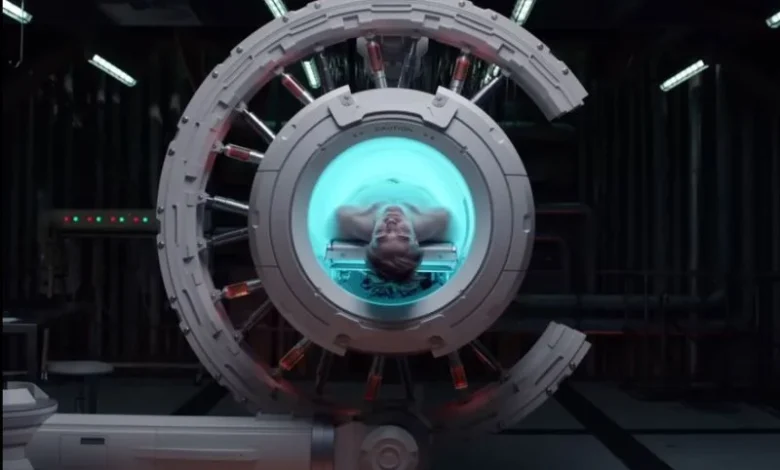
The cinematic landscape is bracing itself for another visionary project from South Korean auteur Bong Joon Ho. Following his historic, barrier-shattering success with the dark comedy-thriller Parasite at the 92nd Academy Awards, the acclaimed director has officially turned his sights toward the realm of science fiction with his upcoming feature film, Mickey 17. Scheduled for theatrical release on March 29, 2024, the movie marks Bong’s first directorial effort since his sweeping Oscar victory, where Parasite became the first non-English-language film in history to win Best Picture.
Distributed by Warner Bros. Pictures, Mickey 17 adapts Edward Ashton’s acclaimed speculative fiction novel Mickey 7, though early indications suggest the auteur’s screenplay may diverge significantly from its literary source material. With a heavyweight cast featuring Robert Pattinson in the title role alongside an ensemble of international stars, anticipation for the project has reached fever pitch across the entertainment industry.
The Premise: A Deep Dive into Mortality and Colonization
At its core, Mickey 17 explores dystopian themes of corporate exploitation, human disposability, and the psychological toll of immortality. The narrative centers on Mickey 7, an "expendable"—a disposable employee on a hazardous human expedition dispatched to colonize Niflheim, a hostile, ice-covered alien world.
In this futuristic societal hierarchy, whenever a mission is deemed too perilous for ordinary crew members—involving lethal radiation, extreme temperatures, or biological hazards—Mickey is sent in. Upon his inevitable death, a new body is regenerated with most of his previous memories intact. The story kicks into high gear during the seventh iteration, when Mickey 7 survives a mission presumed to be fatal, only to return to base and discover that a successor, Mickey 8, has already been printed. The premise forces the narrative into existential territory, exploring identity, survival, and rebellion within a cold, bureaucratic space program.
While Ashton’s novel serves as the structural foundation, Bong Joon Ho is renowned for subverting expectations and tailoring source material to fit his distinct sociopolitical worldview. Industry insiders anticipate that the cinematic adaptation will lean heavier into themes of class struggle and institutional indifference, motifs that have defined Bong’s illustrious filmography from Snowpiercer to Okja and Parasite.
An All-Star Cast and Creative Ensemble
Mickey 17 boasts a powerhouse cast capable of bringing the complex, multi-layered characters of Bong’s universe to life. Robert Pattinson, celebrated for his versatile career trajectory spanning independent dramas like The Lighthouse and high-profile blockbusters like The Batman and Tenet, anchors the production as the titular protagonist. Given the cloning mechanics of the narrative, Pattinson is expected to deliver a nuanced, dual-performance dynamic as multiple iterations of Mickey interact on screen.
Joining Pattinson is an impressive supporting roster that includes Oscar nominee Steven Yeun (Minari, Nope), Naomi Ackie (Whitney Houston: I Wanna Dance with Somebody, The Rise of Skywalker), Toni Collette (Hereditary, The Sixth Sense), and Mark Ruffalo (Poor Things, Avengers: Endgame).
Behind the camera, Bong has reassembled several key members of his trusted creative team. The film is produced by Plan B Entertainment, the production company co-founded by Brad Pitt, alongside Doo Ho Choi and Dede Gardner. Furthermore, composer Jae-il Jung, whose haunting and rhythmic score helped elevate the tension in Parasite, returns to collaborate with Bong, promising an auditory landscape as distinct and memorable as the director’s visual framing.
The Chronology of an Anticipated Production
The journey of Mickey 17 from concept to the silver screen spans several years of meticulous development, production adjustments, and post-production refinement.
In January 2022, reports first surfaced that Bong Joon Ho was developing his next project, attaching Robert Pattinson to star before a studio deal was formally sealed. By May 2022, Warner Bros. officially boarded the project, committing to a major theatrical release and providing the substantial budget required for a high-concept science fiction epic shot on international soundstages.
Casting announcements rolled out steadily through the summer and autumn of 2022, with Yeun, Ackie, Collette, and Ruffalo rounding out the principal cast between July and August. Principal photography commenced later that year in the United Kingdom, utilizing state-of-the-art virtual production technologies and practical set designs to construct the icy expanses of Niflheim.
By early December 2022, Warner Bros. treated global audiences to the first official teaser footage, establishing the atmospheric tone and giving fans their inaugural look at Pattinson’s exhausted, weary space colonist. Although original scheduling had targeted a late 2023 release, industry shifts and extensive visual effects work pushed the theatrical debut to March 29, 2024, positioning the film as a major spring tentpole event.
Background Context: The Post-Parasite Era
To understand the weight and expectation surrounding Mickey 17, one must contextualize the seismic shift Bong Joon Ho’s career underwent on February 9, 2020. At the 92nd Academy Awards, Parasite achieved what many thought was impossible. Beyond securing Best Picture and Best International Feature Film, Bong took home the awards for Best Director and Best Original Screenplay.
This historic sweep broke a longstanding cultural barrier in Western cinema, validating international filmmaking on the global stage and transforming Bong into a globally recognized auteur with unprecedented creative freedom. Studios rushed to collaborate with the South Korean master, granting him the resources to helm ambitious, English-language projects without compromising his unique artistic vision. Mickey 17 represents the culmination of this newfound industry leverage—a big-budget Hollywood sci-fi film stamped with the uncompromising sensibilities of an independent arthouse visionary.
Industry Implications and Cultural Impact
The release of Mickey 17 arrives at a critical juncture for the global film industry, which continues to navigate changing audience habits, box office volatility, and the increasing dominance of intellectual property-driven franchises. As an original science fiction property based on a relatively recent novel rather than a legacy franchise, the film carries high stakes for Warner Bros. and the cinematic landscape at large.
Box office analysts note that event films anchored by auteur directors and bankable movie stars remain one of the few reliable drivers for theatrical attendance outside of superhero properties. If Mickey 17 achieves commercial and critical success, it will further reinforce the viability of high-concept, mid-to-high-budget original storytelling in major studio portfolios.
Furthermore, the film continues a growing trend of cross-cultural collaboration in major Hollywood productions, blending Western star power with South Korean directorial mastery and production expertise. As release day approaches, cinephiles and industry experts alike will be watching closely to see how Bong Joon Ho translates his razor-sharp satirical wit and mastery of suspense into the vast, freezing expanses of interstellar colonization.
Related posts: