Matthew Lillard expresses regret over his return to the Scream franchise following the controversial firing of Melissa Barrera

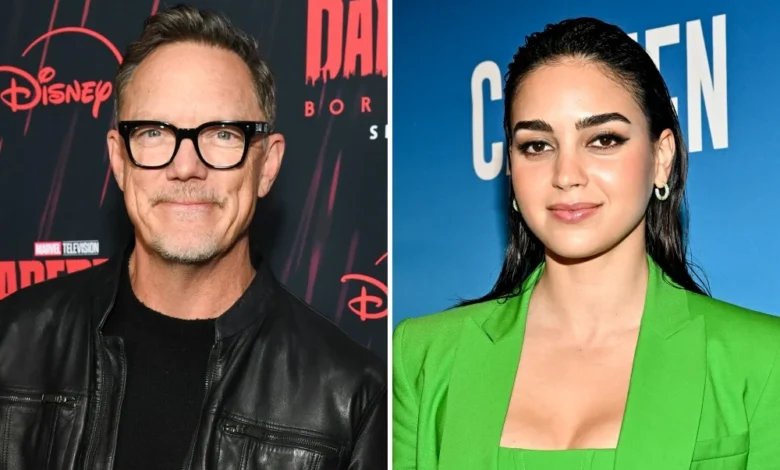
The intersection of Hollywood commerce, political advocacy, and artistic integrity has come to the forefront of industry discourse following candid remarks made by actor Matthew Lillard. During a recent public appearance commemorating the 30th anniversary of the original Wes Craven horror masterpiece Scream, Lillard addressed his decision to participate in the latest franchise installment, Scream 7. His commentary centered on the professional and ethical fallout surrounding the 2023 dismissal of actress Melissa Barrera, whose outspoken stance on the conflict in Gaza triggered a swift and decisive response from production studio Spyglass Media Group.
Lillard, a cornerstone of the franchise who famously portrayed the antagonist Stu Macher in the 1996 original, admitted to feeling a sense of shame regarding his involvement in the most recent sequel. His reflections serve as a microcosm of a broader, ongoing tension within the entertainment industry: the difficult navigation of personal conscience versus professional obligation when an actor’s political values diverge from the corporate mandates of the studios that employ them.
A Timeline of the Controversy
The sequence of events that led to the current discourse began in late 2023, shortly after the escalation of hostilities in Gaza. Melissa Barrera, who had become the lead face of the revitalized Scream franchise through her performances in the 2022 reboot and its 2023 successor, utilized her social media presence to express critical views regarding the actions of the Israeli government.
In November 2023, Spyglass Media Group issued a statement terminating Barrera’s contract for future installments. The company’s official communication cited a "zero tolerance" policy regarding antisemitism and the dissemination of rhetoric they classified as hate speech, specifically referencing terms such as "genocide" and "ethnic cleansing."
The industry response was immediate and bifurcated. Supporters of Barrera argued that her comments were consistent with mainstream humanitarian critiques of the conflict, while the studio maintained that her rhetoric crossed the threshold into prohibited conduct. The fallout was further compounded when, shortly after Barrera’s departure, Jenna Ortega—the co-lead of the recent films—also exited the project, citing scheduling conflicts. These dual departures cast a shadow over the production of Scream 7, which faced significant public scrutiny, including organized protests and calls for boycotts during its February theatrical release.
Lillard’s Reflection and the Weight of Advocacy
At the recent anniversary screening, Lillard was questioned by a fan regarding the challenges of maintaining a vocal political stance in a high-profile career. Lillard, known for his transparent approach to public life, referenced his own history of activism, including his previous public denunciation of U.S. Immigration and Customs Enforcement (ICE).
"I don’t know how else to do it," Lillard stated during the event. "For me, I have queer kids. If I’m not standing up for queer kids or the trans community, then what the fuck am I doing? If I’m not standing up against ICE, then what the fuck am I doing?"
However, when the conversation shifted to his participation in the latest Scream film, his tone shifted to one of introspection and regret. Lillard acknowledged that his excitement to return to the character of Stu Macher—a role that defined his early career—momentarily clouded his ability to consider the broader context of the studio’s treatment of his peer.
"I went back to do Scream, and I got called out. And I’m like, ‘Oh, fuck. That’s brutal,’" Lillard said. "I feel bad about that. I feel ashamed about that. Because in that moment I was so excited to go back, I didn’t really think about Melissa and that journey. I didn’t say no. I’m embarrassed; that’s the truth… I blew that. I’m on the wrong side of history for that."
Industry Implications and Corporate Governance
The controversy surrounding the Scream franchise underscores a growing friction between creative talent and corporate leadership in Hollywood. As studios increasingly prioritize brand safety and risk mitigation, the threshold for what constitutes acceptable political expression by actors continues to shift.
From a business perspective, the Scream franchise remains a potent intellectual property. Despite the internal turmoil and the high-profile firing, the latest entry, released in February, achieved significant commercial success, grossing $214 million worldwide. This figure represents the highest-grossing performance in the history of the franchise. Analysts suggest that this paradox—where a film succeeds financially despite significant public outcry—highlights the enduring power of horror fanbases and the difficulty of mounting successful, long-term boycotts against established cultural touchstones.
However, the human cost of these decisions is not lost on the creative community. By labeling Barrera’s commentary as "hate speech," Spyglass effectively precluded her from future professional opportunities within the franchise, an action that critics argue sets a dangerous precedent for the silencing of political discourse in the arts. Lillard’s assertion that Barrera was "on the right side of history" highlights a widening gap between the perspective of some industry professionals and the rigid compliance standards held by major studios.
The Broader Landscape of Actor Activism
Lillard’s public admission serves as a rare instance of a high-profile actor openly criticizing a decision made by a production company that currently employs them. In an era where "cancel culture" and the fear of professional blacklisting loom large, such transparency is uncommon.
The incident also draws parallels to other instances where performers have faced repercussions for their political beliefs. The tension is particularly pronounced when an actor’s public comments touch upon volatile geopolitical issues. Unlike domestic policy issues, which often fall under the umbrella of standard celebrity advocacy, international conflicts often force studios to contend with potential backlash from international markets and domestic stakeholders, leading to the "zero tolerance" stances that defined the situation with Barrera.
The Path Forward for Franchise Cinema
As Scream 7 concludes its theatrical run, the legacy of the film is now irrevocably tied to the political climate of 2023 and 2024. For Lillard, the experience has served as a catalyst for deeper reflection on the nature of his professional choices. While he indicated that he still finds value in the work itself, his public apology reflects a personal reckoning that may influence his future career decisions.
The broader implications for the film industry are clear: actors are increasingly being forced to weigh their artistic legacy against their political convictions. As audiences become more sensitive to the values of the individuals they support through their ticket purchases, studios may find that the traditional methods of reputation management—firing talent to mitigate controversy—may carry long-term risks to their brand equity and their relationship with the creative community.
Ultimately, the dialogue sparked by Lillard’s comments at the anniversary screening is not merely about a horror franchise or a single casting decision. It is a reflection of a changing industry where the lines between the personal, the political, and the professional are becoming increasingly blurred. As stakeholders on all sides—studios, actors, and audiences—continue to navigate this terrain, the case of the Scream franchise will likely be cited as a pivotal example of how political discourse can fundamentally alter the trajectory of global entertainment properties.
Whether this leads to a more flexible approach to creative freedom or a tightening of contractual morality clauses remains to be seen. What is certain, however, is that the era of the "politically neutral" movie star is effectively over, and the industry is currently in a state of adjustment as it attempts to balance these competing demands in an increasingly polarized world.
Related posts: