
Category International Relations Page 3
Navigating the Complexities: A Deep Dive into International Relations – Page 3
Page 3 of our exploration into International Relations shifts focus from the foundational theories and historical underpinnings to the contemporary mechanisms, challenges, and future trajectories shaping global interactions. This section delves into the practical applications of IR concepts, examining how states and non-state actors engage in diplomacy, utilize economic leverage, and grapple with evolving security threats in a multipolar world. The intricate web of international law, multilateral institutions, and the ever-present reality of power politics forms the core of this critical discussion. We will dissect the instruments of foreign policy, analyze the drivers of conflict and cooperation, and consider the ethical dimensions that permeate global decision-making.
The contemporary international system is characterized by a complex interplay of state and non-state actors, each wielding varying degrees of influence. While nation-states remain the primary units of analysis in international relations, their autonomy and agency are increasingly challenged and shaped by a burgeoning array of non-state actors. These include international organizations (IOs) like the United Nations, the World Trade Organization, and the International Monetary Fund, which establish norms, facilitate cooperation, and provide forums for dispute resolution. Regional organizations, such as the European Union, ASEAN, and the African Union, play a crucial role in fostering regional stability, economic integration, and collective security. Beyond formal organizations, multinational corporations (MNCs) exert significant economic power, influencing trade, investment, and labor practices across borders. Non-governmental organizations (NGOs), from human rights watchdogs to environmental advocacy groups, increasingly shape global agendas and hold governments accountable. Transnational terrorist networks, criminal syndicates, and even influential individuals can also impact international dynamics, demonstrating the diffusion of power beyond traditional state-centric models. Understanding the interactions and motivations of this diverse cast of actors is paramount to comprehending the nuances of modern international relations. The realist perspective, while often focused on state power, must acknowledge the indirect influence of these non-state entities on state behavior and international outcomes. Conversely, liberal and constructivist approaches offer more explicit frameworks for analyzing the roles and impacts of IOs, NGOs, and other non-state actors in shaping norms, identities, and ultimately, the international agenda.
Diplomacy, the art and practice of conducting negotiations between representatives of states or groups, remains a cornerstone of international relations. It encompasses a spectrum of activities, from formal state-to-state interactions to informal back-channel communications. Bilateral diplomacy, involving direct engagement between two countries, is crucial for managing specific issues and building alliances. Multilateral diplomacy, conducted within international organizations, allows for collective problem-solving and the establishment of global norms. Summit diplomacy, involving direct meetings between heads of state or government, can be pivotal in resolving major crises or forging significant agreements. Tools of diplomacy range from negotiation and mediation to conciliation and arbitration. The effectiveness of diplomacy is often contingent on factors such as trust, reciprocity, clearly defined national interests, and the skillful deployment of communication strategies. In an era of rapid information flow and heightened public scrutiny, public diplomacy, aimed at influencing foreign publics directly, has gained prominence, utilizing cultural exchange, media outreach, and educational programs. The challenge for diplomats lies in navigating diverse cultural norms, political systems, and competing national interests to achieve peaceful and mutually beneficial outcomes. The evolving nature of global threats, from cyber warfare to pandemics, demands innovative diplomatic approaches that can transcend traditional boundaries and foster genuine international cooperation. The concept of "smart power," a combination of hard and soft power, is increasingly relevant in contemporary diplomacy, where coercive measures may be complemented by persuasive influence.
Economic statecraft, the use of economic tools to achieve foreign policy objectives, has become an increasingly potent instrument in international relations. Trade policies, including tariffs, quotas, and free trade agreements, can be used to reward allies, punish adversaries, or promote specific economic agendas. Sanctions, ranging from targeted financial restrictions to comprehensive trade embargoes, are employed to compel states to alter their behavior, whether it be regarding human rights abuses, nuclear proliferation, or aggressive military actions. Foreign aid, both humanitarian and developmental, can be used to foster goodwill, build alliances, and promote stability in recipient countries. Investment treaties and financial assistance can also serve as instruments of leverage, influencing the economic policies and political orientations of other states. The interconnectedness of the global economy means that economic policies enacted by one state can have significant ripple effects on others, creating both opportunities for cooperation and avenues for conflict. The weaponization of economic interdependence, as seen in recent trade disputes and the use of energy as a political tool, highlights the strategic importance of economic relationships. International economic institutions, such as the IMF and the World Bank, play a critical role in shaping global economic governance, but their policies and influence are often subjects of intense debate and scrutiny, particularly regarding issues of equity and sovereignty. The rise of economic nationalism and protectionist sentiments in various parts of the world further complicates the landscape of economic statecraft, demanding careful consideration of the long-term consequences of such policies on global stability and prosperity.
The international legal framework provides a normative structure for regulating the behavior of states and other international actors, aiming to foster order and predictability in the international system. International law encompasses a broad range of sources, including treaties, customary international law, general principles of law, and judicial decisions. Key areas of international law include the law of armed conflict, human rights law, international environmental law, and international economic law. The United Nations Charter, a foundational document, articulates core principles such as state sovereignty, the prohibition of the use of force, and the peaceful settlement of disputes. The International Court of Justice (ICJ) serves as the principal judicial organ of the UN, adjudicating disputes between states. However, the enforcement of international law remains a persistent challenge. Unlike domestic legal systems, there is no overarching global authority with a monopoly on legitimate force to compel compliance. Enforcement often relies on the willingness of states to abide by their obligations, the pressure exerted by international organizations, and the potential for reputational damage or retaliatory measures. The rise of international criminal law, with institutions like the International Criminal Court (ICC), represents an attempt to hold individuals accountable for egregious violations of international norms, such as war crimes, crimes against humanity, and genocide. Despite its limitations, the international legal system plays a vital role in shaping state behavior, promoting accountability, and providing a framework for addressing global challenges through peaceful and ordered means.
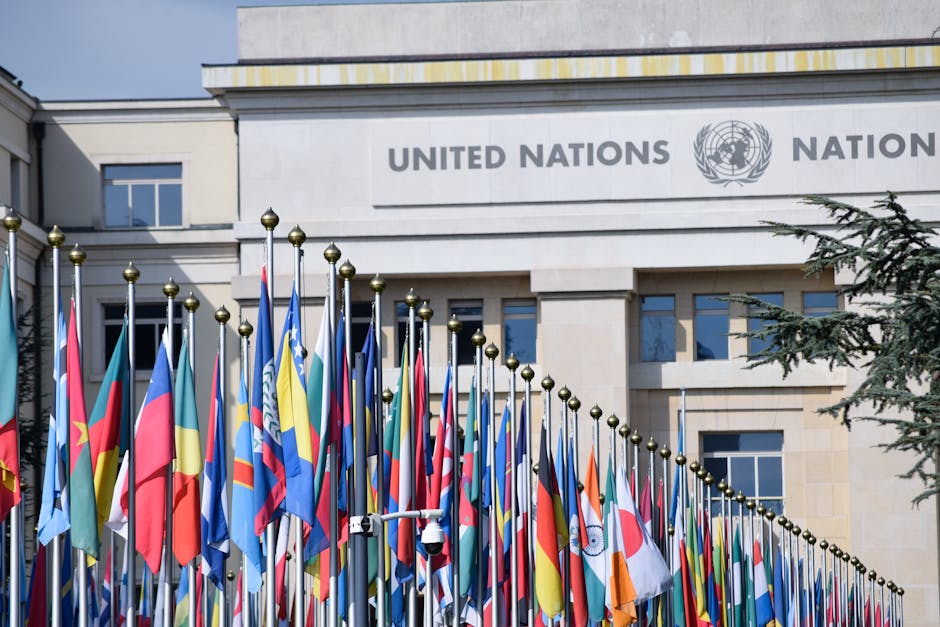
Multilateralism, the practice of coordinating national policies in groups of three or more states, is a defining feature of contemporary international relations. International organizations (IOs) are the primary institutional manifestations of multilateralism, providing platforms for dialogue, cooperation, and collective action on a wide range of issues. The United Nations, with its Security Council, General Assembly, and numerous specialized agencies, remains the most prominent global multilateral institution, striving to maintain international peace and security, promote sustainable development, and uphold human rights. Regional organizations, as previously mentioned, are also crucial in fostering regional cooperation and addressing specific regional challenges. The effectiveness of multilateralism is often debated, with critiques pointing to issues of bureaucracy, inefficiency, and the disproportionate influence of powerful states within these organizations. However, proponents argue that multilateralism is essential for tackling complex global challenges that transcend national borders, such as climate change, pandemics, and terrorism. The strength of multilateralism lies in its ability to pool resources, share burdens, and legitimize collective action. In an increasingly interdependent world, the ability of states to engage in effective multilateral cooperation is paramount to achieving shared goals and navigating the complexities of global governance. The evolving nature of global power dynamics, with the rise of new economic powers and the shifting alliances, necessitates a re-evaluation and strengthening of multilateral institutions to ensure their continued relevance and effectiveness in addressing the challenges of the 21st century.
Security in international relations has evolved beyond the traditional focus on military threats to encompass a broader spectrum of concerns. While interstate warfare remains a persistent threat, the nature of conflict has transformed, with the rise of intrastate conflicts, terrorism, cyber warfare, and the proliferation of weapons of mass destruction. Traditional security paradigms, often rooted in realist notions of power and deterrence, are increasingly insufficient to address these multifaceted challenges. The concept of "human security" has emerged as a complementary framework, emphasizing the protection of individuals from a range of threats, including poverty, disease, environmental degradation, and political repression. This broader understanding of security necessitates a more integrated approach, involving not only military preparedness but also diplomatic engagement, economic development, and the promotion of human rights and good governance. The proliferation of non-state actors, including terrorist organizations and transnational criminal networks, further complicates security dynamics, demanding innovative strategies for intelligence sharing, law enforcement cooperation, and counter-terrorism efforts. Cyber security has become a critical domain, with states and non-state actors engaging in cyber espionage, sabotage, and information warfare. The challenge for international relations is to develop effective mechanisms for collective security that can address these diverse threats, fostering cooperation and de-escalation in an era of heightened global insecurity. The interconnectedness of global security means that threats in one region can have cascading effects elsewhere, underscoring the need for coordinated international responses.
The future of international relations is likely to be shaped by several key trends. The ongoing shift in global power from the West to the East, with the rise of China and other emerging economies, will continue to reconfigure geopolitical landscapes. The challenge of managing this transition peacefully and constructively will be a defining feature of the coming decades. Climate change represents an existential threat that demands unprecedented levels of international cooperation, posing significant challenges to national sovereignty and requiring innovative governance mechanisms. The increasing interconnectedness of global systems, driven by technological advancements, will continue to blur the lines between domestic and international affairs, creating new opportunities for cooperation but also new avenues for conflict. The future of multilateralism and the reform of existing international institutions will be crucial for effectively addressing global challenges. The ethical dimensions of international relations, including issues of humanitarian intervention, global justice, and the responsibility to protect, will continue to be debated and contested. The digital revolution and the rise of artificial intelligence will undoubtedly have profound implications for international security, diplomacy, and the global economy. Navigating these complex and dynamic forces requires a nuanced understanding of the theories and practices of international relations, a commitment to diplomacy and cooperation, and a willingness to adapt to an ever-changing global landscape. The ongoing evolution of international norms and institutions will be critical in shaping the future trajectory of global interactions.
