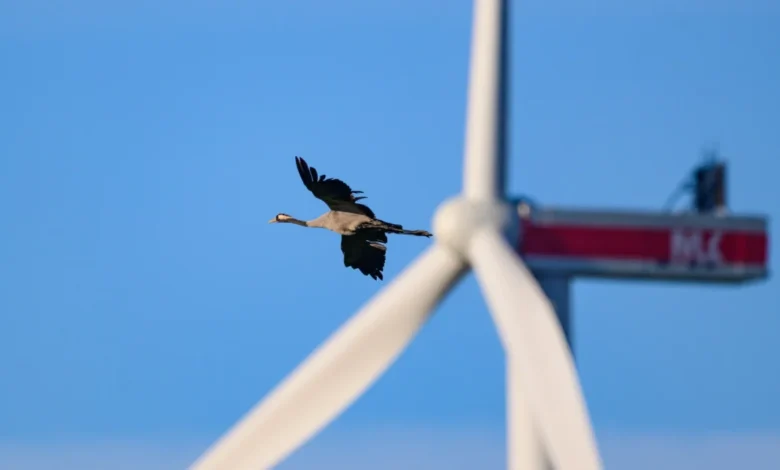
Wind turbines, a cornerstone of our transition to a sustainable energy future, are increasingly being scrutinized for their unintended environmental consequences. While their contribution to reducing carbon emissions is undeniable, the towering structures and their rapidly rotating blades pose a significant threat to avian and bat populations. Recent research published in the journal Behavioral Ecology suggests a surprisingly simple yet effective solution: painting turbine blades with colors that mimic the warning signals found in nature. This innovative approach could dramatically reduce the mortality rates of birds and bats, a critical concern for conservation efforts worldwide.
The Challenge of Avian and Bat Mortality in Wind Farms
Wind energy has experienced exponential growth over the past few decades. In 2023 alone, global installed wind power capacity increased by approximately 108 gigawatts, bringing the total to over 1,000 gigawatts. This expansion, while crucial for climate action, has inevitably led to an increase in the ecological footprint of wind farms. A persistent concern has been the impact on wildlife, particularly flying animals.
While initial media reports sometimes exaggerated the threat, the reality is that wind turbines do contribute to bird and bat fatalities. Studies indicate that a single wind turbine can be responsible for the deaths of approximately two to six birds and four to seven bats per megawatt of installed capacity annually. While these numbers might seem small on an individual basis, when extrapolated across the thousands of turbines operating globally, the cumulative impact becomes substantial. For endangered or vulnerable species, even a minor increase in mortality can have significant repercussions on population recovery and long-term survival.
The specific mechanisms of mortality are varied. Birds may collide with the blades directly, particularly during low-light conditions such as dawn and dusk, or when migrating. Bats, which often navigate using echolocation, can be disoriented by the rotating blades or experience barotrauma (lung damage) due to rapid changes in air pressure caused by the blades. The sheer size and speed of the blades, often painted in a stark white that blends with the sky, make them difficult to detect for many species.
Seeking Nature-Inspired Solutions
Engineers and researchers have been actively seeking ways to mitigate these risks. Early efforts focused on optimizing turbine placement to avoid known migratory routes or sensitive habitats. Other strategies have explored altering operational patterns, such as temporarily stopping turbines during peak migration periods or high-risk times for bats. However, these solutions often involve complex logistical challenges and can impact the energy output of the wind farm.
The breakthrough study published in Behavioral Ecology offers a more direct and potentially cost-effective intervention: visual deterrents applied directly to the turbine blades. The research team, a collaborative effort between scientists from the University of Helsinki and the University of Exeter, drew inspiration from the natural world’s established communication systems. Many species that are toxic or dangerous to predators utilize vibrant, contrasting colors – known as aposematic coloration – to signal their unpalatability. Examples include the striking patterns of coral snakes, poison dart frogs, and certain insects.
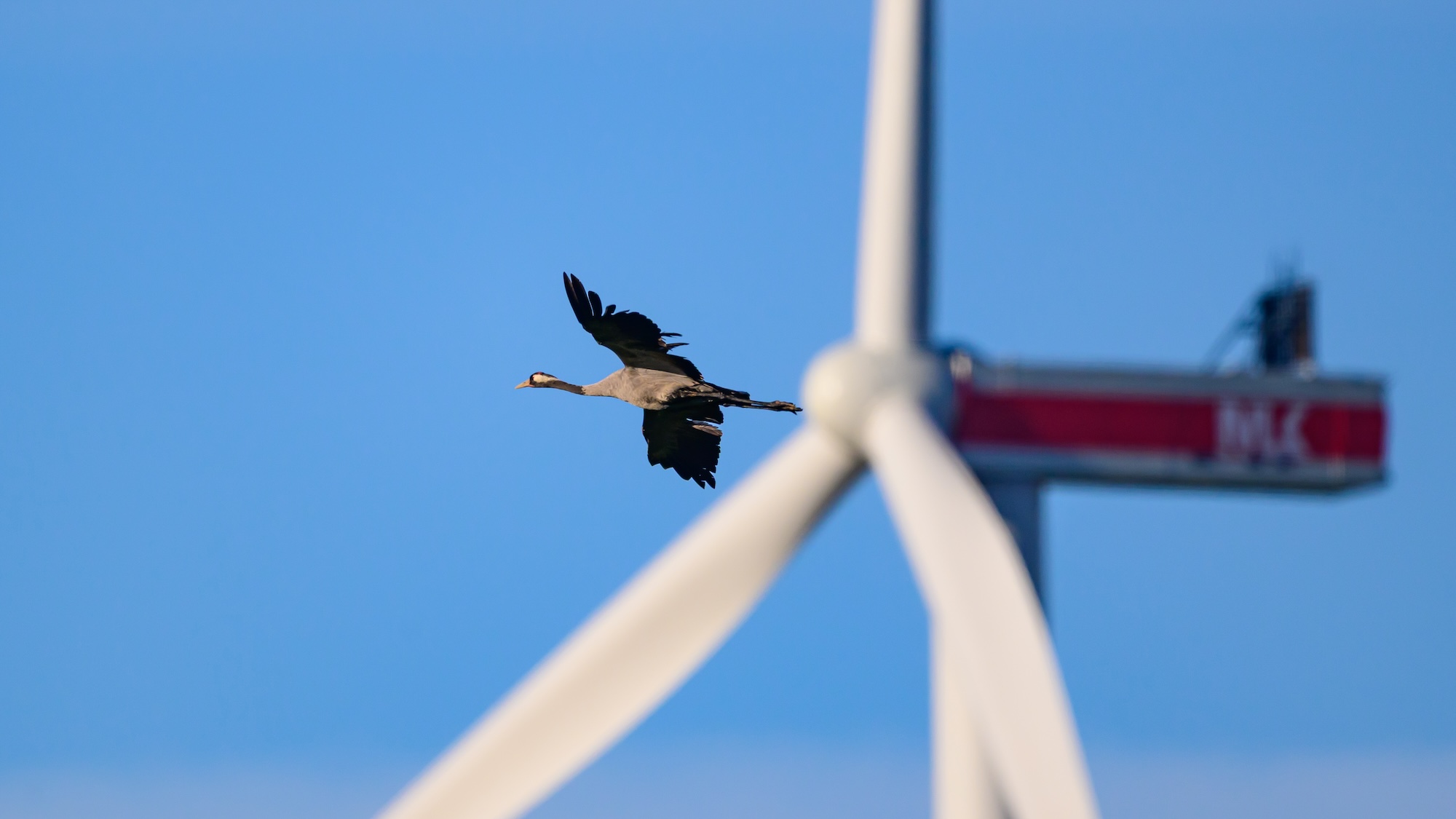
The hypothesis was that by painting turbine blades with colors that mimic these natural warning signals, birds and bats would be more likely to perceive them as a threat and actively avoid them. This concept leverages innate behavioral responses that have evolved over millennia for survival.
Experimental Design and Findings
To test this hypothesis, the researchers designed a series of controlled experiments. In a laboratory setting, birds were presented with video simulations of wind turbine blades rotating at various speeds. These simulations featured different color schemes:
- Classic White Blades: The standard, widely used color for most wind turbines.
- One Blade Painted Black: A variation that aimed to introduce contrast.
- Red-and-White Stripes: A pattern often seen in venomous snakes.
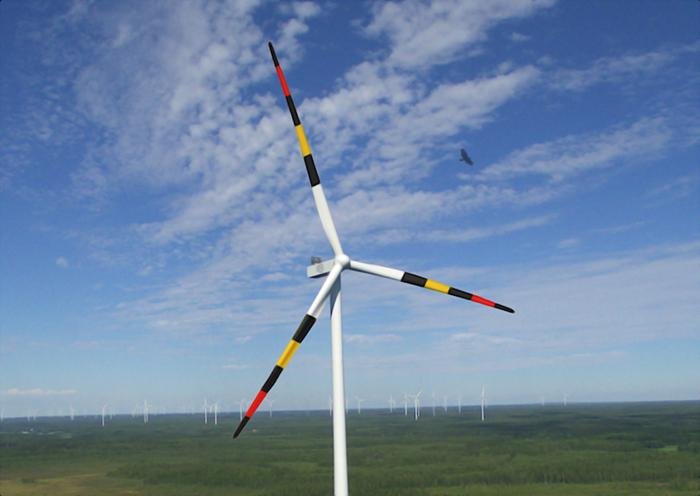
- Biomimetic Red-Black-Yellow Pattern: A novel design inspired by the warning colors of toxic frogs and insects.
The birds’ responses were meticulously recorded using touchscreens designed specifically for avian interaction. This innovative use of technology allowed researchers to observe avoidance behavior and approach tendencies without posing any risk to the birds themselves.
The results were striking. In nearly every trial, the birds demonstrated a significant preference for avoiding the colored blades compared to the traditional white ones. The classic white blades were the most frequently approached, suggesting they offer the least visual deterrence. The red-and-white striped blades and the single black-painted blade also showed some level of deterrence, but the most pronounced avoidance was observed with the novel, biomimetic red-black-yellow striped pattern. This pattern, designed to evoke a strong evolutionary-based "danger" signal, proved to be the most effective in encouraging birds to steer clear of the simulated turbine.
Dr. Johanna Mappes, an environmental scientist at the University of Helsinki and a co-author of the study, emphasized the significance of these findings. "White blades, which are the most frequently used pattern around the world, turned out to be the worst option for birds," she stated in a press release. "This suggests that a relatively simple visual change could reduce bird mortality in connection with wind power."
Dr. George Hancock, an ecologist at the University of Exeter and another co-author, further elaborated on the methodology. "By using a touchscreen especially designed for birds, we can use games to explore their behavior and ecology by simulating real-world scenarios, without putting the birds at risk," he explained. He added, "We’ve known for a long time that birds change how they respond to objects with warning colors, but to see such a large effect was remarkable."
Implications for the Wind Energy Industry and Conservation
The implications of this research are profound. If these findings translate to real-world conditions, a simple and relatively inexpensive modification to turbine blade aesthetics could lead to a significant reduction in avian fatalities. This would represent a major step forward in harmonizing renewable energy development with ecological preservation.
Broader Impact and Analysis:
- Cost-Effectiveness: Repainting existing turbines or incorporating these color schemes into new manufacturing processes is likely to be far less expensive than implementing operational curtailments or complex technological solutions. The cost of painting a single blade is minimal compared to the potential loss of biodiversity and the associated conservation efforts.
- Scalability: The application of this solution is inherently scalable. It can be implemented across new wind farm developments and retrofitted onto existing infrastructure globally.
- Conservation Synergy: By reducing accidental deaths, this approach directly supports ongoing conservation efforts for bird and bat species, many of which are already facing threats from habitat loss, climate change, and other human-induced pressures. For endangered species, even a marginal decrease in mortality can be critical for population stability.
- Addressing Bat Mortality: While the primary experiments focused on birds, the study’s authors suggest that similar warning color principles could also apply to bats. Bats, while relying heavily on echolocation, also possess visual capabilities, and aposematic coloration might serve as a deterrent to them as well, potentially mitigating barotrauma and direct collisions. Further research would be needed to confirm the effectiveness for bat species.
- Potential for Other Avian Dangers: The principle of using evolutionary-inspired warning colors could extend beyond wind turbines. The researchers suggest similar strategies might be explored for other human-made structures that pose a risk to birds, such as power lines, communication towers, and large glass windows on buildings.
Official Responses and Industry Adoption:
While specific official statements from major wind energy companies or international bodies directly responding to this particular study were not immediately available at the time of reporting, the industry has shown increasing awareness and commitment to mitigating wildlife impacts. Organizations like the American Clean Power Association and WindEurope have published guidelines and best practices for responsible wind energy development, which often include considerations for avian and bat safety.
It is anticipated that the findings from this study will be of significant interest to industry stakeholders, environmental regulators, and conservation groups. The potential for a simple, effective, and cost-efficient solution to a long-standing problem is likely to drive further investigation and potential adoption.
Timeline and Future Directions:
- Early 2020s: Growing concern and research into the impact of wind turbines on birds and bats.
- 2023-2024: The research conducted by the University of Helsinki and University of Exeter teams, culminating in the study published in Behavioral Ecology.
- Present: Dissemination of research findings and initial industry/scientific community reactions.
- Near Future (1-3 years): Pilot projects and field trials to validate laboratory findings in real-world wind farm environments across different geographical locations and with various bird and bat species.
- Medium-Term (3-7 years): Wider industry adoption of modified blade color schemes, potentially leading to revised manufacturing standards and guidelines.
- Long-Term (7+ years): Measurable reduction in wind turbine-related bird and bat mortality reported globally, contributing to improved conservation outcomes.
The researchers themselves acknowledge that real-world conditions can differ from laboratory settings. Factors such as lighting conditions, weather, bird species composition, and the specific landscape can influence how effectively the warning colors work. Therefore, the next crucial step is to conduct extensive field trials. These trials will involve painting actual wind turbine blades with the most promising color patterns and monitoring bird and bat behavior and mortality rates over extended periods.
"If the results are repeated in practical conditions in different countries and with different bird species, it could be a significant change for the entire wind power industry," stated Dr. Mappes, underscoring the transformative potential of this research.
Conclusion
The quest for clean energy must be balanced with the imperative to protect our planet’s biodiversity. The innovative research into biomimetic warning colors on wind turbine blades offers a promising pathway to achieve this balance. By learning from nature’s own defense mechanisms, scientists are paving the way for a future where renewable energy sources can coexist more harmoniously with the wildlife they share our planet with, ensuring that our transition to a sustainable future does not come at an unacceptable ecological cost. This simple, yet profound, application of evolutionary biology could herald a new era of safer wind energy for both people and wildlife.
Related posts: