Essential Culinary Landmarks of China A Comprehensive Guide to the Nations Most Influential Regional Dishes and Their Historical Evolution

China possesses one of the world’s most sophisticated and diverse food cultures, an intricate tapestry woven from thousands of years of imperial history, regional migrations, and varying climates. The sheer breadth of the nation’s culinary output makes the assembly of a definitive "best" list a daunting task for gastronomes and historians alike. However, for those seeking to understand the Chinese identity through its palate, certain essential dishes serve as culinary landmarks. These selections offer a well-rounded experience, encompassing the "Eight Great Traditions" of Chinese cuisine while highlighting the techniques—from the precision of Cantonese steaming to the bold fermentation of Sichuan—that have come to define global perceptions of Chinese food.
The Imperial Legacy and Northern Staples
The history of Chinese cuisine is inextricably linked to the movement of its imperial capitals. Peking Duck (Beijing Kaoya), perhaps the most famous culinary export of the nation, serves as a primary example of this historical migration. While synonymous with Beijing today, the origins of roasted duck are traced back over 1,500 years to Nanjing, the capital during several ancient regimes. When the Ming Dynasty relocated the seat of power to Beijing in the 1400s, the imperial chefs brought their specialized roasting techniques with them.

In the modern preparation, the duck is prized for its "glass-like" crispy skin. Traditional ovens use fruitwoods, such as pear or date, to impart a subtle fragrance. The dish is served with a meticulous ritual: thin pancakes, sweet bean sauce, scallions, and cucumber. Data from the China Cuisine Association (CCA) indicates that Peking Duck remains the most requested dish by international travelers, symbolizing the refinement of the northern palate.
Further west in Xi’an, the culinary landscape is dominated by Rou Jia Mo, often colloquially termed the "Chinese hamburger." This dish consists of shredded pork belly braised for hours in a complex "master stock" containing star anise, cinnamon, and ginger, tucked into a toasted flatbread called a mo. Historically, the meat preparation method dates back to the Qin Dynasty, while the bread has roots in the Tang Dynasty’s Silk Road exchanges. A perfectly executed mo must exhibit the "chrysanthemum heart"—a specific pattern of golden-brown swirls resulting from traditional pan-toasting.
The Sichuan and Hunan Heat Wave
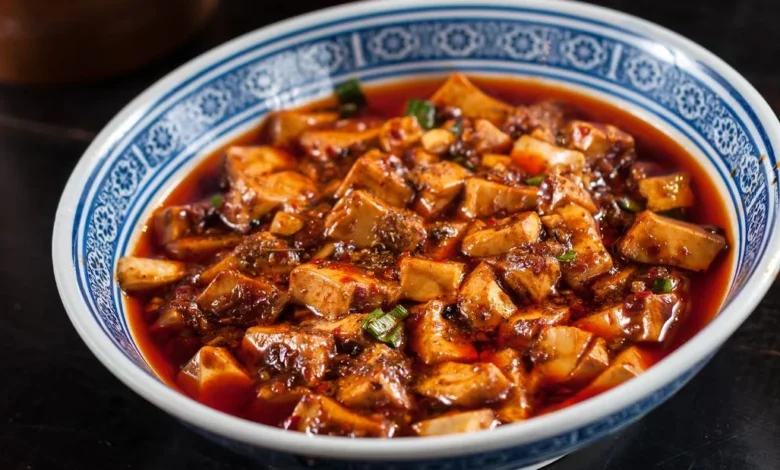
The southwestern provinces of Sichuan and Hunan are globally recognized for their use of chilies, yet their approaches to heat are distinct. Sichuan cuisine is defined by ma la—the combination of numbing Sichuan peppercorns and spicy chilies. Mapo Tofu is the quintessential representative of this style. Named after a pockmarked woman (Ma) who allegedly invented the dish in the 19th century, it features silken tofu set in a fiery, oily sauce of fermented broad bean paste (pixian doubanjiang) and minced beef or pork. Culinary analysts note that the global popularity of Mapo Tofu has surged by 20% in the last decade, driven by an international fascination with the unique numbing sensation of the hydroxy-alpha-sanshool molecule found in Sichuan peppercorns.

Kung Pao Chicken (Gong Bao Ji Ding) represents another facet of Sichuan’s influence. Inspired by Ding Baozeng, a Qing Dynasty governor, the dish is a masterclass in the "lychee-flavored" profile—a balance of salty, sweet, and sour, punctuated by the crunch of fried peanuts and the smokiness of dried chilies.
In contrast, the mountainous province of Hunan (Xiang cuisine) favors "dry spicy" and "sour spicy" profiles. The signature dish, Steamed Fish Head with Chopped Salted Chilies (Duo Jiao Yu Tou), utilizes duo jiao—chilies preserved in salt and ginger. This fermentation process creates a bright, lactic acidity that cuts through the richness of the fish. Hunanese culture is so deeply tied to this heat that local folk songs proclaim a meal incomplete without chili.
Cantonese Mastery and the Art of Dim Sum
Guangdong province, the heart of Cantonese cuisine, prioritizes the "original flavor" of ingredients (yuan zhi yuan wei). This is best exemplified by Cantonese Steamed Fish. The technique is deceptively simple but requires absolute precision; a matter of thirty seconds can mean the difference between succulent flakiness and overcooked toughness. Served with a light dressing of sweetened soy sauce, ginger, and scallions, it reflects the region’s proximity to the sea and its demand for absolute freshness.

The social fabric of the south is perhaps best represented by Dim Sum, a style of morning or afternoon meal centered around "drinking tea" (yum cha). Dim Sum is not a single dish but a curated experience of small plates, including Har Gow (shrimp dumplings) and Char Siu (honey-glazed barbecue pork). Char Siu, characterized by its charred exterior and tender interior, utilizes a marinade of maltose and five-spice powder. It is a staple of "Siu Mei" (roast meat) shops that line the streets of Hong Kong and Guangzhou.
Furthermore, Cantonese culture places a high value on medicinal gastronomy. Therapeutic Herbal Soups are simmered for hours with ingredients like snow fungus, goji berries, and dried tangerine peel. Based on Traditional Chinese Medicine (TCM) principles, these soups are adjusted seasonally to balance the body’s "yin" and "yang," demonstrating how food functions as both sustenance and preventative healthcare in Chinese society.
Coastal Traditions and Regional Specialties
The seaside regions of Chaozhou and Fujian offer a different perspective on umami. Chaozhou-style Cold Crab and Cold Fish involve lightly salting and steaming seafood, which is then cooled to room temperature. This process concentrates the natural sweetness of the meat. In Fujian, the "Lychee Pork" (Lizhi Rou) provides a creative twist on sweet and sour flavors. The pork is scored with cross-hatch incisions so that, when deep-fried, it curls into the shape of a lychee fruit, traditionally served in a sauce that mimics the fruit’s sweetness.

Yunnan province, bordering Southeast Asia, offers Cross-the-Bridge Rice Noodles (Guoqiao Mixian). The dish is steeped in folklore involving a scholar’s wife who discovered that a layer of chicken oil on top of a soup pot would keep the broth scalding hot during her journey across a bridge. Today, it is served as a DIY assembly: a bowl of boiling broth is presented alongside raw slices of meat, vegetables, and rice noodles, which the diner cooks instantly by submerging them in the liquid.
The Architecture of the Dumpling and the Bun
No survey of Chinese food is complete without the diverse family of dumplings (jiaozi) and buns (bao). In the north, jiaozi are a symbol of family unity, particularly during the Lunar New Year, their shape resembling ancient silver ingots (yuanbao).
In the Jiangnan region (Shanghai and surroundings), the Xiaolongbao (soup dumpling) reigns supreme. This architectural marvel contains a pork filling and a solidified gelatin broth that melts into a hot soup when steamed. The "Sheng Jian Bao"—a pan-fried cousin of the soup dumpling—offers a textural contrast with a crispy bottom and a fluffy top. In Fujian, the "Rouyan" dumpling features a wrapper actually made from pounded pork mixed with starch, representing a unique "meat-in-meat" culinary technique.

Broader Impact and Global Influence
The economic impact of China’s culinary heritage is substantial. According to data from the National Bureau of Statistics of China, the catering industry’s revenue exceeded 5 trillion yuan (approximately $700 billion USD) in recent years, with regional specialty dining accounting for a significant portion of this growth. UNESCO has officially recognized cities like Chengdu and Shunde as "Cities of Gastronomy," further cementing the global importance of these traditions.
The international spread of Chinese cuisine has undergone a shift from "Chinatown staples" to authentic regional representation. In major global hubs like New York, London, and Sydney, there has been a 35% increase in restaurants specializing in specific regional cuisines (such as Shaanxi or Hunan) rather than generalized "Chinese" food. This reflects a growing global sophistication and a desire for the historical and cultural narratives that these dishes provide.
Conclusion: A Living Culinary Map
The dishes outlined above—from the imperial roast duck of the north to the medicinal soups of the south—constitute a living map of China’s history. They reflect the ingenuity of a people who have learned to utilize every part of an ingredient, whether it be the duck blood utilized in Nanjing’s vermicelli soup or the pickled mustard greens (mei cai) used by the nomadic Hakka people to preserve vegetables.

As China continues to urbanize, these traditional eats serve as a vital link to the past. While creative chefs are constantly innovating—adding truffles to fried rice or abalone to Mapo Tofu—the core techniques and flavor profiles remain the foundation. For the traveler or the student of culture, these essential eats are more than just meals; they are an invitation to experience the vast, flavorful, and enduring spirit of the Chinese civilization.