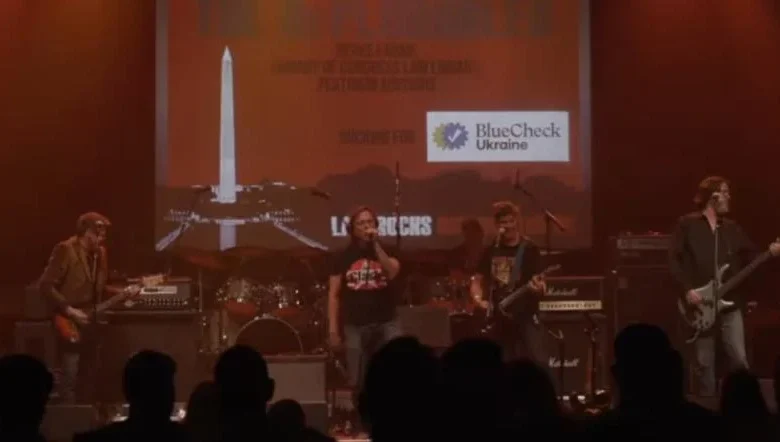
The intersection of high-stakes legal governance and the vibrant Washington, D.C., music scene has come under intense scrutiny following allegations that Elliot Berke, the general counsel for the John F. Kennedy Center for the Performing Arts, attempted to leverage his position to secure a performance slot for his personal cover band. Berke, a prominent figure in the capital’s legal and political circles, has vehemently denied a report published by Politico suggesting he sought to book "The DePlorables"—a rock group in which he plays—at the Kennedy Center’s exclusive rooftop jazz-themed speakeasy. The controversy has sparked a broader conversation regarding the ethical boundaries of in-house counsel at federally funded cultural institutions and the complexities of managing private passions alongside public-facing professional responsibilities.
The Nature of the Allegations
The dispute began with a report by Politico’s Daniel Lippman, which alleged that during the fall of 2025, Berke made inquiries or formal requests to have The DePlorables perform at a rooftop venue within the Kennedy Center complex. The venue in question is known for its intimate atmosphere and curated jazz programming, often serving as a high-profile gathering spot for donors and cultural aficionados. According to the report, which cited internal sources familiar with the matter, staff members at the Kennedy Center reportedly rebuffed the proposal, citing a clear conflict of interest.
The internal pushback allegedly centered on the optics of a senior executive using his administrative oversight to bypass the standard booking procedures that professional musicians must navigate. For an institution of the Kennedy Center’s stature—a National Cultural Center that receives significant federal appropriations—the process for selecting performers is typically rigorous, managed by artistic directors rather than legal staff.
Berke’s band, The DePlorables, is well-known in the niche "Law Rocks" circuit, a series of charity events where legal professionals trade their suits for instruments to raise money for various causes. The band’s repertoire, which includes high-energy covers of Motörhead, Thin Lizzy, and The Clash, stands in stark contrast to the more traditional or avant-garde jazz typically featured at the Kennedy Center’s rooftop speakeasy.
Berke’s Public Rebuttal and the "Music Bro" Defense
Elliot Berke did not remain silent in the face of the allegations. Eschewing a traditional formal press release through the Kennedy Center’s communications department, Berke took to the social media platform X (formerly Twitter) to issue a spirited and personal defense. In his post, Berke directly addressed the reporter, Daniel Lippman, revealing a prior professional relationship that added a layer of complexity to the unfolding drama.
"Daniel, my brother… as I told you, I said ‘No’ to the DePlorables but ‘Yes’ to Yes!" Berke wrote on April 11. He went on to claim that rather than seeking a booking for his own band, he had actually shut down requests from staff who had suggested the band perform. He further characterized Lippman’s persistent inquiries as "creepy" and urged him to stop asking to be his "Music Bro."
A particularly striking element of Berke’s defense was the mention of legal privilege. Berke noted in his social media post that he had performed legal work for Lippman in 2018 and 2019. By asking, "Will you waive privilege?" Berke appeared to be signaling that his past representation of the journalist might complicate the reporting of the story, or perhaps suggested that the reporter’s current scrutiny was a breach of their former professional bond. This unusual public invocation of attorney-client privilege in a dispute over a band booking highlights the deeply intertwined nature of Washington’s legal and media elite.
The "Yes" Connection and Programming Conflicts
The mention of the legendary progressive rock band "Yes" in Berke’s rebuttal refers to his role as outside counsel for the British group. While Berke claimed he said "Yes" to Yes, implying he advocated for the professional band to play at the Kennedy Center, the outcome was ultimately unsuccessful.
A spokesperson for Yes confirmed to media outlets that while there were discussions about the band performing at the Kennedy Center, the engagement never materialized. The band’s statement clarified that they ultimately declined the Kennedy Center’s offer in favor of a more lucrative or logistically favorable offer at another venue within the District of Columbia.
This detail serves to complicate the narrative of Berke’s influence. While he serves as the General Counsel for the venue, his private legal practice, Berke Farah LLP, represents high-profile clients in the entertainment and political sectors. This dual role—protecting the interests of the Kennedy Center while advocating for private clients who might seek to use the Center’s facilities—creates a landscape rife with potential "dual-representation" ethical hurdles.
Chronology of the Controversy
The timeline of Berke’s involvement with the Kennedy Center and his musical pursuits provides context for the current friction:
- 2022: The DePlorables perform at "Law Rocks Washington DC." The performance, captured on video and shared on YouTube, showcases the band’s punk and hard rock influences. Berke’s involvement is public knowledge and generally viewed as a charitable hobby.
- 2023-2024: Berke continues his role as General Counsel, overseeing legal matters for the Kennedy Center’s expansion and its various programming contracts.
- Fall 2025: According to the Politico report, the alleged attempt to book The DePlorables at the Kennedy Center’s rooftop speakeasy occurs. Internal staff reportedly flag the request as a conflict of interest.
- April 11, 2026: Politico publishes the story detailing the alleged booking attempt and the staff’s rejection.
- April 11, 2026 (Evening): Berke issues his rebuttal on X, denying the claims and accusing the reporter of unprofessional behavior.
- April 12-14, 2026: The Kennedy Center remains largely silent on the matter, while the spokesperson for the band Yes clarifies their non-booking.
Ethical Implications for In-House Counsel
The situation involving Elliot Berke raises significant questions regarding the ethical standards expected of in-house counsel at major cultural and non-profit institutions. Under the American Bar Association (ABA) Model Rules of Professional Conduct, specifically Rule 1.7 regarding conflicts of interest, an attorney must avoid situations where their personal interests could materially limit their ability to act in the best interest of the client—in this case, the Kennedy Center.
In the world of non-profit governance, the "duty of loyalty" is paramount. If a general counsel were to use their position to secure a personal benefit—even a non-monetary one like a prestigious performance slot for their hobbyist band—it could be construed as a violation of that duty. Furthermore, for an institution like the Kennedy Center, which relies on a mix of federal funding and private philanthropy, the appearance of "self-dealing" can be as damaging as an actual conflict.
Legal analysts suggest that even if Berke’s version of events is accurate—that he was the one who declined staff suggestions for his band to play—the mere fact that his personal band was being discussed in a professional capacity suggests a blurring of lines. In high-profile roles, the standard is often not just to avoid impropriety, but to avoid the appearance of impropriety.
The Kennedy Center as a National Stage
To understand why a booking for a cover band would cause such a stir, one must consider the prestige of the John F. Kennedy Center for the Performing Arts. Opened in 1971 as a living memorial to the 35th president, the Center is one of the busiest performing arts facilities in the world. It hosts approximately 2,000 performances annually across its various stages, including the Concert Hall, the Opera House, and the Eisenhower Theater.
The rooftop speakeasy and Studio K are part of the Center’s newer efforts to engage a younger, more diverse audience through the REACH expansion. These venues are highly sought after by professional musicians. A booking at the Kennedy Center is a career milestone that confers a level of legitimacy and "cultural imprimatur" that few other venues can match. Consequently, any suggestion that these slots are being filled through internal connections rather than artistic merit is met with significant internal and external resistance.
Broader Impact on D.C. Legal Culture
This incident also shines a light on the unique culture of Washington, D.C., where high-powered lawyers often maintain high-profile "side hustles" in the arts, media, or politics. The "Law Rocks" phenomenon, which has seen The DePlorables perform multiple times, is a staple of the D.C. social calendar, raising millions for charity while allowing lawyers to humanize their professional personas.
However, the transition from a charity gig at a local club to a performance at a national monument is a significant leap. The controversy surrounding Berke serves as a cautionary tale for other professionals in similar positions. It highlights the difficulty of maintaining a "rock star" persona in one’s private life while serving as the "guardian of the gates" in one’s professional capacity.
Official Responses and Next Steps
As of mid-April 2026, the Kennedy Center has not issued a formal statement regarding the specific allegations against Berke or his social media comments. The institution typically avoids commenting on internal personnel matters or the private activities of its executives unless they directly impact the Center’s operations.
The Board of Trustees, which includes a mix of presidential appointees and private citizens, is responsible for the overall governance of the Center. Whether this incident will prompt an internal review of the Center’s conflict-of-interest policies remains to be seen. Given the public nature of the dispute and the involvement of a major news outlet like Politico, the Center’s leadership may face pressure to clarify the protocols for internal bookings and the professional conduct of its senior staff.
For Elliot Berke, the immediate future involves navigating the fallout from his public confrontation with a former client and current member of the press. While his legal expertise and political connections remain formidable, the "Music Bro" saga has added an unexpected and highly public chapter to his career, one that underscores the perennial tension between professional duty and personal passion in the nation’s capital.