Ashton and Michael Kutcher Open Up About Lifelong Bond, Medical Crises, and Sibling Rifts in Rare Joint Interview

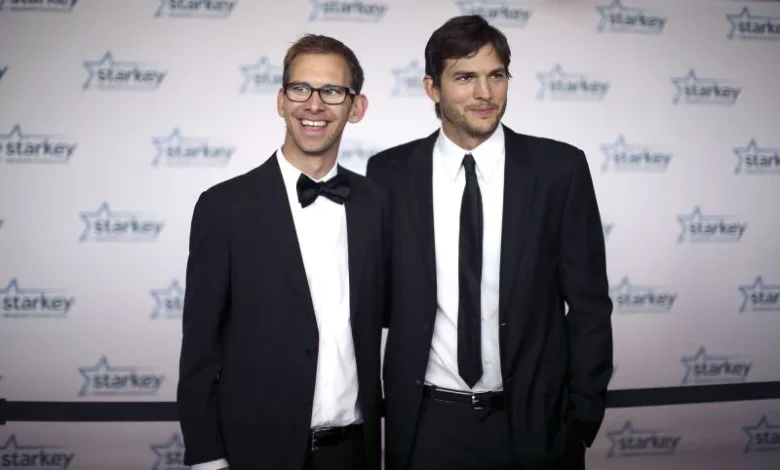
The complex dynamics of twin brotherhood, chronic illness, and Hollywood fame took center stage in a rare and deeply emotional joint interview featuring actor Ashton Kutcher and his twin brother, Michael Kutcher. Appearing on the Paramount+ medical docuseries The Checkup with Dr. David Agus, the brothers offered viewers an unvarnished look into their lives, addressing the profound medical crises that shaped their childhood, the heavy burden of survivor’s guilt, and a period of estrangement driven by resentment and public exposure.
The interview, hosted by Dr. David Agus—who also serves as Ashton Kutcher’s personal physician—initially focused on the actor’s private battle with vasculitis, a rare and debilitating autoimmune condition that severely impacted his vision, hearing, and equilibrium. However, the emotional core of the conversation shifted when Dr. Agus sat down with both brothers to discuss Michael Kutcher’s lifelong journey with cerebral palsy and a near-fatal health crisis during their youth.
A Childhood Forged in Medical Trauma
Michael Kutcher was diagnosed with cerebral palsy at an early age, a neurological disorder that affects muscle tone, movement, and motor skills. While managing the daily challenges of the condition, Michael faced an even more life-threatening crisis as a teenager when he contracted viral myocarditis. The viral infection caused his heart to swell dramatically and ultimately fail, leading to an emergency hospitalization in the intensive care unit.
During the interview, both brothers became visibly emotional as they recounted the harrowing moment Michael’s heart stopped while Ashton was visiting him in the hospital. Fighting back tears, Ashton described entering the room and immediately recognizing the ominous sound of his brother’s monitor flatlining.
"I go in the room and I’m like, ‘Whoa,’" Ashton recalled, his voice wavering. "I’m like… everything is not ok. And he flatlines in the room and I know that noise cause now I’ve been visiting occasionally."
The panic and helplessness of the moment drove Ashton to contemplate drastic, split-second measures. He admitted that he briefly considered jumping off a hospital balcony, entertaining the desperate notion that his own healthy heart could be harvested as a viable transplant match for his twin.
Fortunately, medical intervention prevailed. In a stroke of extraordinary fortune, a matching donor heart became available within just 24 hours, and Michael underwent a successful heart transplant. However, the medical hurdles did not end there. Sometime later, doctors discovered a dangerous blood clot, necessitating subsequent open-heart surgery and prolonged medical oversight.
The Shadow of Survivor’s Guilt and Sibling Friction
While Michael navigated a labyrinth of intensive medical procedures, physical therapy, and life-altering surgeries, Ashton’s life took a drastically different trajectory. As a teenager and young adult, Ashton embarked on a thriving career in modeling and acting, eventually landing a breakthrough role in the hit Fox sitcom That ’70s Show, which catapulted him to international fame.
This sudden divergence in their life paths triggered a profound sense of psychological distress for the actor. Ashton candidly shared the heavy burden of survivor’s guilt that accompanied his ascent to stardom, frequently questioning why fortune smiled upon him while his brother faced such compounding physical hardships.
"For my brother… to be born with cerebral palsy, then have a heart transplant, then have this random blood clot, these things that you’re just like, ‘Who has to go through that?’" Ashton reflected.
For a long time, Ashton’s response to his brother’s condition was defined by deep sympathy and sorrow. However, Michael eventually confronted his twin, delivering a blunt reality check that fundamentally altered their relationship.
"He looked at me and he said, ‘Every time you feel sorry for me, you make me less,’" Ashton recalled. "He said, ‘This is the only life I’ve ever known, so stop feeling sorry for the only thing I have.’ And that then created an entire shift back to where I think we are today, which is straight up equals again."
Fame, Resentment, and the Road to Reconciliation
Despite the paradigm shift brought on by Michael’s direct words, the brothers still had to navigate significant emotional landmines, chief among them being the vast disparity in their public profiles. Michael admitted to Dr. Agus that the realities of Ashton’s celebrity status fostered a deep sense of jealousy during their early adulthood.
As Ashton became a ubiquitous household name, constantly pursued by paparazzi and media outlets, Michael found himself grappling with feelings of inadequacy and being overshadowed.
"There was a moment when I viewed him as receiving more attention than I was," Michael shared during the broadcast. "That kind of drove me down to a place where I was jealous."
The psychological weight of living in the shadow of a famous twin created a temporary rift between the brothers, distancing them from one another during a critical period of personal development. However, open communication ultimately paved the way for reconciliation. Michael explained that by consciously stripping away the external noise of fame, media attention, and public perception, he was able to reconnect with the core of his brother.
"Once I took all of the fame and everything out of it, I was able to just, you know, come back to him," Michael said.
Boundaries, Public Disclosures, and Advocacy
Another friction point in the brothers’ relationship arose over the issue of privacy. Years prior, Ashton publicly disclosed during a television interview that his twin brother had cerebral palsy. At the time of the revelation, Michael had not publicly shared his diagnosis, preferring to keep his medical history private.
The public disclosure caught Michael off guard, leading to a period of tension regarding boundaries and personal autonomy. During their conversation with Dr. Agus, Ashton acknowledged the misstep, noting that he had genuinely been unaware that his brother was actively keeping the diagnosis a secret.
Despite past miscommunications and the complex emotional hurdles of their upbringing, both brothers have channeled their respective experiences into advocacy and resilience. Today, Michael Kutcher has emerged as a prominent public advocate for individuals with disabilities, working to raise awareness, promote inclusivity, and empower others facing similar neurological conditions. Meanwhile, Ashton continues to balance his acting career with philanthropic endeavors, health advocacy, and venture capital investments, while fostering a renewed, unbreakable bond with his twin.
Broader Implications and Public Reception
The appearance on The Checkup with Dr. David Agus resonated widely with audiences, drawing praise from mental health professionals, disability advocates, and fans alike. Media analysts noted that the interview provided a rare, unpolished look at the psychological complexities surrounding chronic illness within families, particularly the often-unspoken psychological toll experienced by siblings of chronically ill individuals.
Psychologists frequently highlight survivor’s guilt as a common emotional response among family members who escape severe illness or disability while loved ones suffer. By openly addressing these vulnerabilities—ranging from Ashton’s guilt and thoughts of self-harm to Michael’s admissions of jealousy and resentment—the Kutchers have contributed to a broader cultural dialogue surrounding sibling dynamics, mental health, and chronic illness.
Furthermore, the discussion underscored the critical importance of early organ donation awareness. Michael Kutcher’s survival hinged entirely on the availability of a donor heart within a critical 24-hour window, a statistic that public health advocates frequently cite to emphasize the life-saving impact of organ donation registries.
As both brothers continue to navigate their respective health journeys—with Ashton managing his remission from vasculitis and Michael continuing his advocacy work—their joint appearance serves as a testament to the resilience of familial bonds. By confronting their past resentments, dismantling the barriers of fame and pity, and returning to a foundation of mutual respect, Ashton and Michael Kutcher have redefined what it means to be equals.
Related posts: