From the Trenches to the Table: A History of How the U.S. Military Delivers Thanksgiving to Troops in Combat Zones

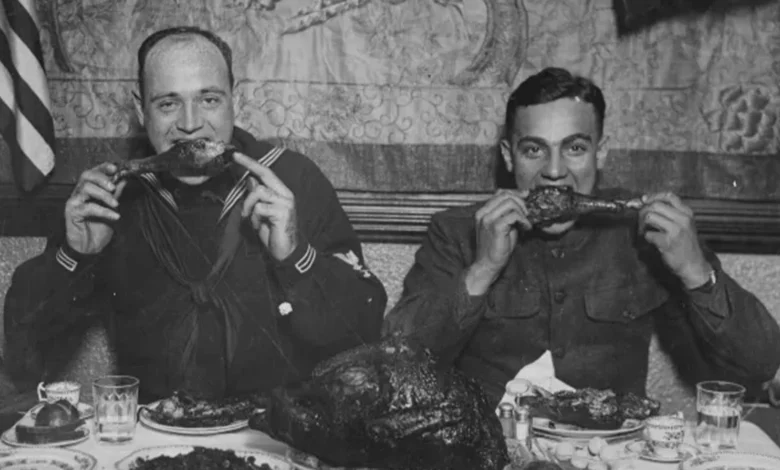
In November 1966, twelve American soldiers stationed at an isolated, heavily fortified outpost in a hostile Vietnamese war zone found themselves as far removed from a traditional American Thanksgiving as geography and conflict would allow. Their remote installation relied entirely on aerial resupply, yet the United States military was determined to bridge the vast distance between the front lines and home. A dedicated mess sergeant at Bien Hoa prepared a complete holiday meal featuring roast turkey and all the traditional trimmings, securely packing the provisions into specialized insulated containers. The cargo was loaded onto a military helicopter and flown directly into War Zone D, where three officers and nine enlisted men belonging to a 5th Special Forces detachment sat down to a hot Thanksgiving dinner, according to historical defense records preserved by the National Archives.
This remarkable logistical operation was far from an isolated incident. Throughout the history of the United States armed forces, providing a traditional Thanksgiving meal to military personnel deployed in active combat zones has stood as a monumental test of logistics, engineering, and national resolve. From the freezing mud of the American Civil War to the rugged, high-altitude outposts of Afghanistan, the military has consistently prioritized delivering a taste of home to troops serving on the front lines, demonstrating how shared culinary traditions can serve as a vital morale booster during times of intense national crisis.
The Origins of a National Holiday Forged in War
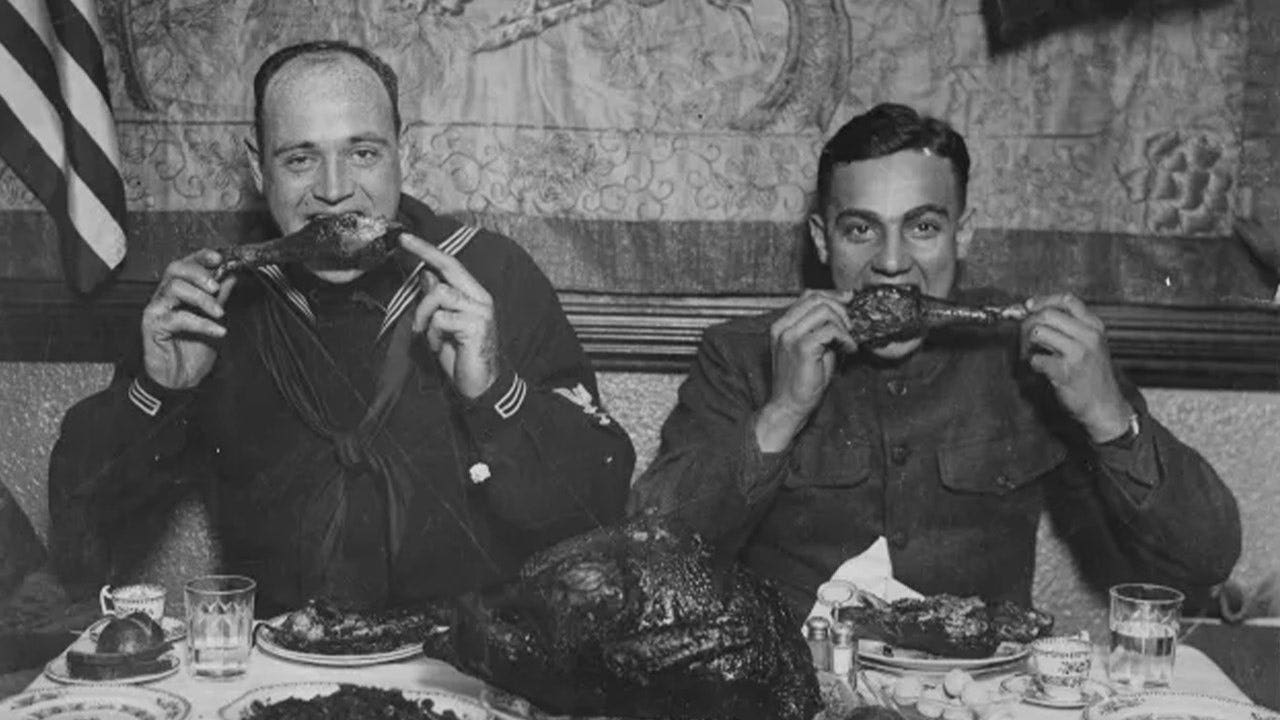
Thanksgiving was officially cemented as a national holiday in the United States during one of the nation’s darkest and most internally fractured periods. In October 1863, as the American Civil War entered its third devastating year, President Abraham Lincoln issued a historic presidential proclamation calling upon all citizens to set aside the final Thursday of November as a day of national "Thanksgiving and Praise to our beneficent Father who dwelleth in the heavens."
Lincoln’s decree was designed to foster national unity and gratitude despite the ongoing bloodshed. Almost immediately, civilian organizations and volunteer committees recognized the profound psychological importance of extending this holiday to the men fighting on the battlefields. By the autumn of 1864, civilians across the North orchestrated a massive, coordinated effort to deliver traditional Thanksgiving dinners directly to Union soldiers.
Historical accounts left by former War Department official Charles A. Dana detail what became known as the "great turkey movement" of November 1864. In New York City alone, civilian relief organizers reported successfully gathering 20,000 dressed turkeys ready for immediate rail and wagon transport to the front lines. Concurrently, a dedicated committee in Philadelphia mobilized to secure transportation for an additional 4,000 turkeys designated specifically for troops serving under the command of General Philip Sheridan. These early civilian-military partnerships established a powerful precedent: that the home front had an active duty to ensure service members were not forgotten during national holidays.

World War II: Rationing, Scale, and the Global Supply Chain
By the time the United States entered World War II, the scale of the armed forces had expanded exponentially, transforming the delivery of Thanksgiving dinner into a massive, globally coordinated logistical challenge. The requirement to feed millions of service members stationed across the Atlantic and Pacific theaters became so immense that it directly impacted domestic food supplies on the home front.
In August 1943, the federal War Food Administration enacted strict emergency regulations restricting most civilian turkey sales within the United States. The government sought to stockpile millions of pounds of poultry to ensure that every deployed American service member received a holiday meal. While the initial procurement target aimed for at least 10 million pounds for troops overseas, soaring demand prompted the agency to expand the mandate to include military installations within the continental United States. By the time the restrictions were lifted in October 1943, wartime government records indicate that federal authorities had successfully acquired approximately 30 million pounds of turkey for the military.
The logistical triumphs of World War II, however, frequently intersected with the harsh realities of combat operations. Delivering hot food to active front lines often placed supply personnel and frontline troops in extreme peril. During the grueling European campaign in the winter of 1944, Lieutenant Paul Boesch of the 121st Infantry Regiment recorded a harrowing incident in Germany’s Hürtgen Forest. Amid some of the most ferocious and punishing combat of the campaign, officers informed Boesch that hot turkey dinners had finally arrived for his exhausted men.

Recognizing the tactical danger, Boesch strongly protested the order, pointing out that sending soldiers out of their defensive positions to collect the food would expose them directly to German artillery observation and fire. Despite his warnings, the directive to distribute the meal stood. Boesch’s fears were tragically validated moments later when enemy artillery zeroed in on the distribution point as troops gathered to retrieve the food, resulting in multiple casualties.
The Cold War and the Korean Peninsula: Subzero Realities
As global conflicts shifted into the Cold War era, American troops found themselves facing entirely new environmental and tactical hazards. On Thanksgiving Day in November 1950, United States Marines deployed around the freezing Chosin Reservoir in North Korea were served a traditional holiday menu featuring turkey, cranberry sauce, candied sweet potatoes, fruitcake, and mince pie. However, the subzero temperatures presented an immediate, frustrating challenge: the prepared food began to freeze almost the moment it was plated.
This austere holiday meal coincided with a brief window of tactical optimism. At the time, military commanders maintained high hopes that the conflict would soon reach a successful conclusion, prompting General Douglas MacArthur to launch the ill-fated "Home-by-Christmas" offensive just one day after Thanksgiving. Instead, Chinese military forces entered the theater in massive, unprecedented numbers. Within days of their Thanksgiving observance, the Marines around the Chosin Reservoir found themselves completely surrounded, fighting for their survival in one of the most brutal and legendary engagements of the Korean War.

Despite the persistent threat of enemy contact, the military’s commitment to maintaining holiday traditions remained unbroken in subsequent years. By November 1951, frontline field kitchens in Korea were established with remarkable ingenuity. Historical photographs from the National Archives document a chow line set up on the reverse slope of a hill—sheltered from direct enemy observation—located a mere 200 yards from the main line of resistance, where troops received warm portions served by their fellow service members.
Modern Conflicts: Iraq, Afghanistan, and High-Tech Logistics
Half a century later, a new generation of American service members experienced Thanksgiving deployments during protracted counterinsurgency conflicts in Iraq and Afghanistan. These modern deployments tested military logistics through vast desert expanses and treacherous, mountainous terrain.
In November 2003, President George W. Bush executed a high-security, clandestine operation to visit troops deployed to Iraq. Flying aboard Air Force One under strict security protocols—with cabin window shades drawn and interior lights dimmed—the president arrived unannounced at Baghdad International Airport to surprise approximately 600 troops gathered for a holiday celebration. Walking into the dining facility, President Bush quipped to the assembled service members, "I was just looking for a warm meal somewhere," before delivering remarks and personally serving turkey to the personnel.

In Afghanistan, the rugged topography necessitated innovative aerial distribution methods. On Thanksgiving Day in 2007, military logistically planners utilized helicopters to ferry roasted turkeys and traditional side dishes from Bagram Airfield directly to isolated, heavily contested firebases situated in the Tagab Valley. For many soldiers, this marked the first hot meal they had consumed in months. Because these positions remained active combat outposts, commanders established strict rotation schedules, ensuring that troops continuously alternated between eating their holiday meal and maintaining perimeter security. Private First Class Matt Lorimer of the 82nd Airborne Division later remarked to military reporters, "The white meat was magnificent."
The lengths to which logisticians would go were further illustrated in 2009 at another remote Afghan outpost. Initially, troops had purchased five locally sourced turkeys and spent a month attempting to fatten them for the holiday, only to realize the birds were insufficient to feed a company of roughly 150 soldiers. In response, the military airlifted additional poultry from the United States to Bagram Airfield, transported it via ground convoy closer to the mountains, and finally loaded the provisions onto helicopters to supply an observation post perched 6,900 feet above sea level.
Strategic Implications and the Psychological Value of Tradition
Military historians and defense analysts emphasize that these immense logistical undertakings are far more than symbolic gestures. Sustaining morale during prolonged combat deployments is recognized by military leadership as a critical component of operational readiness and combat effectiveness.

By ensuring that service members separated by thousands of miles can participate in shared national rituals, the Department of Defense reinforces unit cohesion and psychological resilience. These historical efforts—spanning from the Civil War volunteer committees to modern vertical-lift aircraft resupplying high-altitude mountain outposts—underscore a permanent institutional truth: that the physical sustenance provided by a holiday meal carries a profound emotional weight, serving as a vital connection to home for those standing watch in defense of the nation.
Related posts: