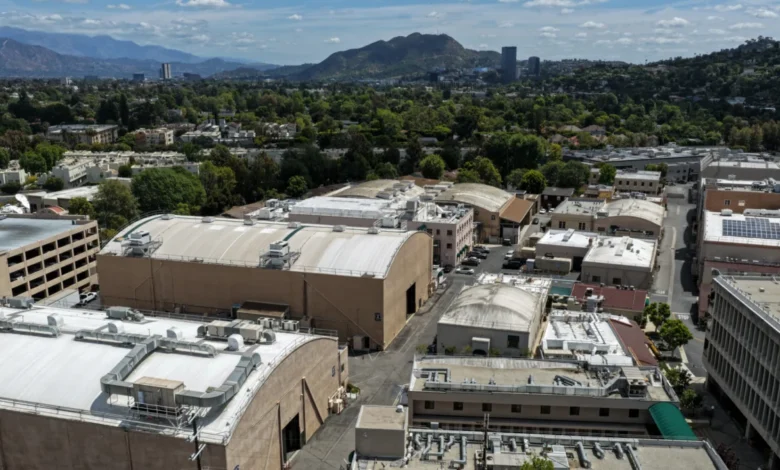
The potential $330 million to $400 million purchase of the iconic Studio City campus, which has served as a cornerstone of television production for decades, has hit a bureaucratic and strategic impasse. While the deal was initially heralded in April as a landmark shift in the streaming giant’s infrastructure philosophy, recent comments from Hudson Pacific Properties—the current owner of the lot—suggest that the entertainment powerhouse is recalibrating its long-term needs. During a recent earnings call, Hudson Pacific CEO Victor Coleman underscored the uncertainty, noting that Netflix has yet to finalize the transaction. "Netflix has not closed the transaction, and they are not deciding to close it until sometime maybe later in the year," Coleman stated. "Or not."
This ambiguity has sent tremors through the Hollywood real estate market, raising fundamental questions about the future of physical production in Southern California. As filming activity in the region struggles to regain pre-pandemic momentum, the hesitation from one of the industry’s largest players highlights a broader trend: the decoupling of major studios from the traditional "Hollywood lot" model in favor of more flexible, global production footprints.
The Chronology of a Stalled Deal
The narrative surrounding the Radford Studio Center acquisition began in early 2024, when rumors surfaced that Netflix was seeking to transition from a tenant to an owner. The move was widely interpreted as an attempt to hedge against rising commercial lease rates and to secure permanent control over essential soundstages in a supply-constrained market.
However, the 90-day due diligence period—the window afforded to prospective buyers to audit the property’s financials, physical infrastructure, and legal status—has been extended. While such extensions are common in high-value real estate transactions, the timing is precarious. Since the deal’s inception in April, macroeconomic conditions have shifted; the cost of debt has remained elevated, potentially making the acquisition significantly more expensive than initial projections suggested.
Industry analysts point to a series of financial disclosures from Hudson Pacific as evidence of the cooling relationship between the developer and its marquee tenant. In August, the real estate investment trust reported that three of its soundstage leases were terminated during the first half of the year. While the company did not explicitly name Netflix as the party responsible, the timing aligns with the streaming giant’s ongoing internal audit of its real estate portfolio.
Assessing the Hollywood Production Landscape
The reluctance to finalize the Radford deal reflects a shifting calculus in the entertainment industry. For years, major studios like Netflix, Disney, and Warner Bros. Discovery relied on a concentration of soundstages in Los Angeles to maintain tight control over creative production. That model is being challenged by a variety of economic pressures.
Regional filming in Los Angeles has hovered near historic lows throughout 2024. The factors driving this decline are multifaceted: a post-strike recovery that has been slower than anticipated, the rise of international production hubs, and the increasing availability of generous tax incentives in states like Georgia, New Mexico, and abroad. As streamers focus on cost-efficiency and content ROI, the high overhead of maintaining massive, multi-acre Los Angeles lots is being scrutinized.
If Netflix chooses to abandon the Radford acquisition, it would signal a profound shift in how the company views the necessity of ownership. Rather than anchoring itself to a specific physical asset, Netflix may be moving toward a "hub-and-spoke" model where it leases modular production space as needed, rather than committing to the capital expenditure of maintaining a sprawling, aging studio campus.
Implications for Hudson Pacific and the Refinancing Crisis
The uncertainty surrounding Netflix is not merely a matter of one deal falling through; it is an existential variable for Hudson Pacific Properties. The firm oversees a massive portfolio of 2.2 million square feet in Hollywood, including the legendary Sunset Gower, Sunset Las Palmas, and Sunset Bronson studios.
Hudson Pacific’s financial health is inextricably linked to its relationship with Netflix. The streaming company currently occupies over 700,000 square feet of office space within Hudson Pacific’s portfolio, including the flagship EPIC building on Sunset Boulevard. With those leases not set to expire until 2031, the two companies are essentially locked in a long-term strategic marriage.
However, Hudson Pacific is currently navigating a complex debt environment. The firm recently secured a one-year extension on a $1.1 billion loan, delaying the need for a principal paydown. Yet, the ability to secure a long-term refinancing package is contingent upon clarity regarding its anchor tenants. As Hudson Pacific President Mark Lammas noted, the company’s priority is to resolve the status of these leases and space requirements before re-engaging with lenders. The Radford deal, in this context, is a piece of a much larger puzzle involving the stability of the entire Hollywood studio real estate sector.
The Future of Studio Space: Ownership vs. Leasing
While the market assumes the Radford deal will eventually close, the "why" remains the subject of intense debate. Netflix’s potential interest in the Echelon project—a new, $450 million studio facility under construction just over a mile from the EPIC building—further complicates the picture. If Netflix is exploring Echelon, it suggests that the company is looking for modern, purpose-built infrastructure rather than the historic, retrofitted stages that define many of the existing lots.
The implications for the industry are clear:
- Capital Allocation: Netflix is clearly prioritizing balance sheet flexibility. The company is actively shedding underperforming lease obligations while simultaneously evaluating the cost-benefit ratio of owning versus renting.
- The "Flight to Quality": Just as in the office sector, studio space is undergoing a "flight to quality." Legacy lots that require expensive, ongoing renovations to support modern production technology (such as virtual production stages and high-bandwidth data connectivity) may become liabilities rather than assets.
- Market Consolidation: Should Netflix decline the Radford purchase, Hudson Pacific may be forced to seek alternative buyers or pivot its strategy for the lot, potentially impacting local studio rental rates and the broader real estate market in the San Fernando Valley.
Conclusion: A Strategic Pause
As of now, the silence from Netflix speaks volumes. The company’s refusal to comment on the Radford situation is consistent with its disciplined, data-driven approach to business operations. For now, the Radford Studio Center remains in limbo—a symbol of the uncertainty currently gripping the entertainment industry.
Whether this delay is merely a tactical pause to negotiate better terms, or a fundamental shift in Netflix’s real estate philosophy, the outcome will have lasting consequences. The entertainment sector is no longer just about content creation; it is about the efficient management of a global, physical, and digital supply chain. In that new world, even a studio as iconic as Radford must justify its place on the balance sheet. For Hudson Pacific, the wait for an answer is not just about a single transaction—it is about securing the foundation of its entire Hollywood portfolio.