Democrats Prepare Legislative Push to Reshape the Supreme Court Following Midterm Election Gains

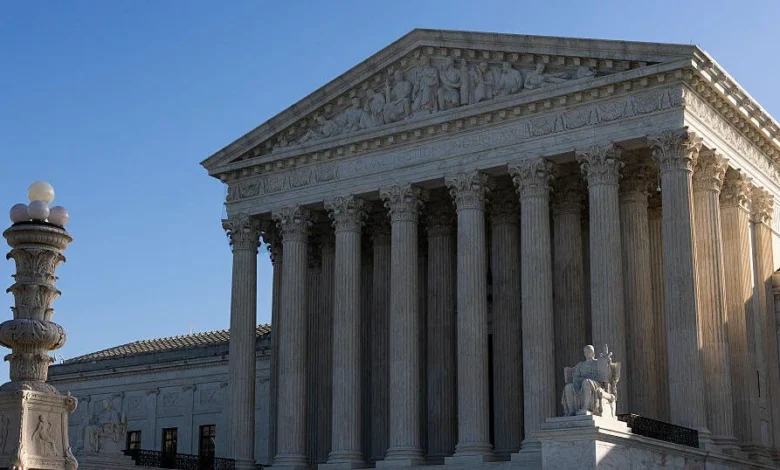
After years of expressing profound frustration with the judicial trajectory of the Supreme Court, Democrats are now moving toward a legislative offensive aimed at implementing structural and ethical reforms within the federal judiciary. Following a successful midterm cycle that saw the party secure control of both the House of Representatives and the Senate, Democratic leadership is signaling that the third branch of government will be a primary focus of their agenda when the new Congress convenes in January. With an expected 250 seats in the House and a comfortable 54-seat majority in the Senate, the legislative branch is shifting from a platform of protest to one of proposed institutional overhaul.
House Democratic Leader Hakeem Jeffries, poised to ascend to the speakership, has identified the integrity of the judicial branch as a cornerstone of his upcoming tenure. In a recent formal letter to his colleagues, Jeffries outlined a tripartite focus: curbing corporate price gouging, addressing ethical lapses within the Supreme Court, and implementing a ban on congressional stock trading. By framing these issues under the umbrella of "accountability," Democrats are attempting to build a populist mandate for judicial reform that extends beyond partisan disagreement over specific case outcomes.
A Chronology of Judicial Tension
The current push for reform is the culmination of a decade-long degradation in public trust regarding the Supreme Court. The timeline of this friction is marked by several pivotal moments that have driven the Democratic base to demand systemic change:
- 2016–2020: The refusal of the Republican-led Senate to hold hearings for Merrick Garland, followed by the rapid confirmations of Justices Neil Gorsuch, Brett Kavanaugh, and Amy Coney Barrett, solidified a 6-3 conservative majority.
- 2021: President Joe Biden established the Presidential Commission on the Supreme Court of the United States. While the commission provided an exhaustive academic analysis of reform options—including expansion and term limits—it declined to offer a formal recommendation for structural changes, ultimately stalling momentum.
- 2022–2024: A series of blockbuster rulings, most notably the reversal of Roe v. Wade, the dismantling of the Chevron deference doctrine, and the expansion of presidential immunity, catalyzed a surge in calls for reform.
- 2023–2025: Investigative reports by outlets such as ProPublica exposed undisclosed luxury travel and financial entanglements involving Justice Clarence Thomas, shifting the conversation from ideological disagreement to institutional ethics.
- 2026 Midterms: Democrats capitalized on voter concern regarding the judiciary, securing enough legislative weight to force committee hearings and floor votes on reform measures.
The Legislative Landscape: Ethics and Oversight
The primary vehicle for reform is the push for mandatory ethics codes. Unlike lower federal courts, which are subject to a binding code of conduct, the Supreme Court has historically maintained that its justices are the final arbiters of their own ethical standards. This changed in November 2023, when the Court adopted a code of conduct in response to public pressure; however, critics—including many in the incoming Democratic caucus—argue that the absence of an enforcement mechanism renders the code "toothless."
Senator Sheldon Whitehouse (D-RI) and Representative Hank Johnson (D-GA) have led the charge on legislation that would mandate an ethics code and provide a clear procedure for investigating complaints. Their proposals go further, calling for the establishment of an internal Office of Ethics Counsel and an Office of Investigative Counsel. These offices would be tasked with reviewing allegations of misconduct, a move that legal scholars argue would bring the Supreme Court into alignment with the oversight structures present in other branches of government.
Furthermore, proposals introduced by Senator Cory Booker and Representative Daniel Goldman would set rigid limits on gift-giving, with some members of the caucus pushing for a hard cap of $50 on any gifts received by justices. This legislative appetite is not limited to the Supreme Court; there is growing support for applying stricter ethical standards to the entire federal judiciary, which has recently faced high-profile scandals involving the mistreatment of law clerks and improper personal conduct by district-level judges.
Term Limits: Addressing Life Tenure
Central to the debate over judicial power is the concept of life tenure, a feature established by Article III of the Constitution. While the "good behavior" clause has been interpreted to mean life appointments for over two centuries, the current Democratic platform views this as an impediment to a responsive democracy.
Proponents of reform argue that 18-year term limits would ensure a predictable, regular rotation of justices, removing the political volatility associated with sudden vacancies. The legislative proposals, such as those introduced by Representative Johnny Olszewski, would force a transition for the current bench, mandating retirement for justices who have exceeded the 18-year threshold.
However, constitutional scholars highlight a significant hurdle: such a shift would likely require a constitutional amendment. Passing an amendment necessitates a two-thirds majority in both chambers of Congress, followed by ratification from 38 states. Given the current political polarization, achieving this threshold remains a monumental task, and the political reality suggests that Democrats may focus on statutory "term limit" models that attempt to bypass the amendment process—a strategy that would almost certainly face immediate legal challenges in the very court the legislation seeks to reform.
Expansion: The Question of Court Size
Perhaps the most contentious reform measure is the expansion of the Supreme Court. The number of justices is not fixed by the Constitution and has fluctuated throughout American history. The current nine-justice structure has been in place since 1869, but recent rulings have emboldened some Democrats to advocate for increasing the bench to 13 members.
Representative Al Green (D-TX) has championed legislation to expand the Court to 13, arguing that a larger bench would better represent the nation’s legal landscape and dilute the influence of the current conservative supermajority. While the party’s platform increasingly leans toward this goal, it remains a point of internal contention. Some moderate Democrats fear that "court-packing" would set a dangerous precedent, leading to a tit-for-tat escalation where each party adds justices whenever they regain power, ultimately eroding the Court’s legitimacy as a neutral arbiter.
Implications and Political Realities
Despite the Democratic control of Congress, the path to passing these reforms is narrow. Even if a reform package clears both the House and the Senate, it faces the hurdle of the 60-vote threshold in the upper chamber. With a 54-seat majority, Democrats would need to peel off several Republican votes—an unlikely scenario given the current partisan climate.
Furthermore, the executive branch remains a wild card. Even if legislation reaches the desk of the President, the potential for a veto or a legal challenge by state attorneys general could render the legislation dead on arrival. The Supreme Court itself would be the final judge of any law regulating its own size or tenure, creating a profound conflict of interest that could trigger a constitutional crisis.
The broader implication of this push is a shift in the relationship between the three branches of government. By aggressively pursuing judicial reform, Democrats are signaling that the judiciary’s immunity from political oversight has come to an end. Whether this movement succeeds in passing legislation or merely serves to frame the narrative for future election cycles, the effort represents a fundamental reevaluation of the role and accountability of the Supreme Court in 21st-century American democracy. As the new Congress prepares to take office, the judiciary will find itself under a level of scrutiny not seen since the mid-20th century, setting the stage for a protracted battle over the limits of judicial power.