Navigating the Physical Toll of the NFL Season: How Depth and Resilience Define the New York Giants Campaign

It is the one constant for every NFL team to one degree or another. Players will get hurt. Starters will go down. Backups will have to play. Across the grueling 17-game National Football League regular season, the physical demands placed upon elite professional athletes remain the ultimate equalizer. No franchise, regardless of its strength, conditioning staff, or multi-million-dollar medical infrastructure, can entirely insulate itself from the violent nature of the sport. For the New York Giants, the 2026 NFL season has once again highlighted this inescapable reality, turning the battle of attrition into a defining narrative of their campaign.
The Inescapable Reality of NFL Attrition
Football is a game of collisions, leverage, and high-velocity impacts. While rule changes over the past decade have been implemented to enhance player safety—limiting helmet-to-helmet hits, restricting blindside blocks, and heavily penalizing defenseless posture targeting—the human body can only absorb so much punishment. Ligaments stretch and tear, bones fracture under immense torque, and muscular strains routinely derail meticulously crafted game plans.
For the Giants, navigating these medical setbacks requires a delicate balance between aggressive on-field strategy and conservative rehabilitation protocols. When a foundational starter exits a game, the ripple effect alters blocking schemes, coverage assignments, and play-calling tendencies. Yet, professional sports operate under a rigid mandate: the game goes on, and the next man up must perform at a competitive level immediately.
A Chronological Look at the 2026 Season and Key Turning Points
The autumn schedule of 2026 has tested the organizational depth of the New York Giants from the opening kickoff through the heart of the fall slate. Training camp and the preseason offered early warnings, but the true test arrived once the games began counting toward the standings.
In the opening weeks, minor nagging injuries tested the conditioning staff, but as the calendar flipped deeper into October, more severe setbacks began to accumulate. The tipping point for many modern NFL teams often arrives during the mid-season block—a stretch where players have not yet reached the restorative sanctuary of a late-season bye week, yet have already absorbed two months of punishing full-contact football.
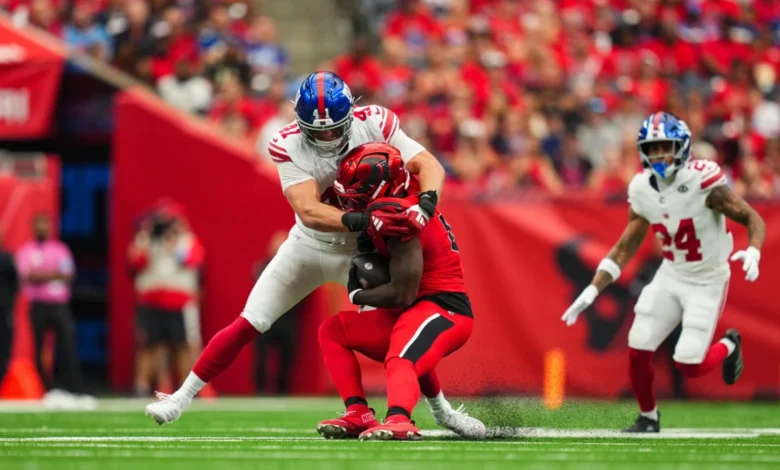
A prime illustration of this fierce competitive environment occurred on October 25, 2026, during a high-stakes cross-conference matchup in Houston, Texas. Facing a formidable Houston Texans squad anchored by elite pass rushers like defensive end Danielle Hunter, the Giants found themselves leaning heavily on their roster depth. In a sequence that encapsulated the unpredictable nature of football, veteran running back Devin Singletary delivered a clutch performance, breaking through a tackle attempt by Hunter to score a crucial touchdown. That play not only secured a vital victory on the road but underscored the reality that bench players and rotational pieces ultimately dictate a team’s ceiling.
Roster Depth and the "Next Man Up" Philosophy
The phrase "next man up" is perhaps the most heavily worn cliche in professional sports, yet its execution separates perennial contenders from struggling franchises. General managers and front offices spend months constructing the bottom half of the 53-man roster, scouring the waiver wire, evaluating practice squad talent, and searching for hidden gems in undrafted free agent pools precisely for moments of crisis.
When frontline players suffer multi-week or season-ending injuries, the coaching staff faces a formidable tactical challenge. Can an offensive coordinator simplify terminology to help a rookie backup tackle protect the blind side? Can a defensive coordinator adjust schemes to compensate for the loss of a Pro Bowl linebacker in pass coverage?

For the Giants, answering these questions has meant relying heavily on versatile personnel. Modern NFL rosters are built with multi-positional flexibility in mind. Linemen who can play both guard and tackle, defensive backs capable of shifting from safety to nickel cornerback, and running backs who excel both as inside runners and pass-catchers out of the backfield become the most valuable commodities on the depth chart.
Behind the Scenes: Medical Staff and Load Management
Behind every successful substitution and rapid return-to-play timeline is an army of athletic trainers, physical therapists, orthopedists, and strength coaches. In recent years, the approach to player health has shifted dramatically toward proactive data analytics and workload management.
NFL franchises now utilize advanced GPS tracking vests during practices, monitoring acceleration, deceleration, total distance covered, and heart rate variability. By analyzing these metrics, training staffs can identify players who are at an elevated risk for soft-tissue injuries and recommend strategic rest days.
However, technology cannot entirely prevent traumatic injuries resulting from direct contact on the field. When a knee buckles during a cut or a shoulder separates under the weight of a defender, the focus pivots instantly from prevention to acute medical intervention and surgical repair. The collaboration between the player, the coaching staff, and the medical team dictates the speed and safety of the recovery process, balancing the team’s immediate competitive urgency with the athlete’s long-term health and career longevity.
Broader Impact and Implications for the Franchise
The cumulative effect of injuries extends far beyond the immediate box score. Over the course of a 17-game season, roster attrition directly influences contract negotiations, future draft strategies, and overall team morale.
From a front office perspective, a heavy wave of injuries provides a comprehensive stress test for the depth of the organization. General managers evaluate whether reserve players can handle starting responsibilities, which directly informs roster construction decisions for the upcoming offseason. If backups prove incapable of maintaining the team’s baseline standard of play, the front office is forced to be more aggressive in acquiring external talent via trades or free agency.
For the coaching staff, managing a depleted roster requires immense adaptability. Game plans must be pruned of complex concepts that rely on elite athletic execution, replaced instead by high-percentage, fundamental schemes that protect vulnerable positions. Head coaches must also manage the psychological aspect of a locker room dealing with the emotional weight of seeing teammates fall to injury. Maintaining confidence among substitutes and preserving team chemistry is often the defining challenge of a grueling professional campaign.
As the Giants continue their journey through the 2026 NFL schedule, the physical toll will remain an omnipresent factor. How the organization manages its personnel, adapts its strategies, and relies on its depth will ultimately determine the trajectory of its season, proving once again that in professional football, survival is just as important as skill.
Related posts: