EloElo Secures $80 Million in Series C Funding Valuing the Microdrama Platform at $500 Million Amid India’s Exploding Mobile Entertainment Boom

The modern digital entertainment landscape is undergoing a profound structural shift, characterized by a decisive migration from traditional living room televisions to hyper-personalized, verticalized mobile screens. At the epicenter of this transformation in India is EloElo, a pioneer in the serialized short-form video sector, which has successfully secured $80 million in a Series C funding round. Co-led by Hornbill Capital and NBCUniversal, with additional participation from the MIT Investment Company alongside returning backers Play Ventures, Kalaari Capital, Waterbridge Ventures, and Griffin Gaming Partners, this latest injection of capital brings EloElo’s cumulative fundraising total to $130 million. More significantly, the transaction values the company at an impressive $500 million, underscoring intense investor confidence in India’s burgeoning microdrama economy.
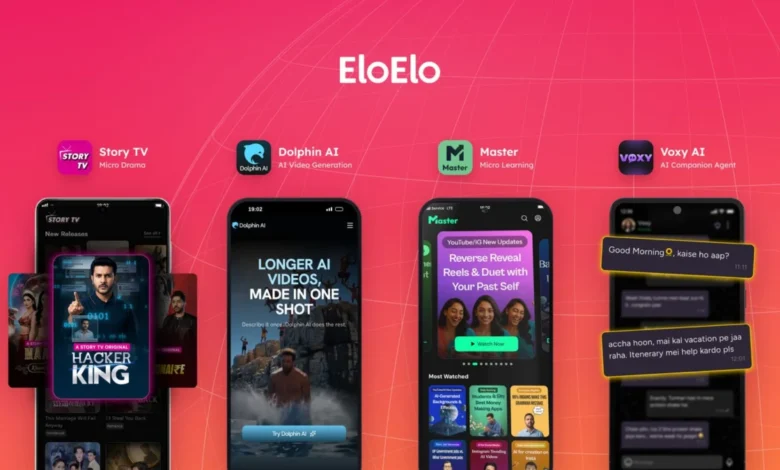
The fresh infusion of capital arrives at a time when microdramas—rapidly consumed, highly serialized fictional narratives typically viewed in vertical orientation—are capturing the collective attention of consumers worldwide. In India alone, more than 118 million users actively consume microdramas on a monthly basis, turning what was once a fringe digital experiment into a mainstream cultural and economic phenomenon. EloElo’s flagship microdrama platform, Story TV, has emerged as one of the undisputed market leaders in this domain, boasting a massive user base of over 33 million active monthly users.
The Evolution and Chronology of EloElo
Founded in 2020 by former Flipkart executive Saurabh Pandey, EloElo initially set out to build interactive entertainment communities before identifying the massive white space that existed in serialized mobile storytelling. Over the past four years, the company has systematically expanded its footprint, evolving from an experimental app into a heavy-hitting content ecosystem.
The trajectory of Story TV has accelerated dramatically over the past two years. As mobile internet penetration deepened across India’s Tier-2, Tier-3, and Tier-4 cities, Pandey and his team amassed a diverse content library exceeding 5,000 distinct titles spanning six regional languages. This localization strategy has proven critical; by catering to linguistic diversity and offering snackable, cliffhanger-heavy episodes, the platform has cultivated intense user engagement. According to company metrics, the average user spends approximately 95 minutes per day on the app across multiple viewing sessions—a duration that rivals or even exceeds traditional television consumption habits.
The broader market chronology reflects a parallel global awakening to the potential of vertical microdramas. Originating prominently in China before expanding rapidly into the United States and Southeast Asia, the format has attracted heavyweights from traditional Hollywood—including high-profile figures such as Issa Rae, James Franco, and Kim Kardashian—who are increasingly investing in, producing, and starring in microdrama projects. In India, dedicated streaming applications like Story TV, Kuku TV, and Quick TV dominated national app store download charts throughout the past year, fueled concurrently by advancements in mobile artificial intelligence tools and shifting consumer attention spans.
Market Dynamics, Revenue Models, and Monetization Challenges
Despite the staggering popularity of microdramas, the industry faces complex monetization hurdles, particularly within the Indian market. While top-tier applications attract tens of millions of viewers, converting free-to-play users into paying subscribers remains a persistent structural obstacle.
According to market research from analyst firm Redseer, while more than 40 million consumers in India have paid for microdrama content at least once, only 15 million to 17 million users maintain active monthly paid subscriptions. Furthermore, a separate comprehensive survey conducted by Ormax Media revealed that an overwhelming 72 percent of Indian microdrama consumers have never spent a single rupee on the content they consume, relying instead on ad-supported free tiers (AVOD).
To navigate these monetization realities, platforms like EloElo deploy a hybrid revenue model. Story TV offers structured subscription tiers—ranging from monthly and quarterly to annual plans—designed to unlock exclusive, premium chapters immediately. Simultaneously, the company maintains ad-supported options to capture the massive volume of cost-conscious users, even as industry data indicates that subscription models offer significantly higher revenue yields per user than ad-supported alternatives.
To ensure the continuous production of high-caliber content that justifies paid subscriptions, EloElo has forged strategic alliances with legacy entertainment giants. Notably, the company partnered with prominent Indian television production powerhouse Balaji Telefilms to co-create exclusive, professionally produced serials, setting a benchmark for production quality in a sector often saturated by low-budget, rapid-fire releases.

Artificial Intelligence Integration and the Dolphin AI Platform
As the appetite for fresh content accelerates, microdrama platforms face an insatiable demand for volume. To maintain a competitive edge without sacrificing narrative quality, EloElo is leaning heavily into artificial intelligence.
While rival platforms such as the Google-backed Kuku have utilized AI primarily to streamline internal workflows and assist creators, and others like Dashverse’s Shortfree experiment with generative video models for entire clips, EloElo has taken a distinct infrastructural approach through its proprietary Dolphin AI platform.
Initially developed as an internal productivity tool to optimize video creation, Dolphin AI is slated for broader commercial release. The platform functions as a comprehensive creative suite, housing templates and an array of multimodal generative models capable of producing images, audio, and video assets. EloElo’s long-term vision extends beyond internal entertainment production; the company intends to position Dolphin AI as a versatile tool for external marketing campaigns and digital advertising.
Despite the automation capabilities of modern generative models, CEO Saurabh Pandey maintains that human creativity remains irreplaceable in the storytelling process. Articulating his philosophy on AI integration, Pandey compares artificial intelligence to a high-performance engine rather than the driver.
"My belief in involving AI is that AI is a really fast race car where AI is the engine, but you need an extremely capable Formula One driver to be on the steering wheel," Pandey noted. "That, for me, is the creative director or the showrunner. AI is supposed to work with them, augmenting their skill set. AI can help write stories, but so far the best stories I have loved have all had a very high human x AI element to it."
Diversification Beyond Microdramas
EloElo’s strategic roadmap extends well beyond fiction-based microdramas. The broader corporate ecosystem houses several distinct applications designed to capture different facets of mobile media consumption. These include Master, a vertical video-based learning app that competes directly with established players like Seekho and Kuku’s Guru, as well as Voxy AI, an interactive artificial intelligence companion application.
Collectively, EloElo’s suite of applications commands a monthly active user base exceeding 40 million individuals, with Story TV anchoring the vast majority of this traffic. To support this expanding portfolio, EloElo currently employs a workforce of 240 people and plans to aggressively scale its headcount, specifically targeting top-tier research talent in artificial intelligence and machine learning. A substantial portion of the newly secured $80 million capital will be directly funneled into expanding the company’s original IP catalog and scaling its technological infrastructure.
Broader Industry Implications and Future Outlook
The massive financial backing of EloElo by premier global institutional investors such as Hornbill Capital and NBCUniversal signals a structural maturation of India’s digital media economy. Industry analysts project that India’s interactive media and entertainment sector will surge past $3 billion to $4 billion in annual revenue by 2030, driven almost entirely by mobile-first content consumption.
As the next billion internet users in emerging markets bypass traditional desktop and television paradigms entirely, mobile entertainment platforms are redefining how stories are told, monetized, and consumed. For EloElo and its competitors, the challenge ahead lies in balancing the relentless volume demands of algorithms with the nuanced creative storytelling required to sustain user loyalty. With significant financial runway, proprietary AI technology, and a dominant foothold in the world’s fastest-growing digital market, EloElo is well-positioned to steer the trajectory of mobile entertainment for the foreseeable future.