Trump and Xi Establish AI Crisis Channel and Strengthen Trade Ties During Washington Summit

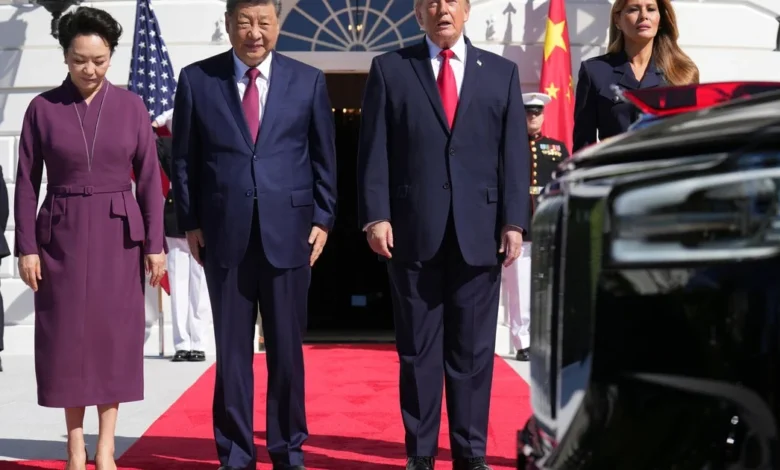
The three-day state visit between President Donald Trump and President Xi Jinping concluded in Washington this Saturday, marking a pivotal moment in the complex trajectory of U.S.-China relations. While the summit did not yield a singular, transformative geopolitical breakthrough, the two administrations successfully codified a series of institutional frameworks designed to prevent accidental escalation, particularly in the rapidly evolving domain of artificial intelligence and military communication. The most significant outcomes of the meeting include the creation of a direct channel for handling AI-related incidents and a reinforced commitment to military crisis management, alongside a modest expansion of trade cooperation overseen by a newly formed Board of Investment.
A Chronology of the Summit
The summit unfolded over seventy-two hours of intensive diplomatic engagement. On the first day, the focus remained on the symbolic pageantry of a state visit, a departure from the adversarial tone that characterized the trade disputes of the previous year. By the second day, the focus shifted to granular policy discussions, culminating in the formalization of the Board of Trade. On the final day, the leaders held a joint press briefing at the White House, where President Trump articulated his vision for technological competition, emphasizing that while the U.S. remains open to diplomatic channels, it will not compromise its current lead in technological development.
Institutionalizing Stability: AI and Military Communications
Central to the summit’s agenda was the governance of emerging technologies. Recognizing the existential risks associated with advanced computational systems, both nations agreed to establish a dedicated communication mechanism specifically for AI-related incidents. This move is intended to facilitate an immediate exchange of information should a technical failure or unforeseen algorithmic behavior threaten national security or civilian infrastructure.
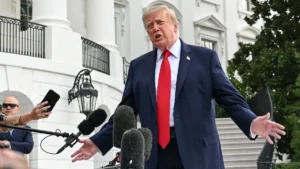
In a stylistic departure from international norms, President Trump insisted that the technology be referred to as "Super Intelligence" (SI) during official negotiations. His rationale, presented to the press on the South Lawn, posited that the term "artificial" suggests a lack of authenticity, whereas "super" reflects the genuine, high-stakes nature of the technology. Despite this semantic shift, the substance of the agreement remains focused on risk mitigation. Both governments are scheduled to hold a deeper, technical dialogue on the risks and benefits of SI in November.
Simultaneously, the two powers committed to a memorandum of understanding aimed at preventing military crises. This agreement represents a crucial "guardrail" mechanism, ensuring that command structures have direct, reliable lines of communication to avoid the catastrophic miscalculations that often accompany heightened geopolitical tensions. This military-to-military dialogue is expected to stabilize a relationship that has been strained by overlapping territorial concerns and the ongoing impacts of the 2025 trade war.
The Economic Landscape: Trade Truce and Investment
Economic relations were addressed through the prism of reciprocity and long-term stability. The leaders agreed to extend the current trade truce by two months, providing a window of calm for global markets. A key component of the trade architecture is the newly established Board of Investment, which serves as a structured platform for addressing commercial impediments. This body is tasked with streamlining investment opportunities while navigating the sensitive landscape of national security screenings.
A notable feature of the trade agreement is a commitment regarding energy and commodities. Under the terms discussed, China has pledged to import a minimum of 10 million metric tons of U.S. coal throughout 2027 and 2028. This move is viewed by market analysts as a symbolic effort to balance the trade deficit, though its long-term impact on global energy markets remains to be seen.
Regarding the ongoing dispute over rare earth minerals—which saw China impose stringent export controls last year as a retaliatory measure against U.S. tariffs—the two sides agreed to work toward normalizing shipment levels. The supply chain for rare earths, essential for everything from defense electronics to electric vehicle batteries, has been a significant point of friction. The White House has characterized this as a step toward ensuring that industrial supply chains remain functional and predictable.
Global Security and Law Enforcement
Beyond bilateral issues, the summit touched upon critical international security matters. Both Washington and Beijing reaffirmed their stance that Iran must adhere to its commitments to refrain from the development of nuclear weapons. Furthermore, in a clear reference to the instability currently affecting the Strait of Hormuz—a vital global shipping artery—the leaders issued a joint statement asserting that no nation should impose tolls or impede the freedom of navigation on international waterways. This rhetoric reflects a shared, if narrow, interest in maintaining the flow of global commerce despite the broader backdrop of the U.S. conflict with Iran.
In the sphere of public health and law enforcement, the U.S. administration expressed appreciation for China’s decision to implement export controls on two additional chemical precursors used in the illicit manufacture of fentanyl. This development follows a period of intense pressure from U.S. law enforcement agencies to curb the flow of synthetic narcotics. Both sides noted that recent arrests in fentanyl-related cases suggest that the nascent cooperation on this front is beginning to produce tangible, if localized, results.
Analytical Perspectives on the Outcome
Analysts have largely interpreted the summit as a successful effort to manage, rather than resolve, the structural tensions between the two nations. Wang Zichen, deputy secretary-general of the Center for China and Globalization, noted that while personal rapport between President Trump and President Xi is a vital component of the current diplomatic climate, the real value lies in the institutionalization of working-level engagement. By creating working groups and standing committees, the two administrations have effectively built a "shock absorber" into the bilateral relationship.
However, observers caution that the underlying competition—particularly in the realm of advanced technology—remains unchanged. President Trump was explicit in his assertion that the United States will not slow its progress in the development of Super Intelligence. His administration views the current lead in the field—estimated by some to be between twelve and eighteen months—as a strategic necessity. Consequently, while the U.S. is willing to communicate regarding risks, it is not currently interested in deep technological integration or the sharing of sensitive intellectual property with China.
Future Diplomatic Milestones
The trajectory set by this summit will be tested in the coming months. Both leaders are scheduled to reconvene at the Asia-Pacific Economic Cooperation (APEC) summit in Shenzhen this November. This meeting will likely serve as a barometer for how well the newly established communication channels and boards are functioning in practice. Following the APEC gathering, a subsequent meeting is expected to take place at the G20 summit, hosted by President Trump at the Trump National Doral Miami golf club in Florida.
These upcoming engagements underscore a shift in the U.S.-China relationship toward a more scheduled, predictable, and managed competition. While the fundamental differences regarding trade, technology, and geopolitical influence remain deep-seated, the Washington summit represents a calculated decision by both parties to prioritize stability and risk management over the total abandonment of diplomatic norms. For the international community, the next year will provide a critical look at whether these institutional guardrails are sufficient to prevent the "trade war" and technological rivalry from escalating into a more volatile, zero-sum confrontation.