Senator Rick Scott Argues Progressive Figures Rather Than Congressional Leadership Direct Democratic Party Strategy Ahead of Midterms

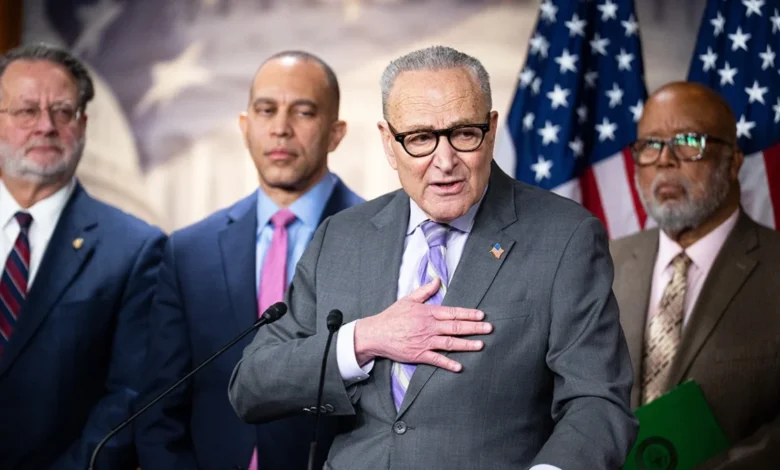
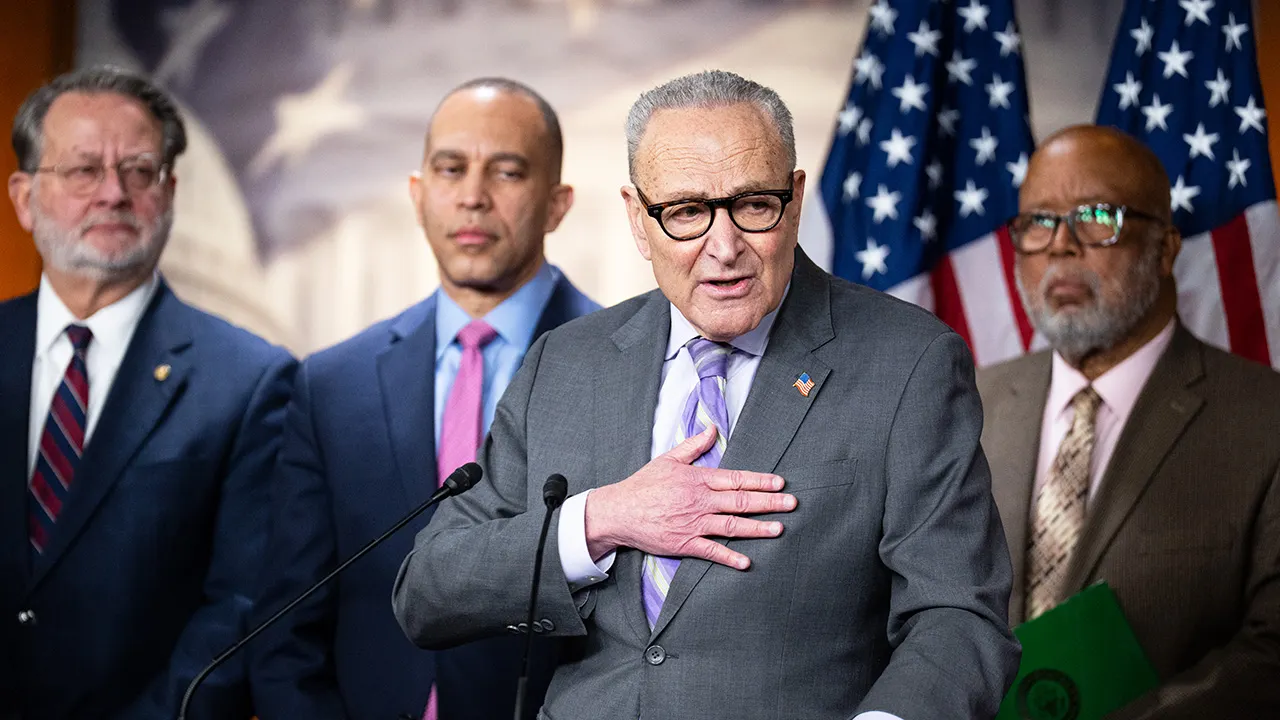
DALLAS — As the Republican Party gathers in Dallas, Texas, for a high-stakes national convention, high-ranking GOP officials are fine-tuning their strategic messaging for the upcoming midterm elections. Central to the Republican electoral thesis is a concentrated effort to frame the opposition not by its official congressional leadership, but by its most progressive voices. In a wide-ranging interview, Senator Rick Scott (R-Fla.) asserted that the structural direction and ideological boundaries of the Democratic Party are dictated less by Senate Minority Leader Chuck Schumer and House Minority Leader Hakeem Jeffries, and far more by prominent left-wing figures inside and outside of federal legislative bodies.
The remarks underscore a broader Republican strategy designed to nationalize local and regional legislative races. By tying mainstream Democratic candidates to progressive icons, media personalities, and municipal leaders, the GOP aims to energize its core base while attempting to alienate crucial independent and suburban voters. With control of both chambers of Congress hanging in the balance, Republican leadership faces the dual challenge of navigating domestic and international headwinds while convincing the electorate that a vote for the Democratic platform equates to an endorsement of far-left policies.
Redefining the Democratic Leadership Hierarchy
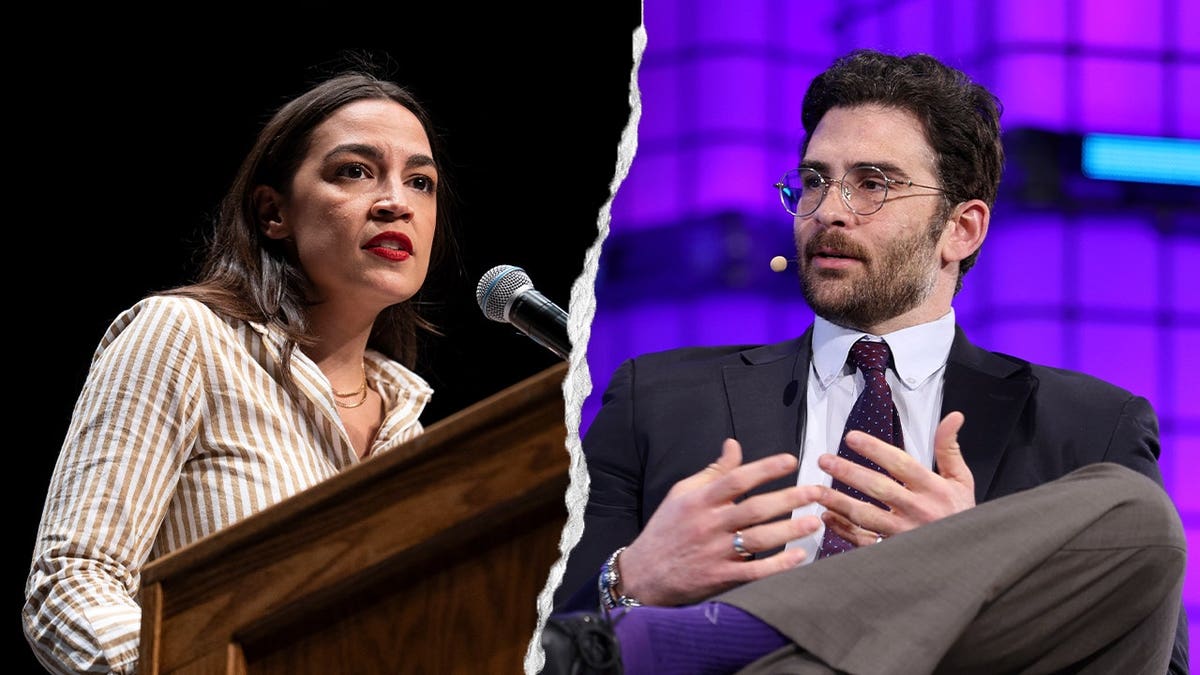
According to Senator Scott, who previously chaired the National Republican Senatorial Committee (NRSC), traditional legislative power structures within the Democratic caucus do not reflect where the party’s ideological gravity truly lies. Scott pointed directly to Representative Alexandria Ocasio-Cortez (D-N.Y.), New York City Mayor Zohran Mamdani, and prominent political commentator and streamer Hasan Piker as the actual vanguard of modern Democratic thought.
"Let’s be clear, the leader of the Democrat Party is not Schumer, it’s not Jeffries," Scott told Fox News Digital. "It’s Hasan Piker, it is AOC and Zohran Mamdani."
This rhetorical maneuver is a cornerstone of contemporary conservative campaigning. By elevating figures known for polarizing stances on cultural and economic issues, Republicans seek to characterize the entire opposition party as radicalized. Scott argued that the legislative messaging coming from Senate and House Democratic leaders is inextricably linked to progressive policy positions that he claims are deeply unpopular with the broader American public.
Among the specific policy areas highlighted by Republican strategists are progressive positions on gender identity in athletics, federal spending initiatives, and broader economic philosophies. Scott pulled no punches in his critique of these policies, suggesting that the ideological trajectory of the left presents a fundamental threat to traditional economic frameworks.
"They’re going to say, ‘Gosh, we want men to play in women’s sports, to destroy women’s sport,’" Scott stated, echoing a frequent talking point among conservative lawmakers regarding Title IX protections and athletic participation. Furthermore, he levied stark warnings regarding economic policy, characterizing Democratic proposals as inherently socialistic. "They can talk about socialism, how they want to kill all the capitalists," he added, before invoking hyperbolic warnings about the deterioration of democratic and economic institutions modeled after historical failures in countries like Venezuela.
The Political Landscape and Economic Headwinds
The Republican push in Dallas occurs against a complex and demanding political backdrop. Midterm elections historically serve as a referendum on the sitting administration, yet the current political climate features unique variables that complicate conventional forecasting models.
Incumbent Republicans and candidates running down-ballot are navigating significant economic and geopolitical pressures. Stubbornly high costs for everyday goods at supermarket checkout lines and elevated prices at the gas pump continue to weigh heavily on consumer sentiment. Additionally, ongoing international conflicts—most notably the protracted war involving Iran—alongside sudden shifts in trade policy, including friction in commercial relations with northern neighbor Canada, have introduced substantial uncertainty into the macroeconomic outlook. These variables create strategic vulnerabilities for GOP incumbents who must defend their legislative records while addressing voter anxieties over the cost of living.
Despite these hurdles, leadership figures within the Republican Party remain publicly optimistic about their electoral prospects. Scott expressed confidence that the GOP can defy historical norms and maintain its majority in the United States Senate while mounting a robust challenge for the House of Representatives.
"The reason is we have a better message and we have great candidates," Scott argued. He pointed to competitive state-level races, such as the high-profile Senate contest in Michigan featuring Abdul El-Sayed, as proving grounds where Republican messaging can effectively draw sharp contrasts on national security, economic stewardship, and patriotism.
Framing the Midterms as a Referendum on Donald Trump
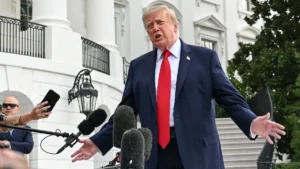
A central theme of the Dallas convention is the explicit acknowledgment that despite not appearing directly on the ballot, former President Donald Trump remains the central gravitational pull of American politics. Republican organizers have structured much of the convention’s programming around solidifying support for Trump’s broader political agenda, framing the midterms as a vital checkpoint for the executive branch.
Trump is scheduled to address the convention on Wednesday evening, coinciding with the official kickoff of the new professional football season—a scheduling choice designed to maximize media exposure and capture the attention of working-class voters. The core takeaway of the Republican closing argument is clear: a divided government or a Democratic congressional majority would grind the administration’s legislative and regulatory agenda to a halt.
"There’s no question the Trump agenda is on the ballot," Scott emphasized. "If you want the Trump agenda accomplished, we have to control the House, we have to control the Senate."
Beyond legislative gridlock, Republican leaders are utilizing aggressive warnings about executive overreach and potential constitutional conflict should Democrats regain control of either legislative chamber. Scott warned that a Democratic-led House would immediately pivot toward aggressive oversight and punitive measures, suggesting that future investigations or impeachment proceedings would be inevitable regardless of executive actions. "And if the Democrats control the House, they’re gonna impeach him for combing his hair the wrong way," Scott said. "So we’ve gotta control the House and we gotta control the Senate."
Chronology and Strategic Milestones Leading to the Midterms
As the electoral calendar advances toward November, both major political parties are operating under compressed timelines to solidify their voter coalitions and secure campaign funding.
- Early Primary Season: Throughout the spring and summer, state primaries have established the roster of nominees. Notable primary victories by progressive and establishment figures alike have drawn national attention, highlighting ongoing ideological friction within both political parties.
- The Dallas Convention: Serving as the current focal point of Republican midterm strategy, the gathering in Texas is designed to synchronize the national message, harmonize donor support, and provide a unified platform for candidates navigating difficult regional terrain.
- Post-Labor Day Sprint: The period following Labor Day traditionally marks the unofficial start of the general election sprint. Campaigns are ramping up television and digital ad buys, focusing intensively on early voting infrastructure, and deploying high-profile surrogates to swing districts and battleground states.
- The Trump Address and Beyond: Trump’s upcoming address in Dallas marks a pivotal inflection point, setting the tone for the final eight weeks of campaigning. The speech is expected to synthesize economic grievances with populist nationalism, providing the grassroots base with a clear set of legislative priorities.
Analytical Implications and Broader Impact
Political analysts note that the strategy of nationalizing midterms through hyper-focus on polarizing figures is a high-risk, high-reward proposition. While elevating figures like Alexandria Ocasio-Cortez and Hasan Piker successfully mobilizes conservative and rural voters by painting a vivid picture of the political opposition, it also risks motivating high-turnout among progressive and urban demographics who see those same figures as champions of their values.
Furthermore, by heavily tying the electoral fate of congressional candidates to the ongoing economic realities—such as inflation, energy prices, and international trade disputes—Republicans are inviting scrutiny of their own governance and policy responses. The efficacy of the GOP’s narrative will ultimately depend on whether voters prioritize concerns over cultural shifts and progressive economic philosophies or focus predominantly on immediate pocketbook issues.
As the convention concludes and candidates return to their respective states and districts, the coming weeks will determine whether the Republican framing of the progressive wing as the de facto leader of the Democratic Party resonates deeply enough to secure legislative majorities for the remainder of the presidential term.