Decoding the Sperm Whale Alphabet New Research Reveals Striking Similarities Between Cetacean Clicks and Human Phonology

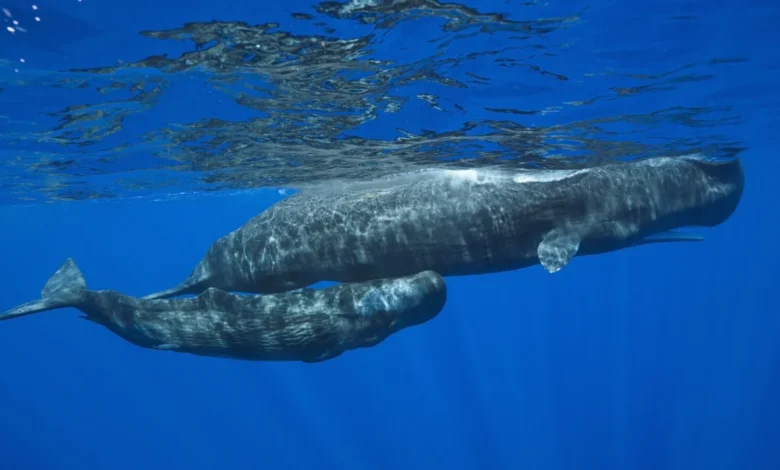
For centuries, the sperm whale was viewed primarily through the lens of industry and mystery, a leviathan of the deep hunted for the valuable oil found within its massive head. However, a groundbreaking study published in the journal Proceedings of the Royal Society B: Biological Sciences has revealed that these marine giants possess a communication system far more sophisticated than previously imagined. Researchers associated with Project CETI (Cetacean Translation Initiative) have discovered that sperm whales utilize a "phonetic alphabet" that bears striking structural similarities to human language, including the use of vowels, diphthongs, and tonal variations comparable to languages such as Mandarin or Slovenian.
This revelation challenges the long-standing belief that complex, combinatorial communication is a uniquely human trait. Despite sharing a common ancestor more than 90 million years ago, sperm whales and humans appear to have undergone a process of convergent evolution, developing intricate methods of information exchange to navigate their respective social environments. The findings suggest that the rhythmic clicks of the sperm whale, known as "codas," are not merely repetitive signals but are composed of various layers of modulation that allow for a vast array of expressive possibilities.
The Architecture of Cetacean Communication
Sperm whales (Physeter macrocephalus) do not possess vocal cords in the traditional sense. Instead, they produce sound by forcing air through a pair of "phonic lips" located at the front of their nasal passage, beneath the blowhole. The resulting sound is reflected through the spermaceti organ—a massive reservoir of oil—and out into the water as a series of intense, high-frequency clicks. While these clicks were originally understood as a tool for echolocation, scientists have long known that they also serve a social function.
The new research, led by Gašper Beguš, a linguist at the University of California, Berkeley, and David Gruber, the founder of Project CETI, utilized advanced machine learning and artificial intelligence to analyze thousands of codas recorded off the coast of Dominica. By stripping away the silence between clicks and analyzing the acoustic properties of the pulses themselves, the team identified what they describe as "vowel-like" structures.
In human speech, vowels are formed by changing the shape of the vocal tract to emphasize certain frequencies, known as formants. The researchers found that sperm whales perform a biological equivalent by modulating the physical properties of their click production to create distinct spectral signatures. These variations allow the whales to create a combinatorial system where the meaning of a coda can change based on its internal structure, much like how changing a single vowel in a human word can alter its definition.
A Chronology of Discovery: From Moby Dick to AI
The path to understanding the sperm whale’s "language" has been a slow transition from exploitation to observation.
- Pre-1950s: Sperm whales were largely considered "silent" or capable only of rudimentary mechanical noises. Most human interaction with the species was through the whaling industry, which focused on the physical extraction of resources rather than biological study.
- The 1950s and 60s: With the advent of hydrophone technology during the Cold War, researchers began to record the rhythmic "tapping" of sperm whales. In 1957, researchers Worthington and Schevill provided the first definitive proof that sperm whales produced sound.
- The 1970s: Dr. Roger Payne’s work on humpback whale songs revolutionized the public’s perception of cetaceans, leading to the "Save the Whales" movement. During this era, scientists began to recognize that sperm whale clicks were organized into "codas"—short patterns of 3 to 40 clicks used in social contexts.
- The 1980s and 90s: Researchers like Dr. Hal Whitehead established that sperm whales live in complex, matrilineal societies with distinct "cultures." It was discovered that different clans of whales use different sets of codas, effectively speaking different dialects.
- 2020 – Present: The launch of Project CETI marked the application of Big Data and Artificial Intelligence to marine biology. By deploying high-density acoustic sensor arrays and robotic tags, researchers have gathered the massive datasets required to apply natural language processing (NLP) algorithms to non-human communication.
Supporting Data: Complexity and Convergence
The study analyzed over 8,700 codas and found that the "alphabet" consists of several distinct dimensions. The researchers identified four primary features of the sperm whale communication system:
- Pacing: The tempo of the clicks within a coda.
- Rhythm: The pattern of intervals between clicks.
- Ornamentation: An additional click added to the end of a coda, which functions as a suffix.
- Rubato: Subtle variations in the duration and timing of clicks that do not change the basic rhythm but may convey emotional or contextual information.
Quantitatively, the researchers noted that the whales can manipulate the "spectral tilt" and "formant-like" peaks of their clicks. In the study, these were compared to the phonological rules of human languages. For instance, the way sperm whales use rising and falling tones to differentiate meaning parallels the tonal systems of Mandarin Chinese. The use of "rubato" and "ornamentation" suggests a recursive structure, a hallmark of complex grammar that was previously thought to be absent in animal communication.
Furthermore, the sperm whale’s brain—the largest on the planet at approximately nine kilograms—possesses a highly developed neocortex and an abundance of spindle neurons, which are associated with social intelligence, empathy, and linguistic processing in humans. The sheer scale of their neurological hardware provides the biological foundation for the complex "chit-chat" observed by the research team.
Social Context and Observations in the Field
The discovery of a phonetic alphabet is reinforced by the observed social behaviors of sperm whales. These animals are intensely social, living in "units" of roughly ten females and their offspring. These units often merge into larger groups for protection and social bonding.
David Gruber, President of Project CETI, notes that the most complex communication occurs when the whales are at the surface, engaging in "socializing" periods. "If you watch sperm whales, they put their heads right together and click into each other’s heads," Gruber explained. This proximity is necessary for the exchange of high-fidelity acoustic information. He likened the intimacy of these conversations to humans leaning in to discuss a complex literary work, suggesting that the depth of the information being shared requires a high level of focus and physical closeness.
Recent field observations have added weight to the theory of a sophisticated social culture. In March 2024, Project CETI researchers filmed a sperm whale giving birth off the coast of Dominica. The footage showed other members of the pod surrounding the mother, providing physical support and vocalizing intensely throughout the process. This "midwife" behavior suggests a high degree of coordination and emotional resonance, likely facilitated by the complex communication system now being decoded.
Professional Reactions and Scientific Implications
The scientific community has reacted to the study with a mixture of awe and cautious optimism. Mauricio Cantor, a behavioral ecologist at the Marine Mammal Institute, noted that while researchers have known about codas for decades, the identification of an underlying phonetic structure is a major leap forward. "With this study, we’re starting to see that these signals are organized in ways we didn’t fully appreciate before," Cantor stated.
Linguists, however, remain careful about using the word "language" in the human sense. While the sperm whale system has phonology (the organization of sounds), it has not yet been definitively proven to have semantics (specific meanings for specific "words") or syntax (rules for combining those words into complex sentences).
Gašper Beguš emphasizes that the "relatability" of the whales is what makes the discovery so profound. "They have grandmas, they babysit each other’s calves, they give collaborative births," Beguš said. "It’s such a distant intelligence, but in many ways very relatable."
Broader Impact and the Future of Interspecies Dialogue
The ultimate goal of Project CETI is not merely to listen, but to understand and, eventually, respond. The initiative has set a five-year benchmark to comprehend 20 distinct vocalized expressions related to specific biological and social actions, such as diving, sleeping, or nursing.
The implications of this research extend far beyond marine biology. If humans can successfully decode the communication of a species that evolved in a completely different environment (the deep ocean), it could provide a blueprint for understanding other forms of non-human intelligence.
Furthermore, the research has significant conservation implications. Sperm whales are currently listed as "Vulnerable" by the IUCN. Understanding their communication could lead to more effective protection strategies, such as identifying critical social habitats or reducing noise pollution in areas where "cultural" transmission is highest.
As AI continues to bridge the gap between human and cetacean, the world is forced to reconsider its place in the hierarchy of intelligence. The discovery of a sperm whale alphabet suggests that for millions of years, a rich, oral history has been pulsing through the world’s oceans—a history that humans are only now beginning to hear. The "humbled" perspective offered by David Gruber serves as a reminder that while humans may be the only species with the technology to record these sounds, we are certainly not the only ones with something to say.
Related posts: