Oakland Airport Wins Right To Use The “San Francisco Bay” Name — With A Very Specific Catch [Roundup]

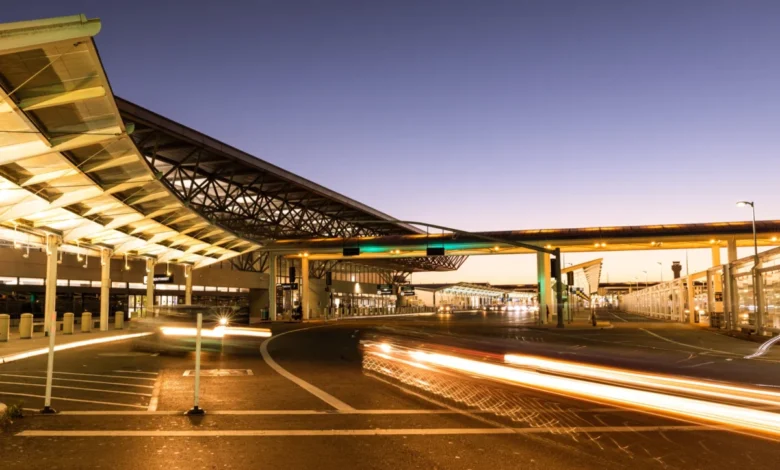
Richmond International Airport (RIC) has entered preliminary discussions regarding the potential establishment of a Capital One branded lounge, a move that would represent a significant shift in the airport’s premium service offerings and a departure from the typical size requirements for such high-end facilities. Martin Rubinstein, the Chief Growth Officer for the Capital Region Airport Commission, recently informed commissioners that the airport is exploring options with a third-party management company responsible for building and operating Capital One’s existing lounge network. While Capital One typically focuses its lounge presence on major international hubs—such as Dallas/Fort Worth International (DFW), Denver International (DEN), and Washington Dulles (IAD)—the financial institution’s massive corporate presence in the Richmond area provides a unique strategic rationale for a location at RIC.
The proposal comes at a time when Richmond International Airport is aggressively pursuing international expansion, specifically targeting direct transatlantic service to Europe. According to Rubinstein, the presence of a Capital One lounge would serve as a critical amenity for the bank’s high-volume corporate travelers and would align with the airport’s broader goal of elevating its infrastructure to support global connectivity. Capital One, headquartered in nearby McLean, Virginia, maintains a sprawling campus in Richmond and is one of the region’s largest private employers. The bank’s travel rewards ecosystem, anchored by the Venture X credit card, has positioned its lounges as a primary competitor to the American Express Centurion Lounges and Chase Sapphire Lounges. Currently, Capital One operates lounges at seven domestic airports, including New York’s LaGuardia and JFK, Las Vegas Harry Reid, and Reagan National, with an eighth location slated for Charlotte Douglas International.
The Strategic Importance of Capital One at Richmond International
The potential for a Capital One lounge at RIC is rooted in the "home-field advantage" provided by the bank’s local operations. Despite RIC’s classification as a medium-hub airport—processing roughly 4.8 million passengers annually—the concentration of Capital One employees and cardholders in the Central Virginia region creates a localized demand that exceeds typical passenger-to-lounge ratios. Rubinstein noted that as the airport pursues direct European flights, the expectations of business-class travelers and corporate executives will increase. Providing a premium lounge environment is often a prerequisite for attracting international carriers, which look for high-end ground services to accommodate their premium cabin passengers.
Historically, RIC has lacked a diverse array of independent or credit-card-branded lounges. The current facility primarily offers a USO lounge for military members and standard terminal seating. The introduction of a Capital One lounge would not only enhance the passenger experience but also serve as a significant branding victory for the airport. Capital One’s lounges are known for their high-quality dining, "grab-and-go" food options, and amenities like relaxation rooms and shower suites. If the project moves forward, it would likely involve a public-private partnership or a long-term lease agreement with the third-party developers that manage Capital One’s hospitality assets.
United Airlines Pilot Faces Scrutiny Over Social Media Conduct
Parallel to these development discussions, United Airlines has been drawn into a social media controversy involving one of its flight deck officers. An account identified as "Libs of TikTok" highlighted a Facebook cover photo change by a pilot named Matt Doogen. The image in question featured the number "8647," a numerical sequence that has recently surfaced in highly polarized political circles. In internet slang and political discourse, "86" is a term commonly used in the service industry to signify the removal or cancellation of an item, while "47" refers to the potential 47th President of the United States, Donald Trump.
![Oakland Airport Wins Right To Use The “San Francisco Bay” Name — With A Very Specific Catch [Roundup]](https://viewfromthewing.com/wp-content/uploads/2023/08/oak-airport.jpg)
The post has sparked a debate regarding the intersection of personal political expression and professional conduct within the aviation industry. Critics on social media have questioned whether such posts constitute a security concern or a violation of United Airlines’ corporate conduct policies. United Airlines, like most major carriers, maintains strict social media guidelines that prohibit employees from posting content that could be perceived as threatening, discriminatory, or damaging to the company’s reputation. While the airline has not released a formal disciplinary statement as of the current reporting period, the incident highlights the ongoing challenges corporations face in managing employee speech in a hyper-polarized political environment.
This situation is particularly sensitive for the aviation industry, where the safety and security of passengers are paramount. Pilots are held to rigorous standards of mental and professional fitness. Federal Aviation Administration (FAA) regulations and airline internal policies often stipulate that any behavior suggesting a lack of judgment or a potential threat to the safety of flight operations must be investigated. The controversy follows a series of incidents over the past several years where airline employees have faced termination or suspension for social media activity that crossed the line from personal opinion into perceived harassment or incitement.
Department of Transportation Issues Tentative Redetermination of Route Allocations
In the regulatory sphere, the U.S. Department of Transportation (DOT) has issued a tentative redetermination regarding international route frequencies, a move that has significant implications for the competitive landscape of American carriers. The DOT manages the allocation of "slots" or "frequencies" to countries where bilateral aviation agreements limit the number of daily or weekly flights allowed. This is common in markets such as China, Brazil, and previously, Tokyo’s Haneda Airport.
The recent screenshots of "Current allocation" versus "Tentative redetermination" suggest a shift in the government’s approach to maximizing public benefit. Under the current framework, major carriers like United, Delta, and American Airlines must prove that their use of limited frequencies serves the "public interest" through competitive pricing, route connectivity, and economic impact. If an airline fails to utilize its allocated frequencies—a practice known as "slot squatting"—the DOT can revoke those rights and reassign them to a competing carrier.
The tentative redetermination often follows an "Order to Show Cause," where the DOT invites airlines to argue why a specific allocation should or should not be changed. For example, if United Airlines held 10 weekly frequencies to a restricted market but only operated seven, a competitor like JetBlue or Alaska Airlines could petition the DOT for the remaining three. The DOT’s priority is to ensure that the limited supply of international flight rights is used efficiently to provide consumers with the most options and lowest fares. The data released indicates that certain carriers may be losing ground in specific South American or Asian markets, while others are gaining the opportunity to expand their international footprint.
Chronology of Recent Aviation Industry Shifts
The convergence of these events reflects a broader period of transition within the U.S. aviation sector.
![Oakland Airport Wins Right To Use The “San Francisco Bay” Name — With A Very Specific Catch [Roundup]](https://viewfromthewing.com/wp-content/uploads/2026/04/Screenshot-2026-04-30-065328.png)
- Q1 2024: Capital One confirms its intention to expand its lounge network beyond traditional mega-hubs, eyeing airports with high corporate cardholder density.
- April 2024: Richmond International Airport officials formally acknowledge discussions with Capital One’s development partners, linking the lounge to their transatlantic flight goals.
- Late April 2024: Social media monitors flag the United Airlines pilot’s profile, leading to a viral campaign demanding a response from the airline.
- Early May 2024: The DOT releases its tentative redetermination documents, signaling a potential reshuffle of international route authorities for the upcoming winter travel season.
Broader Implications for Corporate Branding and Regulatory Oversight
The move by RIC to court Capital One illustrates the evolving nature of airport revenue models. As airports move away from relying solely on parking fees and traditional retail, "experiential" amenities like premium lounges become vital revenue drivers. For Capital One, placing a lounge in Richmond is a strategic move to solidify loyalty among its own employee base and the affluent residents of Central Virginia. It signals a shift in the "Lounge Wars" where the battleground is moving from the largest hubs to secondary markets with specific demographic advantages.
On the regulatory and social front, the United Airlines controversy and the DOT’s route reallocations demonstrate the dual pressures on modern airlines: social accountability and operational efficiency. Airlines must navigate the minefield of employee social media use, which can quickly escalate into a brand crisis, while simultaneously fighting for every possible advantage in the highly regulated world of international route rights.
The DOT’s willingness to reallocate frequencies suggests a more aggressive stance on competition. For years, the "Big Three" (American, Delta, United) have held a dominant share of international frequencies. However, the DOT’s recent data indicates a trend toward holding airlines accountable for their capacity commitments. If an airline claims a route is vital for the public but fails to fly it consistently, the government is showing an increased willingness to hand those keys to a rival.
Conclusion
Richmond International Airport’s pursuit of a Capital One lounge, the social media firestorm surrounding a United Airlines pilot, and the DOT’s reallocation of flight frequencies are disparate events that collectively underscore the complexity of the modern aviation industry. Whether it is through the development of luxury infrastructure, the management of a global workforce’s public persona, or the navigation of federal route regulations, airlines and airports are operating in an environment where every decision is subject to intense public and governmental scrutiny. As RIC continues its push for international status and United manages its latest PR challenge, the industry remains in a state of constant flux, balanced between growth ambitions and the realities of a polarized and highly regulated world.