‘Murderous’ Review: Neil LaBute’s New Film Is Undone by Its Overly Familiar Premise and Obvious Plot Machinations

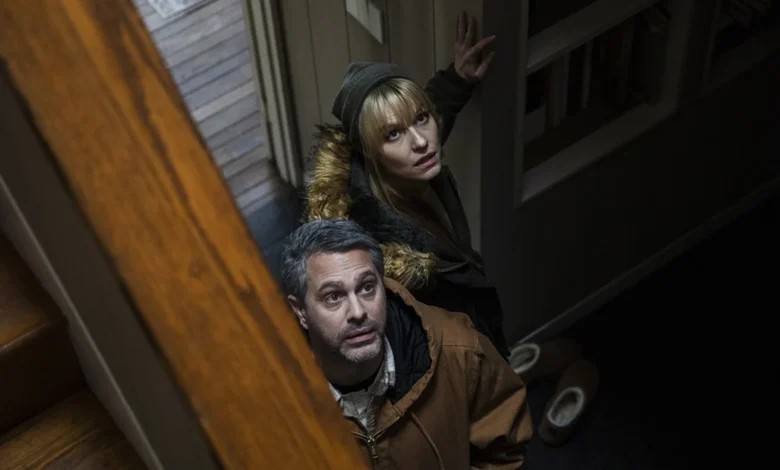
Premiering at the Oldenburg International Film Festival—a renowned German event frequently referred to as the "Cannes of the North" due to its focus on independent and unconventional cinema—the film serves as a departure from LaBute’s typical ensemble-driven narratives. By narrowing the scope to a single location and a trio of performers, the director attempts to evoke the high-stakes atmospheric pressure seen in classic genre staples such as Joseph L. Mankiewicz’s 1972 masterpiece Sleuth and Alfred Hitchcock’s 1948 experimental thriller Rope. However, as the film unfolds, it reveals a narrative structure that struggles to maintain the tension required for such a minimalist approach.
The Anatomy of the Narrative
The story is bifurcated into two distinct chapters, titled "Him" and "Her." The protagonist is Marian, a filmmaker portrayed by Gia Crovatin, who has recently achieved mainstream success following the release of her directorial debut, a genre-bending horror film also titled Murderous. Her newfound prosperity is physically manifested in her home—a rustic, converted mill—and the vintage red Porsche parked in her driveway. This setting establishes a theme of isolation and material comfort, providing the perfect backdrop for the intrusions that follow.
The first act centers on the unexpected arrival of Norman, played by Thomas Sadoski. Norman, an acquaintance from Marian’s past who served as a teacher’s assistant during their shared time in academia, initiates an awkward, high-stakes confrontation. The dialogue reveals that the pair once shared a romantic history, but the subtext is anchored in intellectual property theft. Norman alleges that the premise of Marian’s hit film was actually a collaborative effort between them, complete with physical evidence in the form of flipbooks documenting individual sequences.
The interaction is characterized by a palpable, manufactured tension. Norman’s observations about the sterile nature of Marian’s home—notably the lack of personal photographs contrasted with the presence of high-value literary artifacts—serve as a commentary on her character’s detachment. The presence of a letter opener once owned by Shirley Jackson acts as a heavy-handed narrative device, nodding toward the macabre nature of the characters’ dispute.
The Mechanics of the Conflict
As the conversation shifts from past grievances to present-day compensation, the film leans into the provocative, often uncomfortable dialogue that has become a trademark of LaBute’s career. The power dynamic shifts when Norman brings up the infidelity that marred their past relationship. In a moment that underscores the cynicism inherent in LaBute’s writing, the conversation devolves into a transactional exchange, questioning whether sexual favors could serve as a form of restitution for creative theft.
The second act, "Her," introduces Jordan Baker as Lila, a woman who arrives under the guise of an ardent fan seeking autographs for her family. This segment serves as a vehicle for the film’s most candid moments. Through a prolonged dialogue between the two women, LaBute uses Marian as a mouthpiece to air industry-wide grievances regarding movie distributors, marketing departments, and the general obfuscation of the creative process. While critics note that this segment feels the most autobiographical for the director, it also highlights the film’s primary structural flaw: the dialogue often feels like an "actors’ exercise" rather than an organic progression of a thriller.
Context and Historical Precedents in Creative Theft
The theme of creative plagiarism, or the "stolen story," has long been a potent engine for dramatic tension in literature and film. From the literary world, Jean Hanff Korelitz’s The Plot explores the devastating consequences of hijacking a brilliant narrative idea, while Ira Levin’s stage play Deathtrap remains the definitive benchmark for the "theft as a motive for murder" subgenre.
In real-world creative industries, the implications of these themes are significant. The legal definition of "idea theft" is notoriously difficult to litigate, as copyright law protects the expression of an idea rather than the idea itself. This legal reality often leads to the exact kind of "extra-legal" or violent resolution depicted in Murderous. By grounding his film in the frustration of a creator who lacks the legal leverage to prove ownership, LaBute taps into a genuine anxiety shared by writers, screenwriters, and artists alike.
Production and Reception Analysis
Running at 107 minutes, Murderous faces criticism for pacing issues that dilute its impact. Despite the strong performances of Crovatin, Sadoski, and Baker, the film’s reliance on predictable plot machinations—or, as some critics noted, "subtlety with the force of a sledgehammer"—prevents it from reaching the heights of the classic thrillers it seeks to emulate.
The Oldenburg International Film Festival, known for championing works that challenge traditional narrative boundaries, provided a fitting stage for the film’s debut. Yet, the consensus among attendees and industry observers suggests that the film’s theatrical, stagy nature might have been more effective in a live stage environment. On screen, the narrative claustrophobia often feels forced, and the lack of subtext leaves the audience with little to decipher, resulting in a viewing experience that feels overly deliberate.
Broader Implications and Industry Reflections
The production of Murderous raises questions about the evolution of the "single-room" thriller in a post-pandemic landscape. With the rise of restricted-location storytelling—necessitated by budget constraints and safety protocols over the past several years—filmmakers have been forced to rely more heavily on dialogue and performance than on spectacle. While this shift has produced some exceptional works, it also requires a razor-sharp script to keep the audience engaged for nearly two hours.
When comparing Murderous to the works of Hitchcock or Mankiewicz, one must account for the shift in audience expectations. Modern viewers are generally more accustomed to complex, non-linear storytelling. A film that relies on the "stagy and contrived" tropes of the mid-20th century without subverting them significantly risks alienating a contemporary audience. LaBute’s work remains technically proficient, but it serves as a reminder that the most dangerous weapon in a thriller is not the item on the desk, but the believability of the motive.
Ultimately, while Murderous serves as an intriguing, if flawed, study of creative envy and retribution, it stands as a cautionary tale for filmmakers attempting to pay homage to the masters of suspense. Without a tight, unpredictable script, even the most capable cast can find themselves trapped within the very narrative limitations they are trying to transcend. The film will likely be remembered for its performances and its sharp, albeit isolated, critiques of the film industry, rather than as a definitive entry in the pantheon of psychological thrillers.
Related posts: