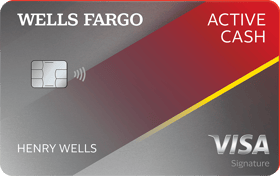
The personal finance landscape continues to evolve as consumers increasingly seek financial products that offer maximum simplicity alongside high-yield rewards. In this competitive environment, the Wells Fargo Active Cash® Card has firmly established its dominance, earning the designation of Best Credit Card for 2026 by leading financial analysts and industry experts. Combining a straightforward flat-rate reward structure with modern consumer protections and introductory financing incentives, the card has redefined what cardholders can expect from a no-annual-fee financial product.
As inflation and shifting macroeconomic conditions prompt households to scrutinize their everyday spending, the demand for high-value cash-back rewards has reached unprecedented levels. Industry experts note that while tiered rewards cards offer elevated percentages in specific categories such as dining, grocery shopping, or travel, they often require active category management, tracking rotating schedules, and navigating strict spending caps. The Wells Fargo Active Cash® Card circumvents these complexities by offering an unconditional, flat-rate return on all purchases, capturing the attention of consumers who prioritize ease of use without sacrificing earning potential.
Main Facts and Core Value Proposition
At the heart of the Wells Fargo Active Cash® Card’s market success is its defining feature: an unlimited 2% cash rewards rate on all everyday purchases. Unlike competitors that restrict high earnings to specialized merchant categories, this card provides consistent returns whether the cardholder is purchasing daily utilities, booking emergency travel, or buying routine household goods.
Beyond its baseline earning power, the card features a competitive welcome offer designed to attract new applicants. Cardholders can earn a $100 cash rewards bonus after spending $500 on purchases within the first three months of account opening. Financial analysts point out that while $100 bonuses are common in the credit card industry, finding this incentive paired with a permanent, unlimited 2% cash-back structure on a card with a $0 annual fee is exceedingly rare.

Furthermore, the product addresses the needs of consumers seeking debt consolidation or financing for upcoming large purchases. New cardholders receive a 0% intro APR for 12 months from account opening on both purchases and qualifying balance transfers. Following the conclusion of the introductory period, a variable regular APR of 18.49%, 24.49%, or 28.49% takes effect, depending on creditworthiness.
Chronology and Evolution of Flat-Rate Cash Back
The rise of the 2% flat-rate cash-back credit card represents a significant shift in the consumer credit market over the past decade. Historically, credit cards were divided into two distinct categories: travel rewards cards that appealed to affluent, frequent flyers, and basic cash-back cards that offered modest returns, typically ranging from 1% to 1.5%.
When issuers first introduced unlimited 2% cash-back cards, they often came with stringent prerequisites, such as maintaining a linked checking account, meeting high minimum investment thresholds, or paying an annual fee. Over time, competitive pressures forced major financial institutions to democratize these offerings. The introduction of the Wells Fargo Active Cash® Card marked a pivotal milestone in this evolution by stripping away annual fees and restrictive banking requirements while maintaining the coveted 2% benchmark.
Throughout its market lifecycle, the card has consistently adapted to consumer demands, incorporating contemporary security features and enhanced consumer perks, such as built-in cell phone protection. By providing up to $600 in coverage against damage or theft—subject to a $25 deductible—when the monthly cellular bill is paid using the card, Wells Fargo bridged the gap between a standard rewards card and a comprehensive financial safeguard.
Supporting Data and Credit Score Requirements
Securing approval for top-tier financial products requires meeting specific underwriting criteria established by issuing banks. According to issuer guidelines, the Wells Fargo Active Cash® Card is targeted toward consumers with good to excellent credit scores, typically defined as falling within the 670 to 850 range.
While falling within this credit score range does not guarantee approval—as lenders evaluate a comprehensive profile including debt-to-income ratios and payment history—it represents the baseline benchmark for potential applicants. For consumers falling below this threshold, issuers frequently recommend taking preparatory steps to build or repair credit history before submitting an application to avoid unnecessary hard inquiries on credit reports.
Comparative data within the broader credit card market highlights the card’s competitive positioning against similar financial products:
- Capital One Quicksilver Cash Rewards Credit Card: Offers an introductory bonus of $200 cash back after spending $500 within the first three months and a 1.5% flat cash-back rate on all purchases, backed by a $0 annual fee and a 0% intro APR for 15 months on purchases and balance transfers. While it provides a larger upfront welcome bonus and a longer 0% APR window, its baseline earning rate is lower than the 2% offered by Wells Fargo.
- Citi Double Cash® Card: Features a unique structure that effectively yields 2% cash back (1% at the time of purchase and an additional 1% upon paying for those purchases), along with a 0% intro APR for 18 months on balance transfers. However, it traditionally lacks a standard purchase-based welcome bonus comparable to the Wells Fargo offering, making the Active Cash card more lucrative for immediate, short-term returns.
Official Industry Analysis and Expert Perspectives
Financial researchers and consumer advocacy groups have closely monitored the performance of flat-rate cash-back cards amidst fluctuating economic conditions. Industry analysts emphasize that as interest rates remain elevated, consumers are increasingly utilizing introductory 0% APR periods to manage existing debt through balance transfers or to finance necessary expenditures without incurring high interest charges.
"Products that combine long-standing rewards stability with zero annual fees provide a vital buffer for household budgets," notes a prominent consumer finance researcher. "When consumers are forced to navigate complex reward calendars or spending ceilings, engagement often drops. A predictable, no-nonsense 2% return eliminates friction and ensures that every dollar spent yields tangible value."
Furthermore, banking sector observers note that credit cards offer significantly stronger fraud protection and consumer safeguards compared to traditional debit cards. While debit cards draw funds directly from a checking account—leaving consumers vulnerable while disputes are investigated—credit cards utilize the issuer’s capital during disputes, insulating the consumer’s personal liquidity from fraudulent transactions. The inclusion of cell phone protection further elevates the card’s utility, transforming a standard payment method into an active insurance policy for essential daily technology.

Broader Impact and Economic Implications
The ongoing popularity of the Wells Fargo Active Cash® Card reflects broader trends in consumer spending and banking preferences. As digital transactions dominate retail commerce, consumers view credit cards not merely as borrowing instruments, but as essential tools for financial optimization.
The absence of an annual fee ensures that cardholders do not need to calculate whether their yearly rewards exceed a membership cost—a common pain point associated with premium travel and lifestyle cards. This frictionless value proposition appeals across demographic lines, from young professionals establishing their credit profiles to seasoned budget managers looking to streamline their wallet contents.
However, financial advisors consistently emphasize that rewards cards must be managed responsibly. The core principle of maximizing cash-back rewards relies entirely on paying the monthly statement balance in full to avoid accumulating interest charges. When high interest rates—such as the card’s variable APR range—are applied to an unpaid balance, they quickly negate any financial gains earned through cash-back rewards.
Conclusion and Practical Recommendations
For consumers evaluating their current wallet composition, the Wells Fargo Active Cash® Card presents a compelling upgrade over lower-yielding rewards cards or traditional debit cards. Its combination of unlimited 2% cash rewards, a $100 introductory cash bonus, a 12-month 0% intro APR window on purchases and balance transfers, and a $0 annual fee cements its status as an industry leader.
Prospective applicants should review their credit profiles to ensure they meet the recommended 670–850 score range before applying. By aligning card usage with sound financial habits—specifically paying balances in full each month—consumers can successfully leverage the card’s robust feature set to enhance their personal financial efficiency.
Related posts: